
Last updated September 20, 2026
Full 25-point door and opener safety check with every visit - springs, cables, rollers, tracks, and your LiftMaster or Chamberlain opener included
You get a price before we start. It does not change when the truck arrives.
 Before
 After
After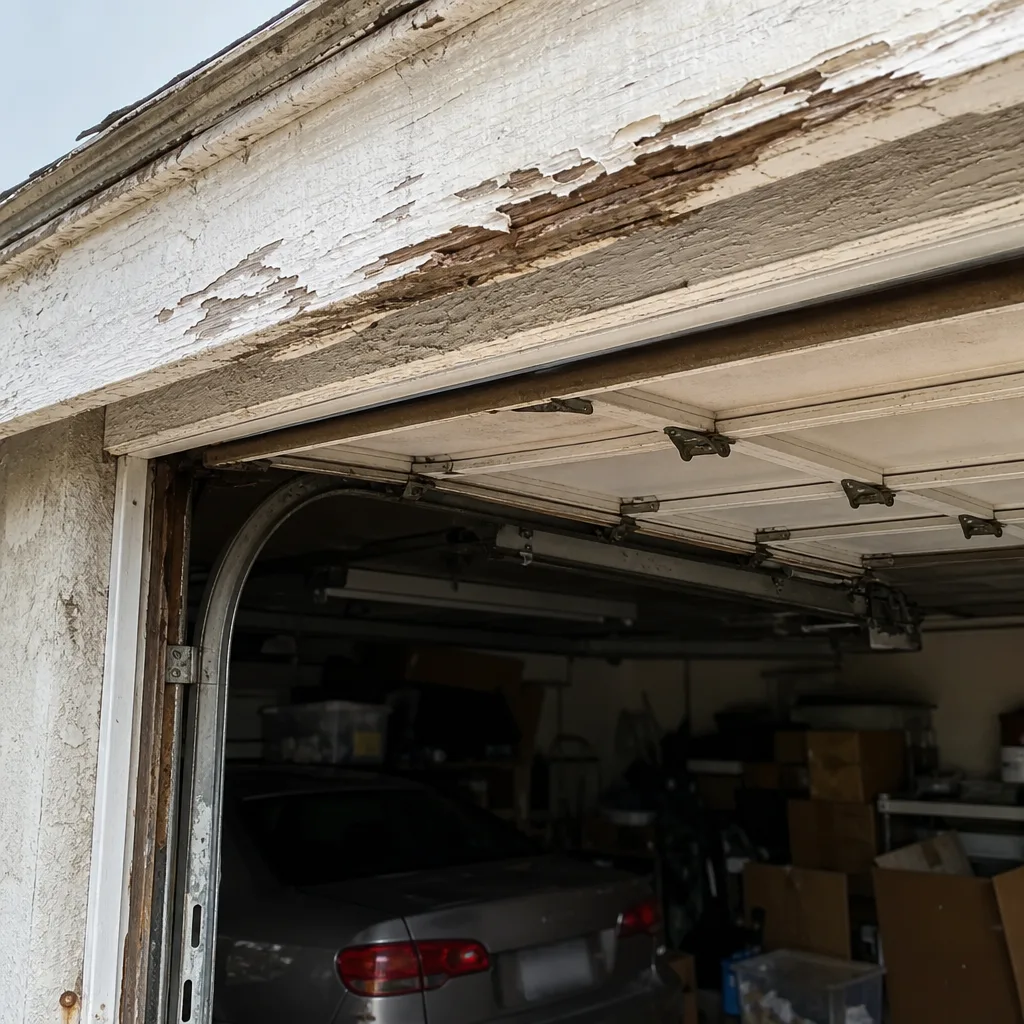 Before
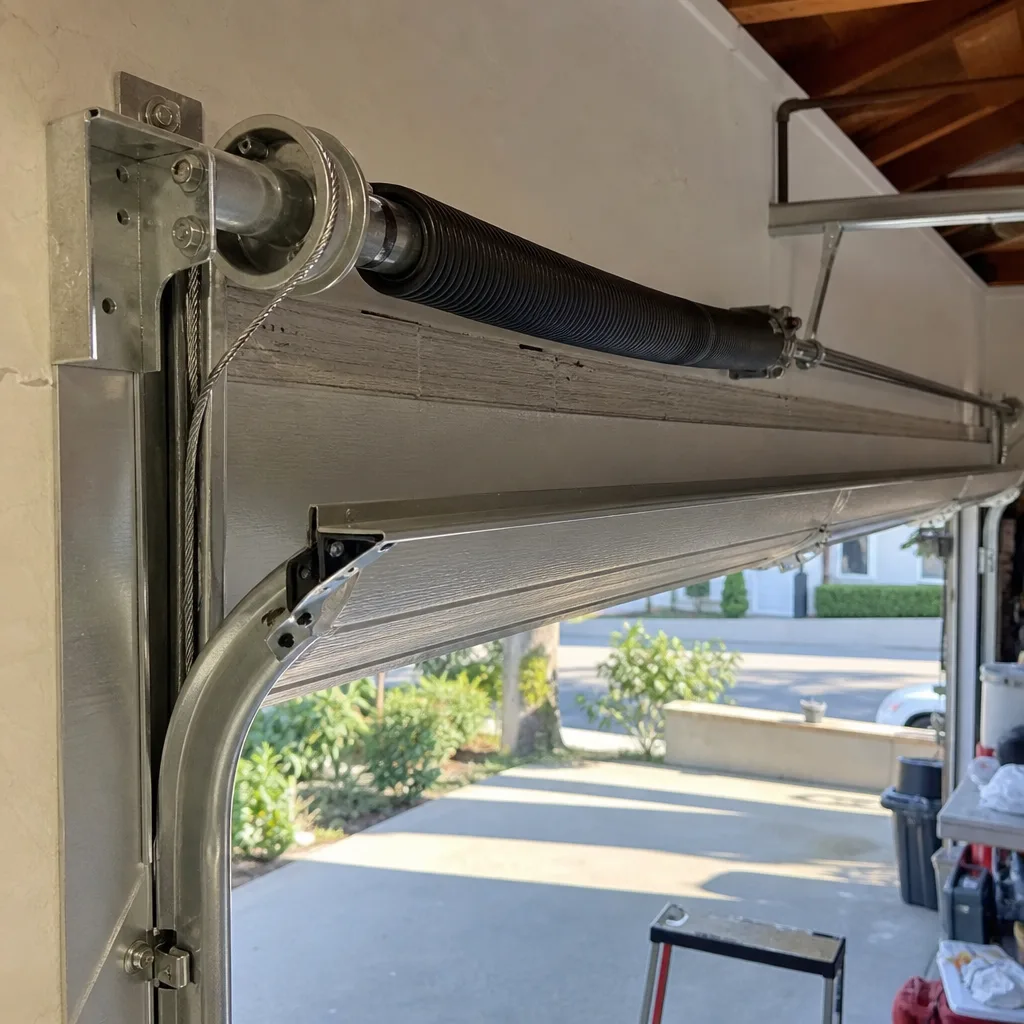 After
After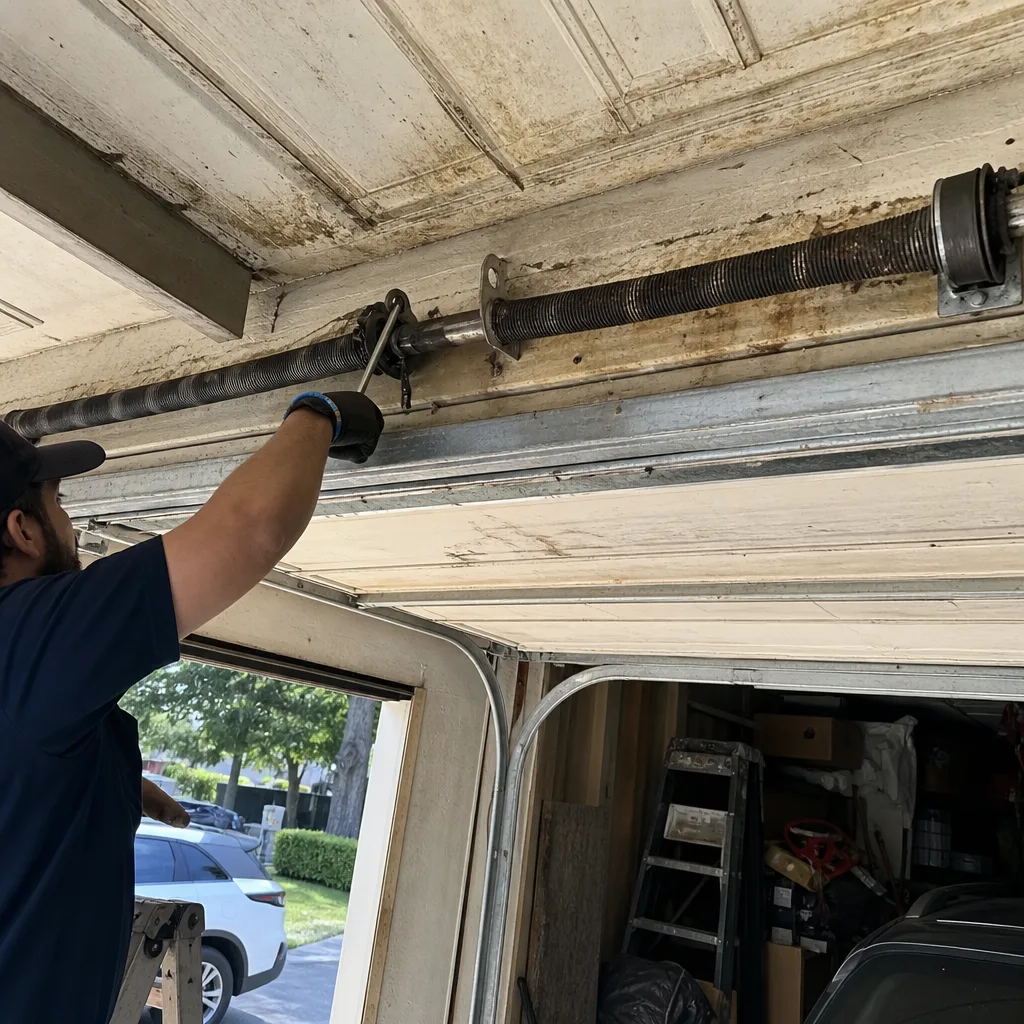 Before
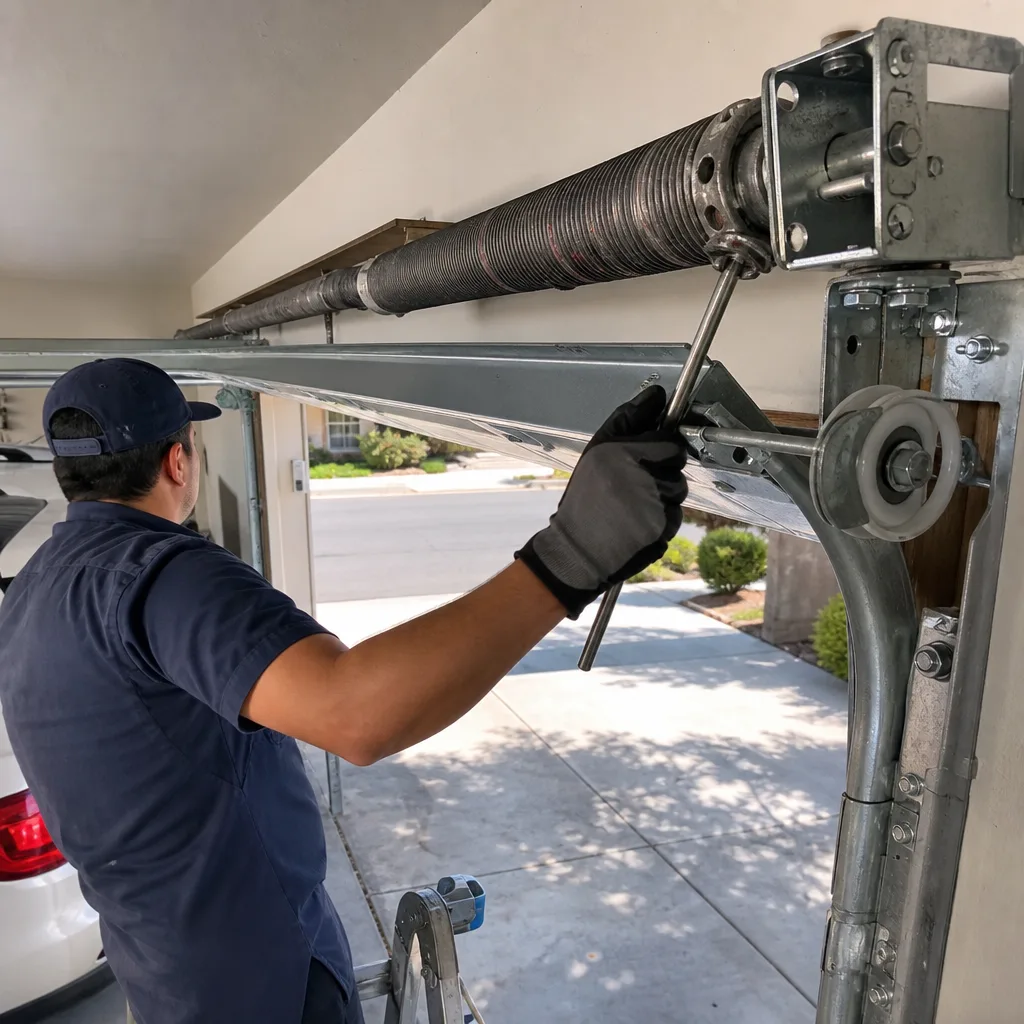 After
AfterGarage Door Repair Maintenance Checklist for Tarzana Homeowners
A garage door is the heaviest moving object in most houses, and in Tarzana it moves more than you think. The average door cycles 1,500 times a year. Each cycle stresses every moving part, from the torsion spring above your head to the rollers in the track. Most failures we see in Tarzana are not sudden. They are deferred maintenance that finally hit its bill. This checklist is built to stop that bill from arriving. Each inspection point below is paired with what it costs to fix if you skip it, because a checklist that doesn’t tell you the consequence is just a list of things to worry about.
Quick Answer
A garage door maintenance checklist for Tarzana homeowners has seven core checks: spring condition, roller condition, cable integrity, track alignment, opener force settings, seal condition, and hardware torque. Most checks take under ten minutes and require no special tools. The ones that do require special tools - spring adjustment and cable work - should be left to a trained technician offering Garage Door Repair services. In Tarzana’s heat and coastal air, a spring or roller failing because it was never checked typically runs $180 to $340 to replace, and a full door failure costs considerably more.
Table of Contents
- Torsion Springs: The Check That Saves $280
- Rollers and Hinges: The $90 Part That Quietly Adds Up
- Cables and Safety Cables: The Most Overlooked Risk
- Track Alignment and Lag Bolts: What Loose Looks Like in Inches
- Opener Force, Limits, and Auto-Reverse: The 2×4 Test
- Weather Seal and Bottom Rubber: Tarzana’s Heat and Salt Air Target
- How to Log Maintenance Dates So They Transfer to a New Owner
- Common Mistakes to Avoid
- When to Call a Professional
- Frequently Asked Questions
- The Bottom Line
BeforeAfterTorsion Springs: The Check That Saves $280
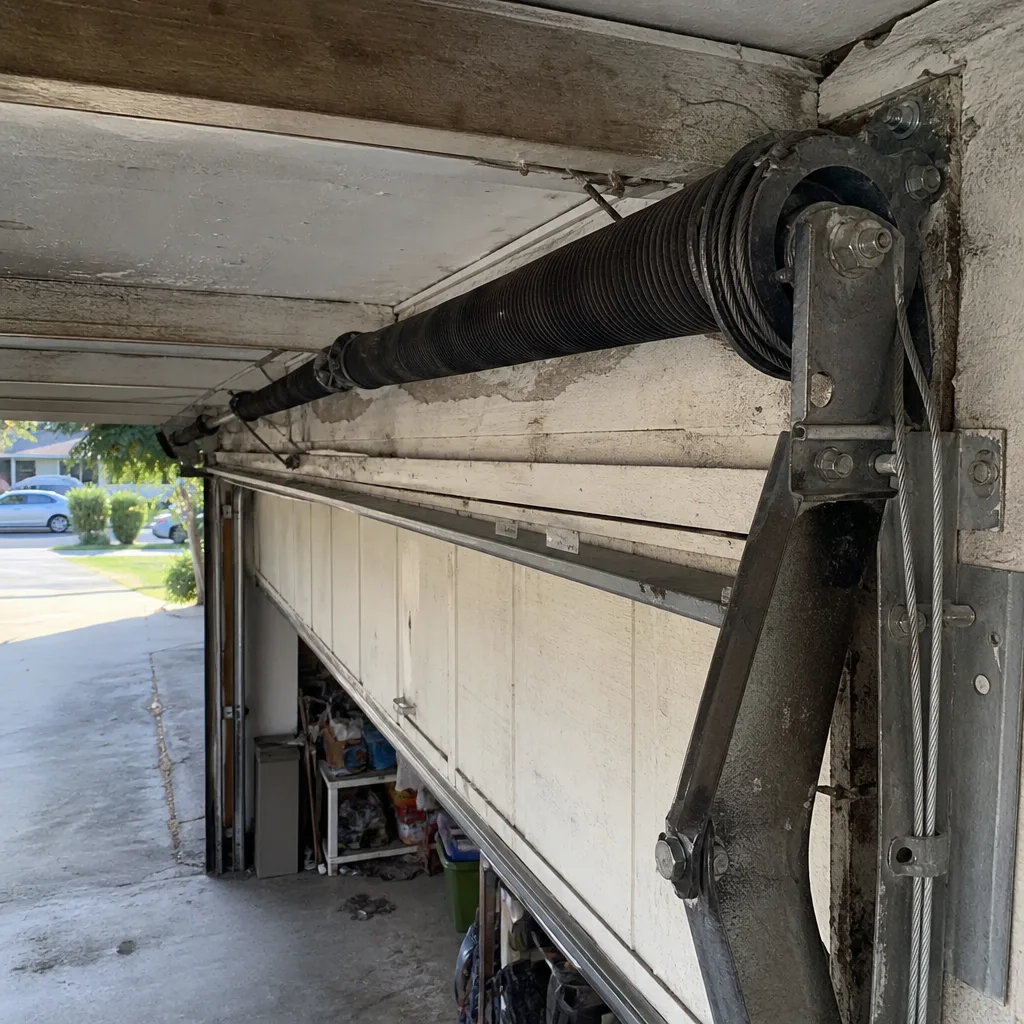
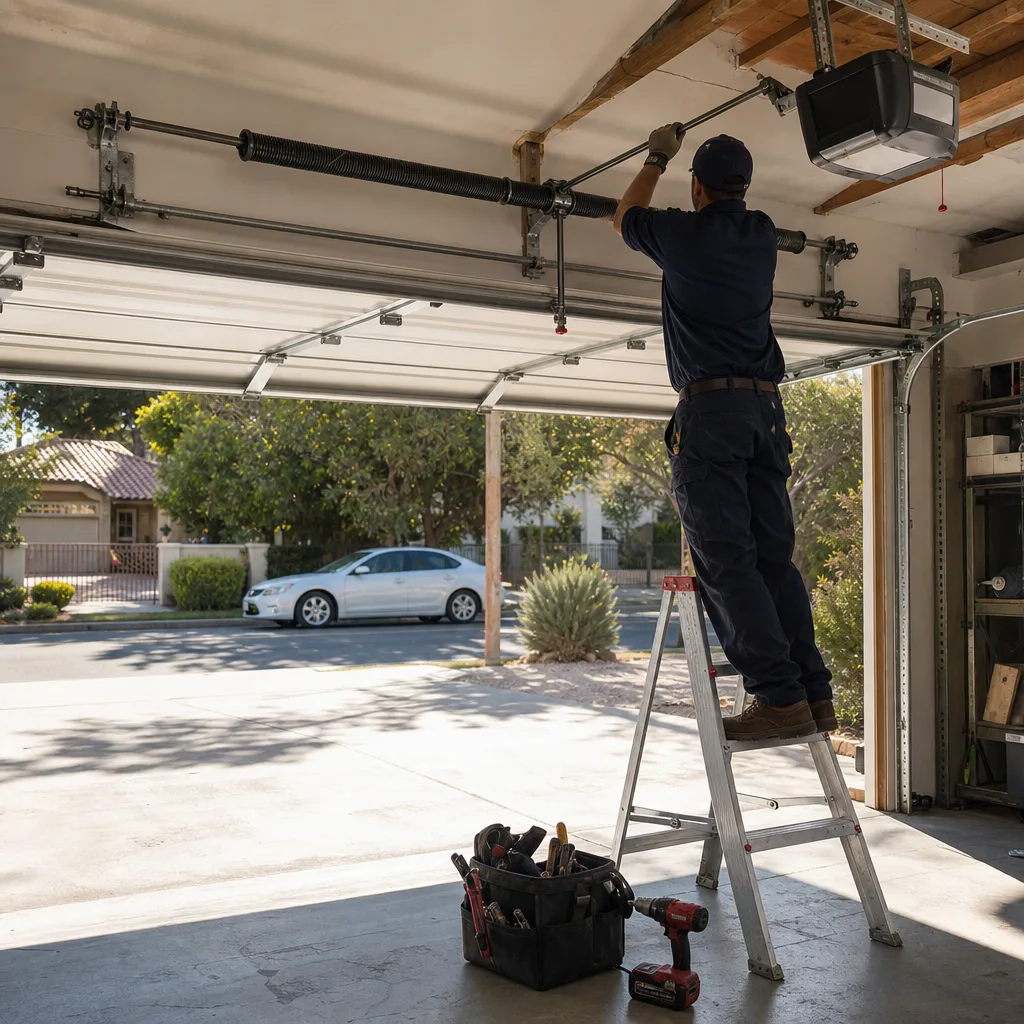
The torsion spring is the coiled metal bar mounted above the center of the door opening. It stores the tension that lifts the door, which is why the term “counterbalance” matters: the spring does the work, the opener just guides it. In Tarzana, most residential doors run on a single spring rated for 10,000 cycles. That is roughly seven to eight years of normal use. We’ve replaced springs in Tarzana homes after five years and after fifteen. The failure is never gentle. It is a loud snap that sounds like a car backfiring in the garage.
How to check a torsion spring safely
- Stand inside the garage with the door closed. Look up at the spring, not directly at it from below. A flashlight helps.
- Look for a visible gap in the coil. A broken torsion spring has a clean separation, usually a half-inch to two-inch gap, and you’ll see the two broken ends slightly out of line.
- Check the spring color. Most manufacturers paint the end cones red, black, or silver. Color does not tell you condition. It tells you can order the right replacement when it fails.
- Look for rust. Surface rust is normal after a few Tarzana summers. Deep pitting or flakes mean the metal is weakening.
- Listen. When you open the door, it should move quietly. A spring that creaks or pops while winding may have internal binding.
Do not adjust, repair, or stand in line with the spring cone. A torsion spring under full tension carries stored energy that can break bone. If you see a gap, the spring is done and the door may not lift at all. Call a professional.
Cost consequence if you skip this check
| Timeframe | What happens | Tarzana repair cost range |
|---|---|---|
| 6 months of ignoring visible rust or a loose spring pad | Spring breaks mid-cycle. Door drops or jams. Usually happens on the way out to work. | $180-$340 for a single spring replacement, including labor |
| 24 months of ignoring the same | Spring breaks and takes the cable drum or a cable with it. Door may rack in the tracks and bend a panel. | $450-$950 for spring, drum, cable, and possible panel straightening |
In Tarzana, springs fail more often in summer. Heat above 100°F expands the metal, and if there is already a micro-fracture from years of cycling, the expansion finishes the job. We get more spring calls in August than in December. The cheapest time to look at the spring is the day before it fails, and the check costs nothing.
Rollers and Hinges: The $90 Part That Quietly Adds Up
Rollers sit in the track and carry the door up and down. Most doors built in the last ten years use nylon rollers, which are quieter than steel and do not require track lubrication. All rollers have internal ball bearings, and those bearings wear out. A worn roller starts to wobble, then the wobble turns into a hard grind against the track. If the roller seizes entirely, the door can jump the track.
What to look for
- Visible flaking or cracking on nylon rollers. Tarzana’s dry heat bakes the nylon over time. If you see hairline cracks at the rim, the roller is one hard cycle away from failure.
- Wobble. With the door halfway up, gently try to rock the roller back and forth inside the track. More than about a quarter-inch of play means the bearing is gone.
- Flat spots on steel rollers. If you still have steel rollers from a pre-2010 install, look for a flat edge that has been ground down by friction.
- Hinge play. The roller is held by a hinge that bolts to the door section. Grab the hinge and try to move it. It should feel rigid.
Lubricating a roller takes four minutes with white lithium grease or a silicone-based spray. Replacing a cracked nylon roller because it was never lubricated takes about forty-five minutes and runs $90-$160 per roller in current Tarzana labor rates. A typical door has ten rollers. The checklist math is not subtle: a $12 can of lubricant once a year versus a $900-$1,600 roller replacement bill in year eight.
Hinges: the part nobody photographs
Hinges connect the door panels and carry every roller except the bottom two. They flex every time the door rounds the track curve. A cracked hinge is not always visible from inside; look at the side of the door while it is moving. If one section leans inward or the gap between panels opens unevenly, a hinge has torn. Replacing one hinge is a $35-$70 part and a thirty-minute job. Replacing a door section because a broken hinge let the panel twist out of its track starts at $400 for the panel and climbs fast.
Cables and Safety Cables: The Most Overlooked Risk
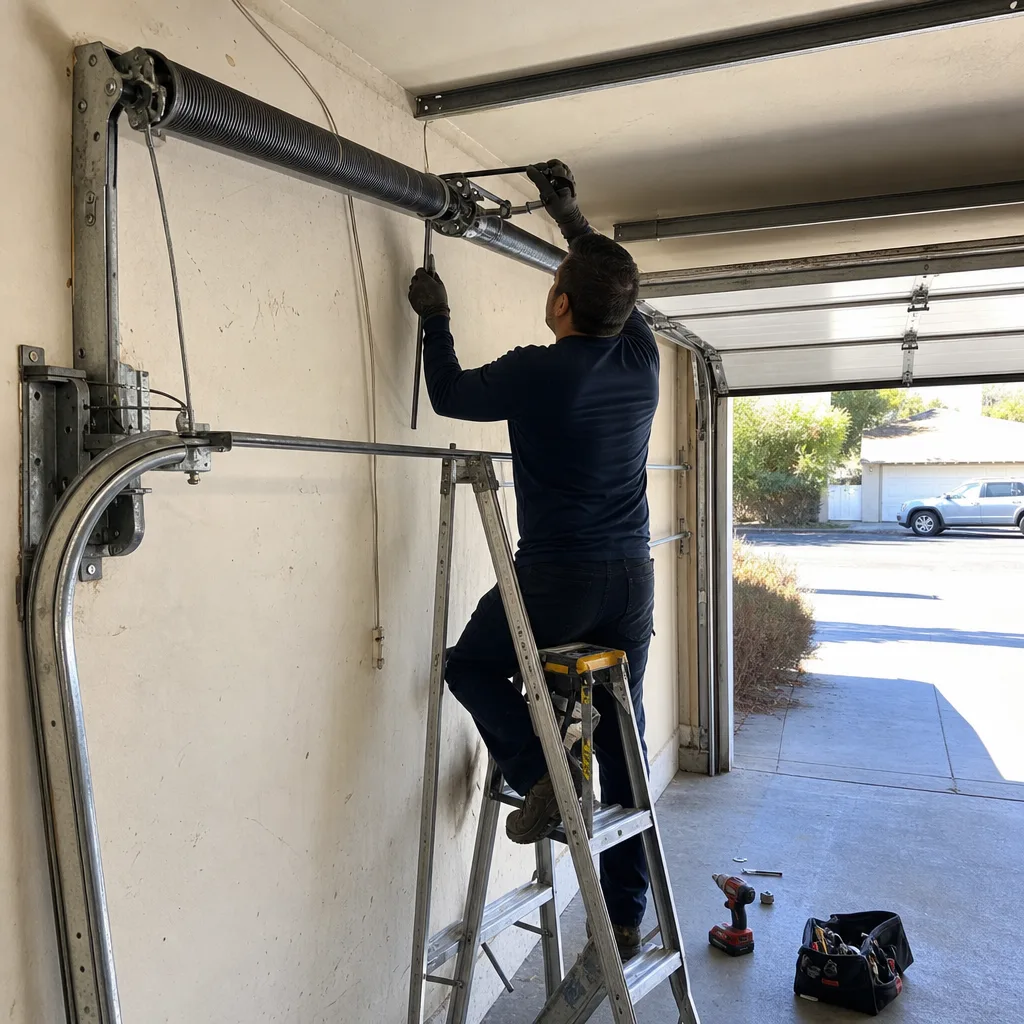
The cables are the braided steel lines that run from the bottom brackets up to the drums mounted on the torsion spring shaft. They carry the door’s full weight when the spring does its job. A cable that frays does not give you a warning sound. It lets go, and when it lets go the door drops on one side, rakes across the tracks, and usually bends the panel it was holding.
Safety note: Cables are under constant tension. Do not touch a cable with a bare hand if it is frayed. Do not attempt to re-thread a cable that has come off a drum. Both require releasing spring tension with a dedicated two-rod torque procedure that a trained technician performs with proper locking wrenches. This is one of the four checks on this list that should not be attempted without a torque wrench and the right training.
What to check from the ground
- Fraying. Run a flashlight up the cable while the door is closed. Look for individual wires sticking out anywhere along the length. A single protruding strand means replacement, not repair.
- Evenness. Both cables should look equally taut. One looser than the other means the drum has slipped, which is a spring system problem.
- Rust at the bottom bracket. The bottom bracket is the steel L-shaped fitting that anchors the cable to the bottom panel. Water from car tires pools here in winter. Pitted or rusted brackets snap without warning.
- Safety cable presence. If you have extension springs (the long springs running along the horizontal track - common on pre-2000 Tarzana homes), there must be a safety cable running through the middle of each spring. If there is no safety cable and the spring breaks, it becomes a steel projectile aimed at whatever is parked below it. That is not an exaggeration.
Cost consequence: A frayed cable replaced before failure is a $90-$150 job in Tarzana. A dropped door from a broken cable is a $500-$1,400 repair, because the technician is not just replacing the cable - they are re-aligning the door in its tracks, checking the panels for cracks, and possibly replacing the bottom bracket and a panel. Early cable detection is the single highest-return check on this list.
Track Alignment and Lag Bolts: What Loose Looks Like in Inches
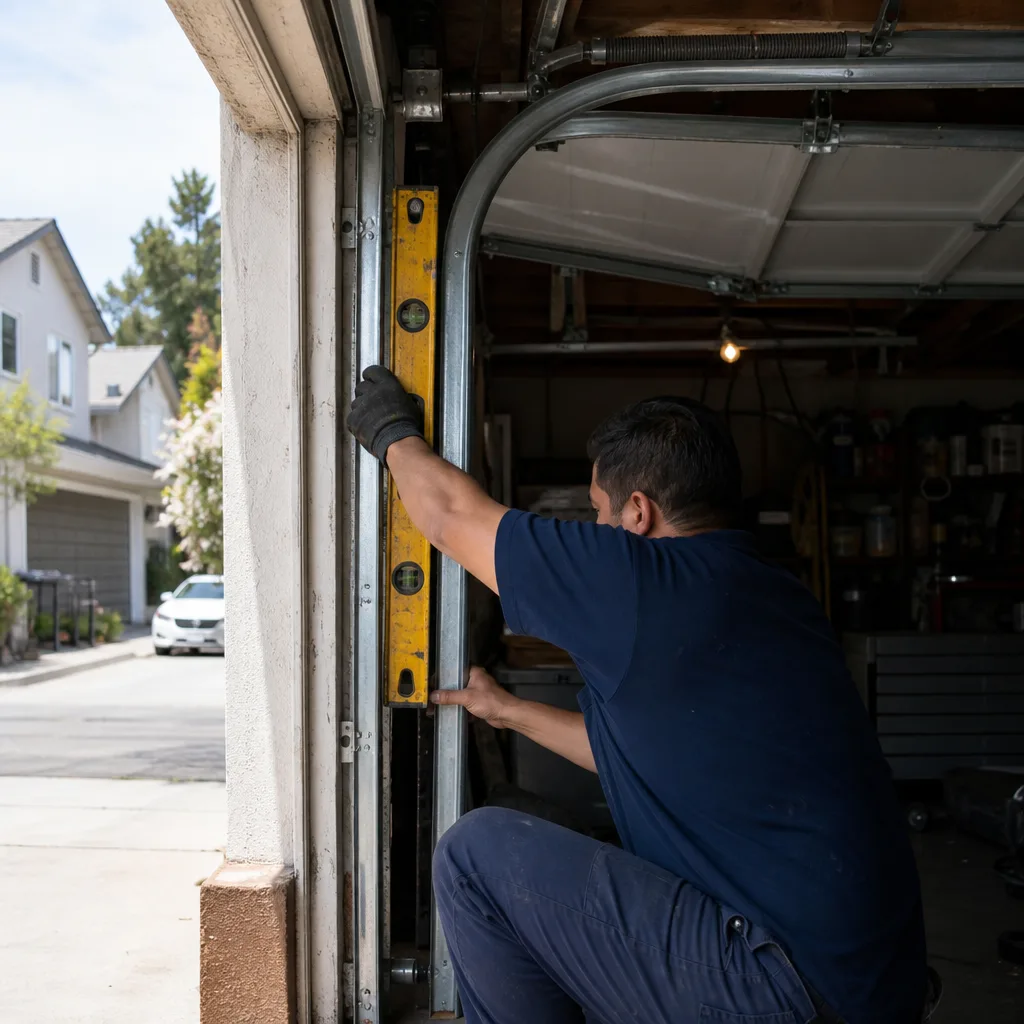
The tracks are the vertical and horizontal steel channels bolted to the garage walls and ceiling. They appear fixed. They are not. Every cycle transfers vibration into the track assembly, and in Tarzana the wood framing behind the drywall expands and contracts through a 40-degree seasonal swing. Bolts back out. Tracks drift. The door starts to shimmy.
How to measure track alignment without special tools
- Stand with your back to the closed door, looking down the length of one vertical track.
- Hold a straightedge (a yardstick works) flat against the track. Any visible light gap between the straightedge and the track means the track has bent or bowed.
- Look at the gap between the track and the door’s edge. It should be uniform. On most Tarzana installations we measure between a quarter-inch and three-eighths of an inch of clearance on each side.
- Check the lag bolts. These are the thick screws holding the track brackets to the wall. You should not be able to move the track by hand. If you can push the track inward and it springs back, a lag bolt has pulled loose from the stud behind it.
Why this matters in Tarzana specifically: The southern San Fernando Valley sits in a high-thermal-expansion zone. Stucco homes absorb heat all day and release it slowly at night. Wood studs behind the garage drywall move enough over two or three summer seasons to loosen lag bolts on the track. We see more track-droop calls in Tarzana and Woodland Hills than in coastal communities, where temps are more stable.
Cost consequence: Re-seating a track and tightening or replacing lag bolts is a $120-$200 service call. Replacing a door section because the track let the rollers out and the panel twisted is a $400-$900 repair. The track is the cheapest thing to check and the most expensive thing to ignore.
Opener Force, Limits, and Auto-Reverse: The 2×4 Test
The opener is the motorized box mounted to the ceiling. It does not lift the door - the springs do. The opener’s job is to move the door along the track at the right speed and stop in the right place. When a garage door opener fails, nine times out of ten the problem is not the motor. It is the force setting, the travel limits, or the auto-reverse sensor.
The three opener checks that take five minutes
- Force setting test: Close the door. Stand inside. Reach down and try to stop the door with both hands while it is closing. It should reverse within a second or two of meeting resistance. If it keeps pushing down with noticeable force, the down-force setting is too high. LiftMaster and Chamberlain openers have a dial on the motor unit; Genie units adjust through a button sequence. If you cannot adjust it safely, a technician can do it in ten minutes.
- Auto-reverse sensor test: Wave a 2×4 block (or a rolled-up floor mat) under the door while it is closing. The door should reverse immediately and return to the open position. These are the small photo-eye sensors at the bottom of each track, about six inches off the floor. If the door does not reverse, the sensors are misaligned, dirty, or wired incorrectly.
- Travel limit check: Let the door close all the way. It should seal flat against the concrete. If it stops an inch short or grinds for two seconds after hitting the floor, the down-limit is out of adjustment. On a LiftMaster or Chamberlain, the limit controls are marked with arrows; on a Genie, they are behind a light cover. A door that does not fully close is a security risk in Tarzana, not just an energy leak.
We replace more opener logic boards in Tarzana between July and September than the rest of the year combined. Valley heat above 105°F pushes circuit board solder joints to their thermal limit. If your opener is eight years old and the motor still runs fine but the door will not respond to the button, the logic board has likely cooked. A replacement board is $180-$300 installed. A full new opener is $450-$750 installed, depending on drive type and features. The board is cheaper. You will know which one you have when the technician shows you the board under a bright light - that is the kind of evidence we photograph before asking you to approve a replacement.
Weather Seal and Bottom Rubber: Tarzana’s Heat and Salt Air Target
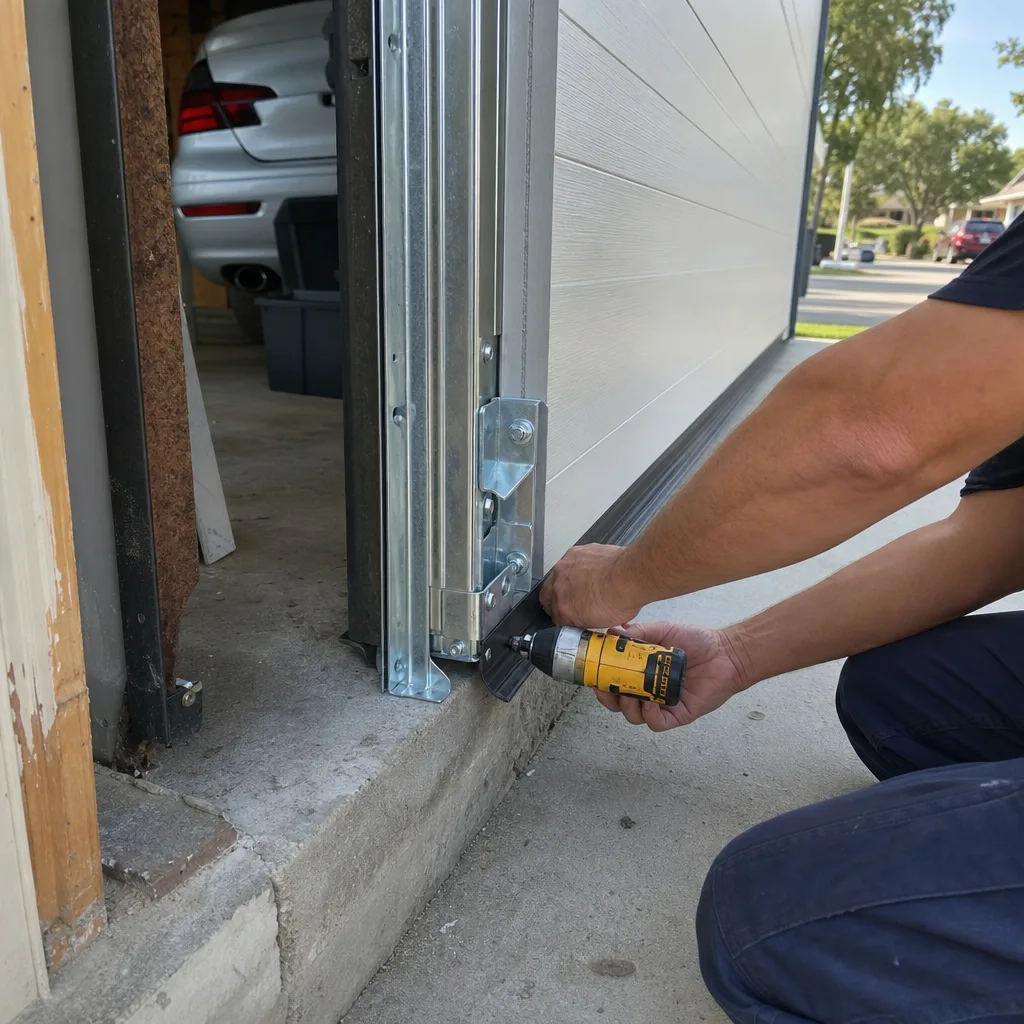
The weather seal is the strip of rubber or vinyl that runs along the bottom of the door and up the sides. In Tarzana, it deals with three things: summer heat, winter rain, and a subtle coastal factor. June Gloom pushes marine air inland along the 101 corridor, and while Tarzana is not a beach town, the overnight humidity carries trace salt and moisture into garage spaces that never fully dry out before the midday heat bakes them.
What to inspect
- Crushed or flattened bottom seal. It should be U-shaped and springy. If it is pancaked flat against the concrete, it has lost its ability to seal.
- Cracks along the length. Valley heat hardens rubber. After three or four Tarzana summers, the seal develops micro-cracks and then full splits.
- Gaps at the corners. Light visible from outside at the bottom corner means the seal has pulled away from the retainer.
- Side seal separation. The vertical rubber strips on the outside edges of the door frame should meet the door surface. If they curl inward, they are done.
Why it matters: A failed bottom seal lets hot air, dust, and bugs into the garage. More importantly in Tarzana, it lets moisture sit on the bottom panel. Water cycling through the panel’s steel or wood core is how bottom panels rust out, delaminate, and crack. A new bottom seal is a $45-$90 part and a twenty-minute job. A replacement bottom section because the seal failed and the panel rotted starts at $500. Every dollar of seal money returns ten in panel money.
Clopay and Amarr doors use different seal profiles - T-shaped, bulb, or P-style - so have the old seal in hand or a photo of the retainer before ordering a replacement. Most Tarzana supply shops carry the common profiles.
How to Log Maintenance Dates So They Transfer to a New Owner
When you sell a Tarzana home, the garage door is part of the transfer disclosure. California sellers must disclose known defects or material facts. A garage door that has been maintained and logged shows up as a plus on the property record. A door that has never been documented is indistinguishable from one that has never been maintained.
The format matters less than the consistency. We recommend a simple log that a future buyer can actually read:
- Date of check. Write it in MM/DD/YYYY format.
- What was checked. One line: “Springs, rollers, cables, tracks, opener force, seals.”
- What was found. “No visible spring gap. Left side track lag bolt loose. Rollers lubed.”
- Action taken. “Tightened lag bolt. Sprayed white lithium on rollers.”
- Cost, if any. Even if it is $0, write it. A buyer wants to know the door has a history.
Keep the log in a document file or a paper folder in the garage. If a technician visits, ask for the photo record. Most good companies, including ours, provide it automatically - it attaches to the job file and gives you dated visual evidence of what the components looked like on that date. At Servo Garage Doors Tarzana home, every visit includes a documented photo record precisely so the homeowner has a transferable maintenance history, not a memory.
When you sell, attach the log to the disclosure statement. It will not raise the sale price by a dollar. It will prevent a buyer’s inspector from flagging “age and condition unknown” and knocking $400 off the negotiated price.
Common Mistakes to Avoid
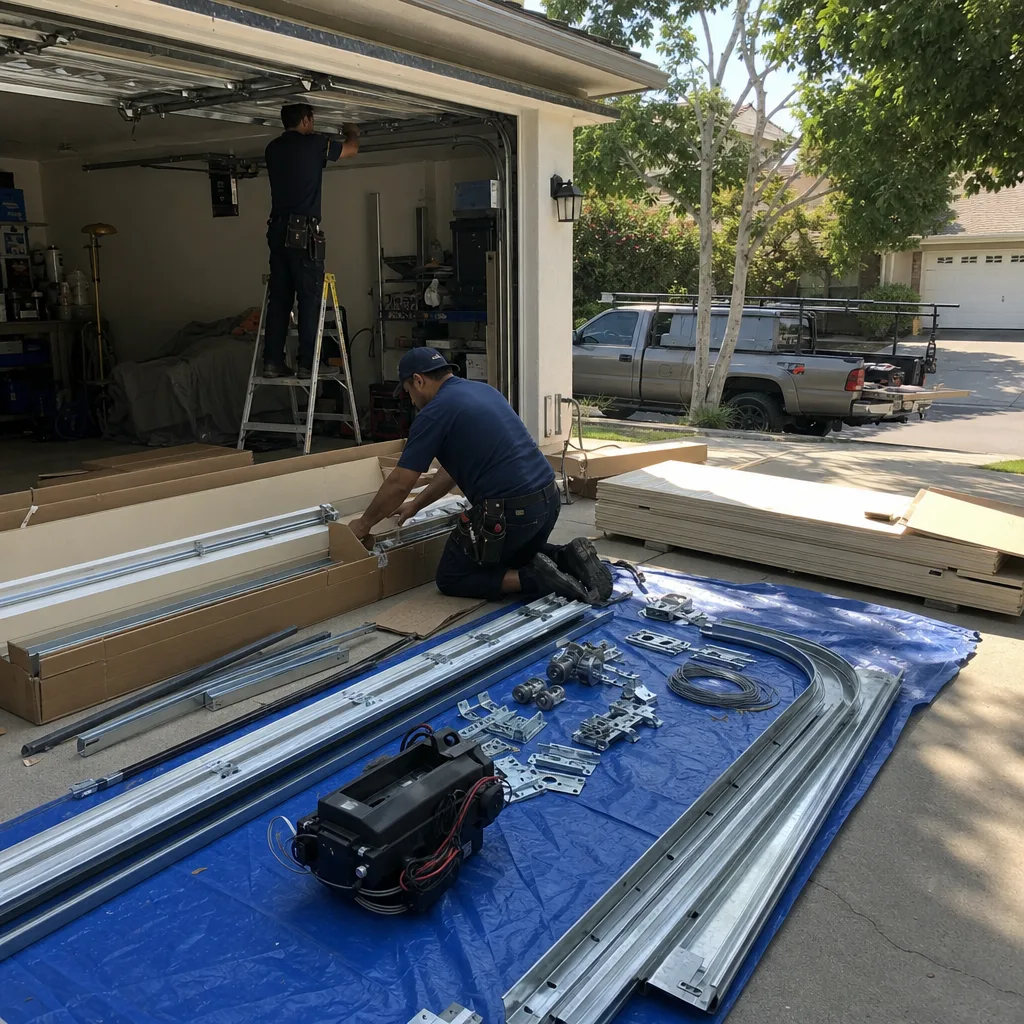
- Lubricating the track with WD-40. The track should be clean and dry. Lubricant on the track collects Tarzana dust and turns into grinding paste. Lube the rollers and hinges, not the track.
- Ignoring a noisy door because “it still opens.” A grinding roller does not heal. It fails, and then the door comes off the track at the worst possible time.
- Testing the auto-reverse with your hand instead of a 2×4. Your hand gives up. The 2×4 gives a consistent measurement and keeps your fingers out of the equation.
- Believing a broken spring is a DIY fix. The internet will show you videos. The internet will not show you the people who end up in urgent care. This is the top safety mistake we see in Tarzana.
- Buying the cheapest opener on sale without checking compatibility. A $275 discount opener installed on a door with tired springs fails in two years. The spring is the foundation.
- Deferring roller replacement until the door “really gets bad.” By the time the door sounds like a cement mixer, at least one roller has seized and the track is being machined down by metal-on-metal contact. That is a $900 repair instead of a $160 roller.
- Not writing anything down. Unrecorded maintenance is not maintenance. It is anecdote.
When to Call a Professional
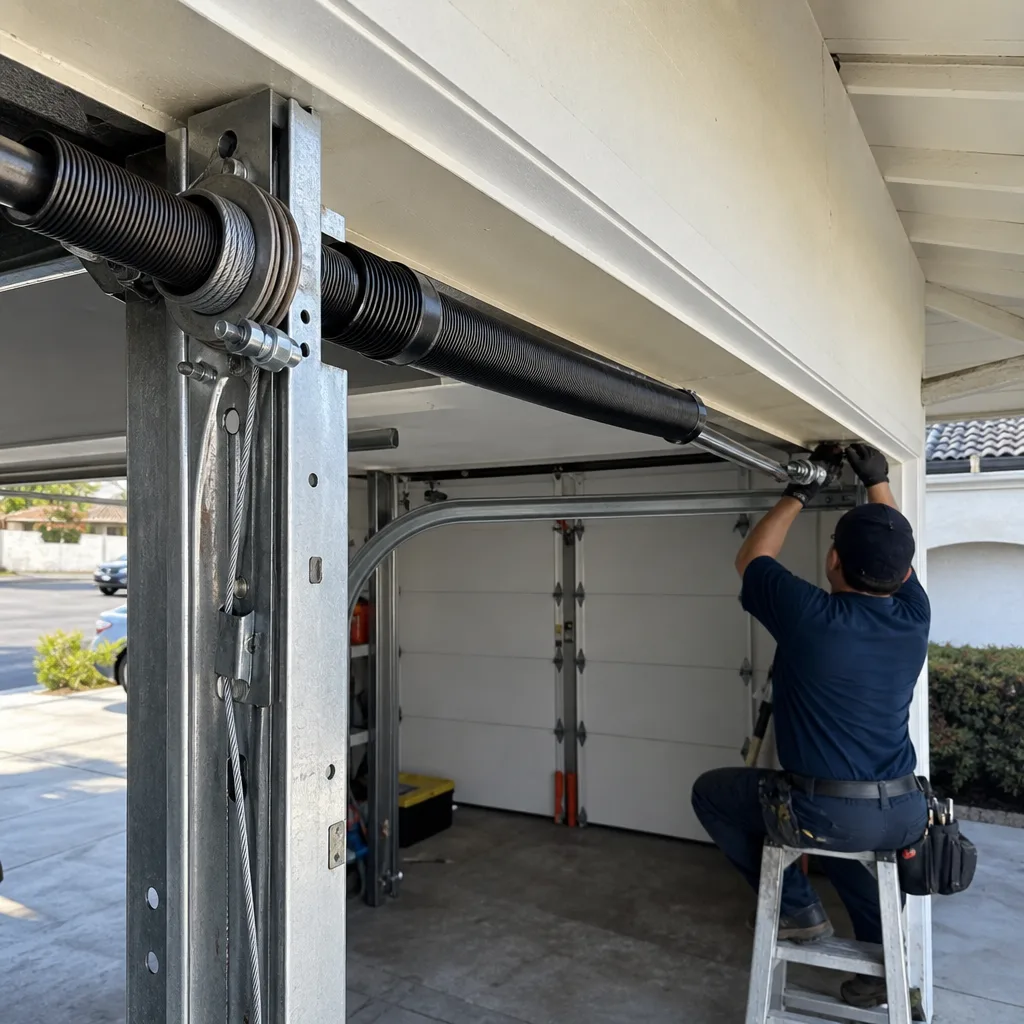
Four items on this checklist require a torque wrench and proper training: torsion spring repair or replacement, cable removal or re-threading, spring drum adjustment, and any work involving releasing spring tension. These are not difficulty issues. They are fracture and projectile risks. A spring under 200 pounds of torque will not give you a second chance.
Also call a professional if the door is off its track, if the opener motor runs but the door will not move, or if you have done the checks and found three or more failed items. At that point the door needs a systematic repair, not a patch. Servo Garage Doors Tarzana offers free estimates in Tarzana - call (424) 372-1317. Every estimate is a flat written price before any work starts, per Clause 1 of The Haven Standard. No call-for-a-quote, no surprise invoice.
If you have a written estimate from another company, bring it in. We will give you a second opinion on the written scope at no charge. The paperwork goes both ways.
Frequently Asked Questions
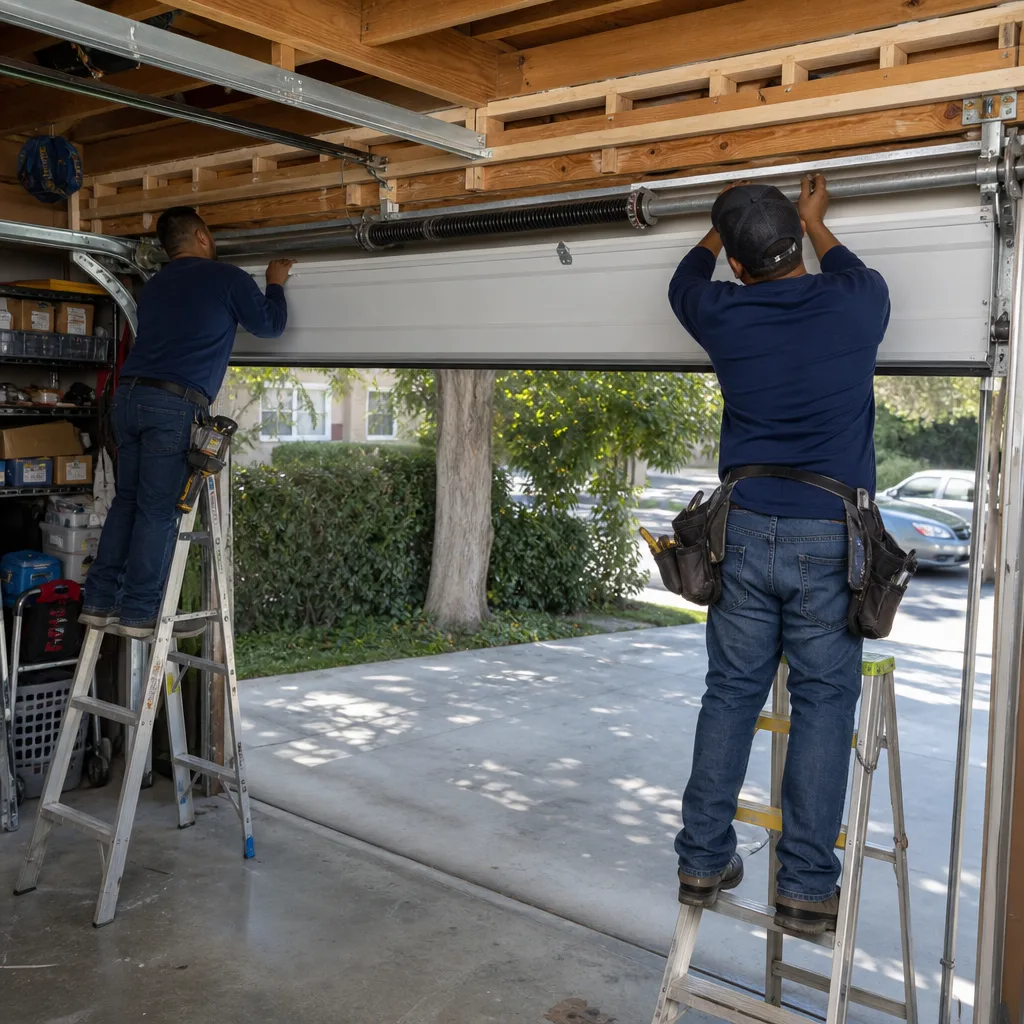
Twice a year is ideal for Tarzana’s climate: once in early spring, after the rainy season, and once in late fall, before the coldest months put extra load on the springs. At minimum, run the seven core checks annually. Most busy households can do the full check in under thirty minutes, including the lubrication.
A professional tune-up in Tarzana typically runs $95-$190, depending on the door type and what is included. You should expect the technician to inspect the springs, rollers, cables, hinges, tracks, opener settings, auto-reverse, and seals, and to lubricate all moving parts. If you are choosing a provider, read How to Hire a Garage Door Contractor in Tarzana: A Step-by-Step Guide first. The flat written price is quoted before work begins. Call (424) 372-1317 for an exact quote.
Standard springs are rated for 10,000 cycles, which is roughly seven to eight years in a single-car household that cycles the door twice a day. Tarzana heat accelerates wear at the spring’s mounting points, and many springs fail between year six and year nine. High-cycle springs rated for 25,000 cycles are available and typically add $50-$80 to the replacement cost.
Yes, and you should. Use white lithium grease or a garage-door-rated silicone spray on the roller bearings, hinges, and spring coils. Do not spray the track. Lubrication is a four-minute job and is the single most effective thing a homeowner can do to extend roller and hinge life. For a full guide on what to use and where, see our Garage Door Repair in Tarzana page.
Heat expands the metal components - tracks, springs, and roller bearings. Clearances that were fine at 75°F tighten at 105°F, and that creates friction. If the garage faces west and bakes through the afternoon, the track itself can warp slightly. The noise usually indicates dry or worn roller bearings. If lubrication does not quiet it, the rollers are likely near the end of their life.
Springs first, always. The springs carry the door. The opener guides it. If a spring is weak or broken and you replace only the opener, the new opener is being asked to do the spring’s job, and it will burn out its motor prematurely. A new Genie or LiftMaster opener on a healthy door is a ten-year machine; on a weak door, it is a two-year machine. For opener-specific guidance, see our Garage Door Opener Repair & Installation in Tarzana page.
If you are deciding between repairing an old door and replacing it entirely, read our Garage Door Installation in Tarzana page for a component-level cost breakdown.
The Bottom Line
A garage door maintenance checklist is only as good as the consequence it prevents. In Tarzana, where heat cycles stress springs and coastal moisture creeps into seals, the seven checks above cover the failure points that actually cost money: springs, rollers, cables, tracks, opener settings, seals, and hardware torque. Run them twice a year. Write down what you find. Lubricate what moves. Stay away from what is under torque. And when something is degraded, fix it before it fails, because a $90 cable is always cheaper than a $1,400 dropped door. For more guides & resources, visit our blog. The math is not subtle.
Written by Marcus Deller, Owner at Servo Garage Doors Tarzana, serving Tarzana since 2015.