
Last updated September 20, 2026
Full 25-point door and opener safety check with every visit - springs, cables, rollers, tracks, and your LiftMaster or Chamberlain opener included
You get a price before we start. It does not change when the truck arrives.
 Before
 After
After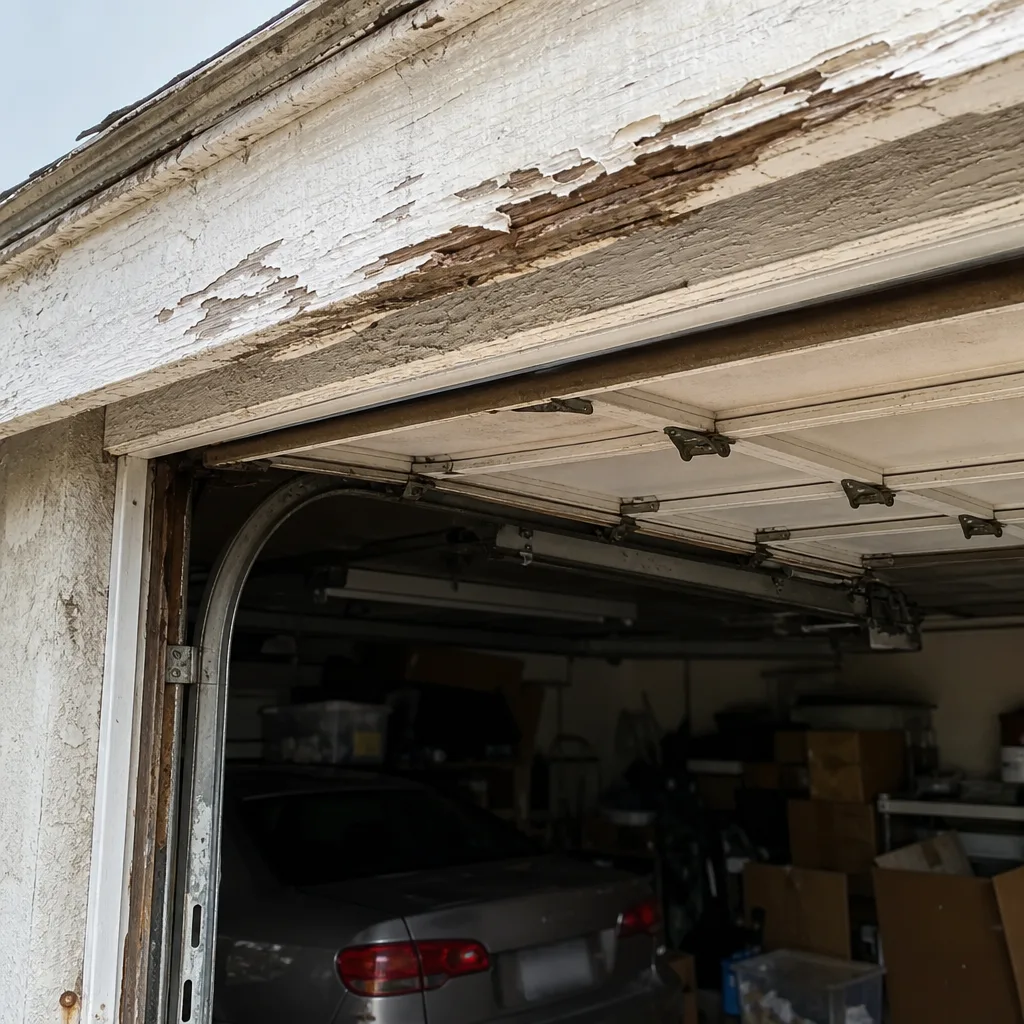 Before
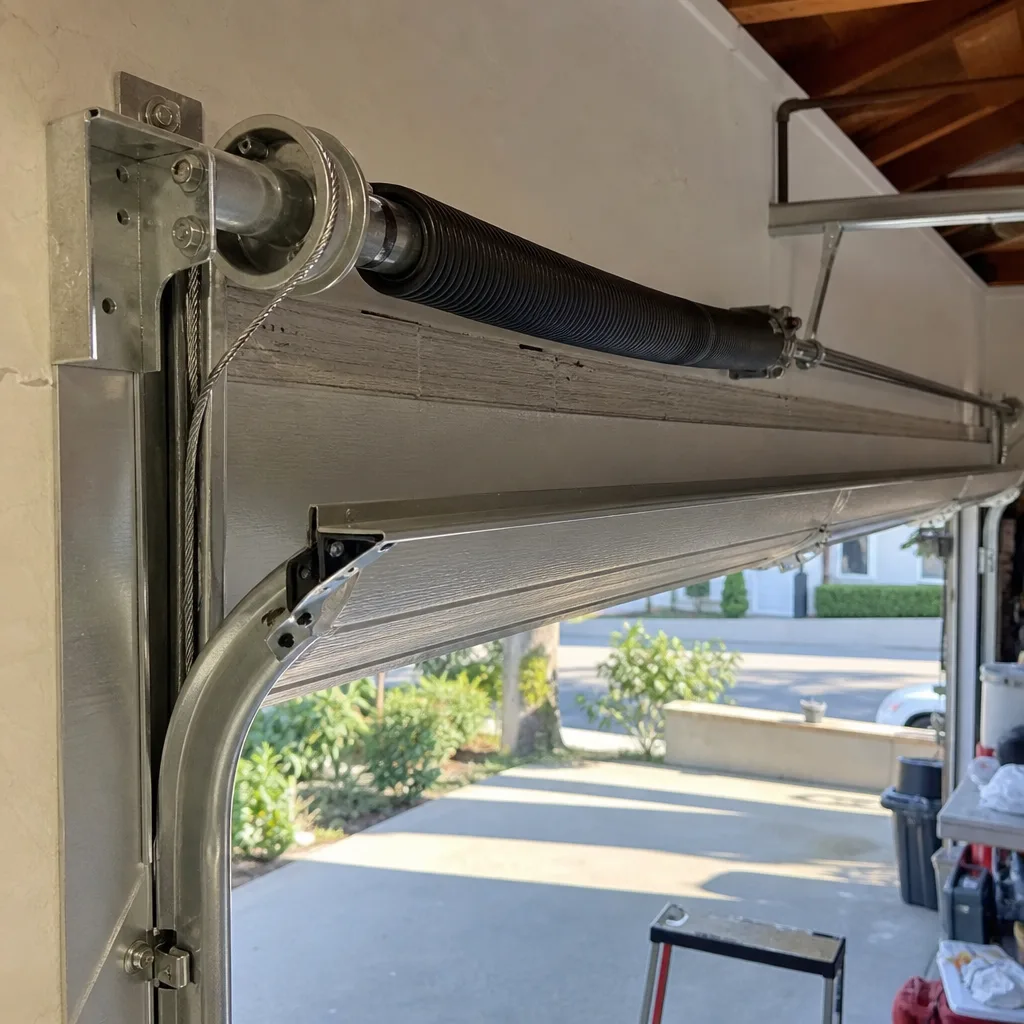 After
After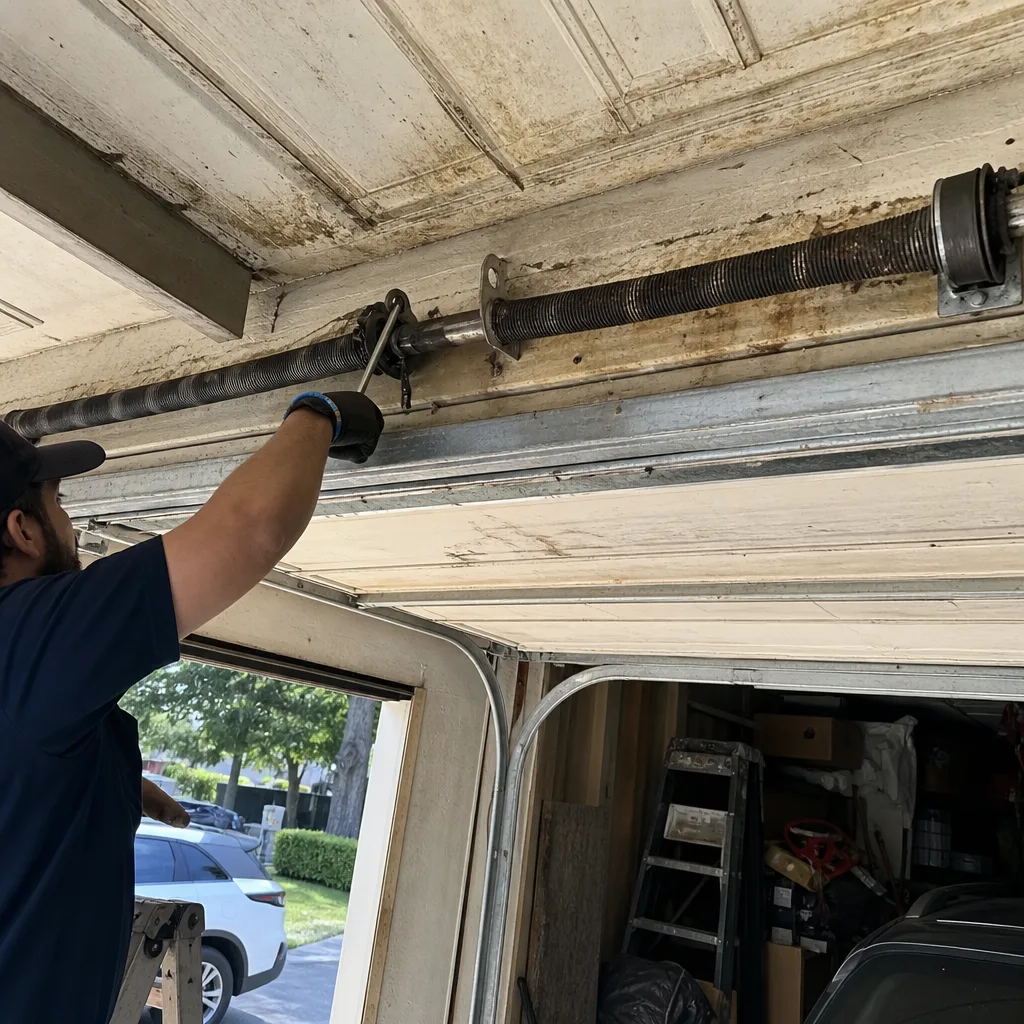 Before
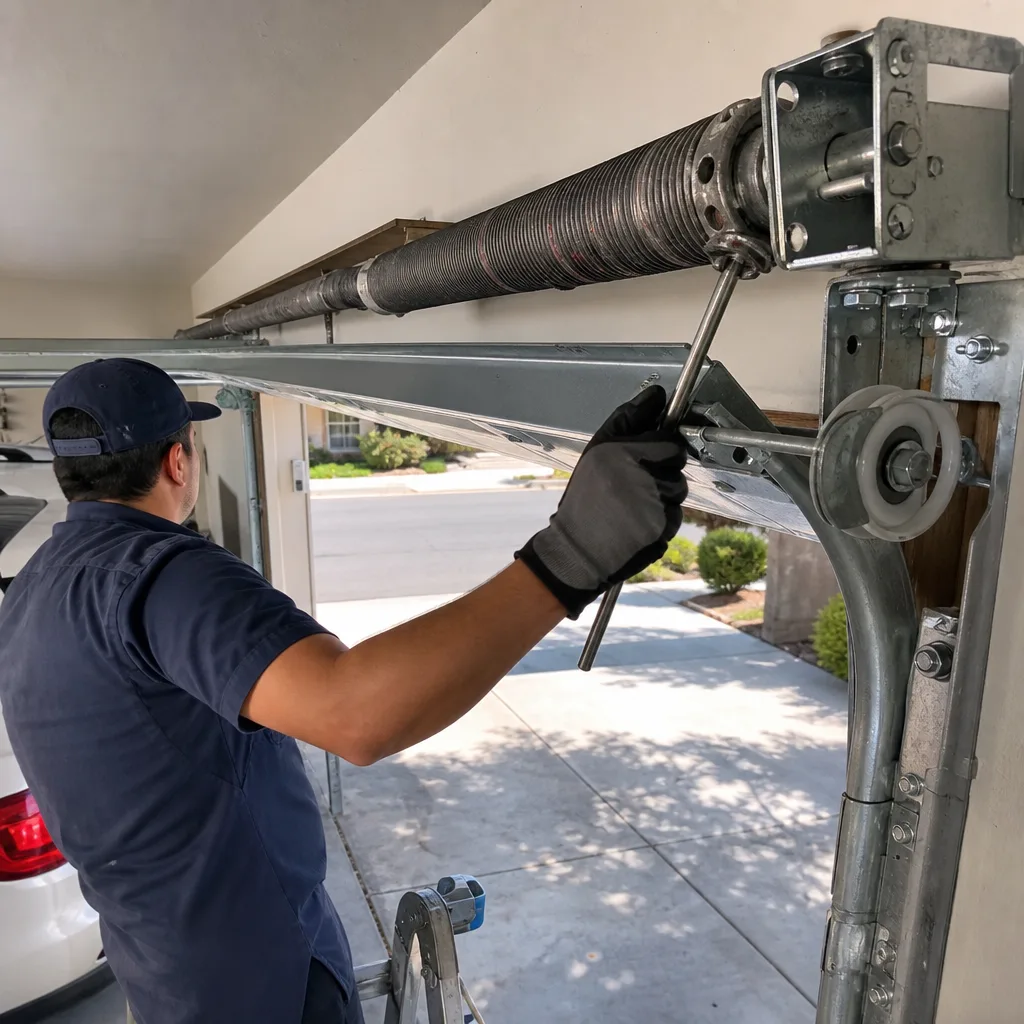 After
AfterSeasonal Garage Door Care for Tarzana: Year-Round Homeowner’s Guide
The spring that snaps in January in Tarzana usually accumulated its metal fatigue in August. Valley heat cycles compress and expand a torsion spring hundreds of additional times per year compared to a coastal climate, so the month the door fails and the month the damage happened are rarely the same. This guide maps Tarzana’s three thermal regimes - the May-to-July marine layer, the triple-digit summer, and the 40°F winter overnights - against the actual components that fail under each, and tells you what to inspect, when to inspect it, and what to leave to a professional. For DIY vs Professional Garage Door: The Tarzana Homeowner’s Decision Guide, see our dedicated breakdown.
Quick Answer
Seasonal garage door care in Tarzana means aligning your inspection routine with three local weather patterns rather than four generic seasons. In June and July, check steel components for marine-layer corrosion. In August through October, watch for heat-accelerated roller wear, seal degradation, and spring fatigue. From November through February, inspect for cold-weather stiffness and the delayed breakage of springs weakened by summer heat. Most of this is visual and takes fifteen minutes a month.
Table of Contents
- Tarzana’s Three Thermal Regimes and What They Stress
- The Month-by-Month Tarzana Care Calendar
- How Sustained Heat Above 95°F Damages Rollers and Seals
- Why the Marine Layer Corrodes Steel Faster Than You’d Expect
- The Lubricant Specification That Works Across Tarzana’s Full Temperature Range
- Spring Tension Across the Thermal Year: February Balance vs. September Drift
- What to Inspect Yourself vs. What Needs a Technician
- Common Mistakes to Avoid
- When to Call a Professional
- Frequently Asked Questions
- The Bottom Line
BeforeAfterTarzana’s Three Thermal Regimes and What They Stress
Tarzana sits far enough inland that the ocean’s moderating effect weakens, but close enough to the Sepulveda Pass that marine air still pushes through on summer mornings. The result is not four seasons but three distinct thermal patterns, each of which stresses a different set of garage door components.
The marine layer season (May through July) brings cool, moist air overnight and into mid-morning, then burns off to dry heat by early afternoon. This daily moisture cycle condenses on bare steel surfaces inside uninsulated garages. Components that stay wet for hours - hinges, track brackets, spring coils, cable windings - develop surface corrosion faster than homeowners expect in a place that averages less than fifteen inches of rain a year. It’s not the rain that rusts metal in Tarzana; it’s the morning condensation.
The high-heat season (August through mid-October) is the hardest on moving parts. Ambient temperatures above 100°F, combined with direct sun on a west-facing garage door, can push the door surface to 140°F or more. The inside surface radiates that heat into the garage cavity, where nylon rollers, rubber bottom seals, and spring steel all absorb it. Metal expands. Rubber oxidizes. Lubricants thin out and drip off. This is the season when a door that ran quietly in May starts grinding in September.
The cold-over-night season (November through February) rarely produces a true freeze in Tarzana, but overnight lows in the 40s and low 50s are common. The garage interior cools, metal contracts, and lubricants thicken. A torsion spring that accumulated micro-fractures during August’s expansion cycles now meets the added stress of a stiffer door and a denser lubricant. This, in our experience, is when most spring failures in Tarzana actually occur - not during the heat itself, but at the first sustained cold snap that follows it.
Each regime leaves a signature. Recognizing the signature tells you what to check and when.
The Month-by-Month Tarzana Care Calendar
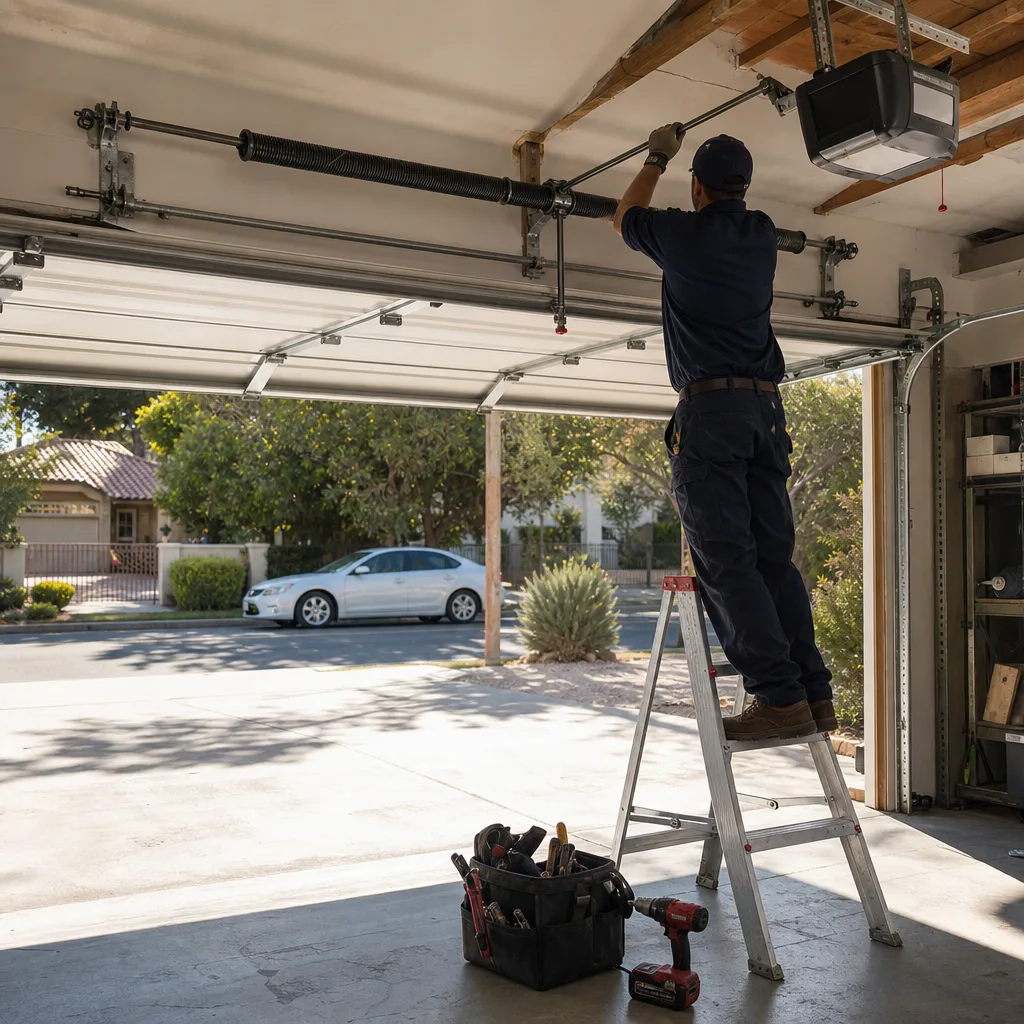
Here is a care schedule built around Tarzana’s actual weather patterns, not a generic seasonal template. Most entries take under fifteen minutes.
January
After several weeks of overnight lows in the 40s, run the door through three full open-close cycles and listen for a sharper-than-usual “bang” or “pop” at the first movement. A cold-stiffened torsion spring will sometimes bind slightly before releasing. Visually inspect both spring coils for a clean separation gap - a signature of cold-weather metal contraction finishing what summer started. Check the bottom seal by running a hand along it on a cold morning; cracked rubber is most obvious when it’s stiff.
February
Do an accurate balance test. Disconnect the opener (pull the red release handle) and lift the door manually to waist height. It should hold position without drifting. If it falls, the spring tension needs adjustment. This is the baseline month - record how the door behaves now so you have a comparison point in September.
March
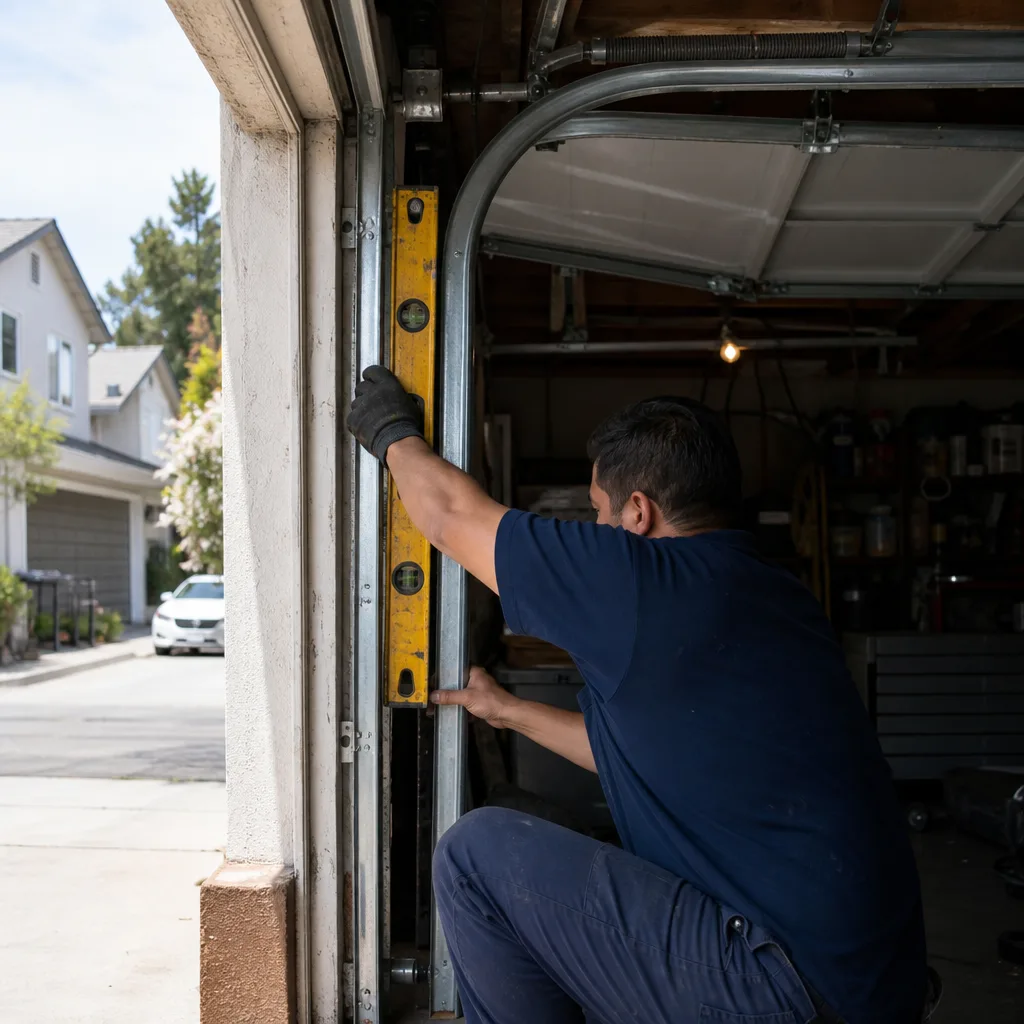
Inspect weatherstripping on all three sides of the door frame. Winter contraction followed by early warming pulls staples and loosens adhesive. Reseat anything that’s gapped. Check track bolts with a socket wrench - torque them to snug, not over-tight.
April
Wipe down the tracks and photoelectric sensors with a dry microfiber cloth. Santa Ana wind events carry fine dust into the garage, and sensor lenses pick up enough film to trigger false reversal. Do not adjust sensor alignment yourself unless you’ve done it before; that’s a quick technician call.
May
This is peak marine-layer month in Tarzana. Start the corrosion watch. Check hinges, bracket edges, and any bare-metal scratch on the door face for a fine, brownish-orange bloom. A light coat of white lithium grease on hinge pivots is the right preventive step now, not in August when the heat will just cook it off.
June
Lubricate all moving hinge points, the roller stems (not the nylon wheel surface), and the torsion spring coils. Use a silicone-based garage door lubricant - the spec that holds up across Tarzana’s temperature range. More on that below. Run the door twice after lubricating to work it into the pivots.
July
Inspect the bottom seal for early cracking and check roller wear. By July, rollers that started the year marginal are visibly chipped or flat-spotted. If you see white nylon dust accumulating on the track at floor level, plan for roller replacement before August heat makes the job more urgent and more expensive.
August
The highest-risk month. Check spring coils thoroughly for any silver line, gap, or uneven spacing between coils - the first visual sign of metal fatigue. Run the door and listen for a “gravelly” sound that indicates roller bearings are losing lubrication. Check the bottom seal again; rubber that was merely cracking in July may be crumbling by late August.
September
Repeat the February balance test and compare. If the door drifted from its baseline, the spring has lost tension - usually from heat-cycle creep, not a visible break. If drift exceeds two inches, call for a spring tension adjustment before the cold season. Also inspect opener force settings: if the door now hesitates on the way up, the motor is working harder against a door and spring combination that’s moved out of spec.
October
Inspect cables at the bottom drums and the full vertical run. Look for fraying - a few broken strands is the threshold for replacement, not for “watching it.” Cables under tension that let go can cause significant damage and injury. This is not a DIY replacement.
November
Test the auto-reverse feature. Place a 2×4 flat on the floor under the door’s path and close the door on it. If the door doesn’t reverse within two seconds of contacting the wood, call a technician. Also check the garage door opener force and limit settings, especially on older units that may have drifted over the summer.
December
Before holiday travel, do a complete visual pass: springs, cables, rollers, hinges, tracks, seal, opener. Confirm the manual release works. If anything looks marginal, address it now - the last thing you want is a door that won’t open when you’re juggling luggage and a driveway full of guests.
How Sustained Heat Above 95°F Damages Rollers and Seals
Every Tarzana homeowner has felt August heat. What most don’t realize is what that heat does to the polymer components on a garage door. Nylon rollers and rubber bottom seals are both petroleum-derived materials, and both degrade measurably faster as ambient temperature climbs.
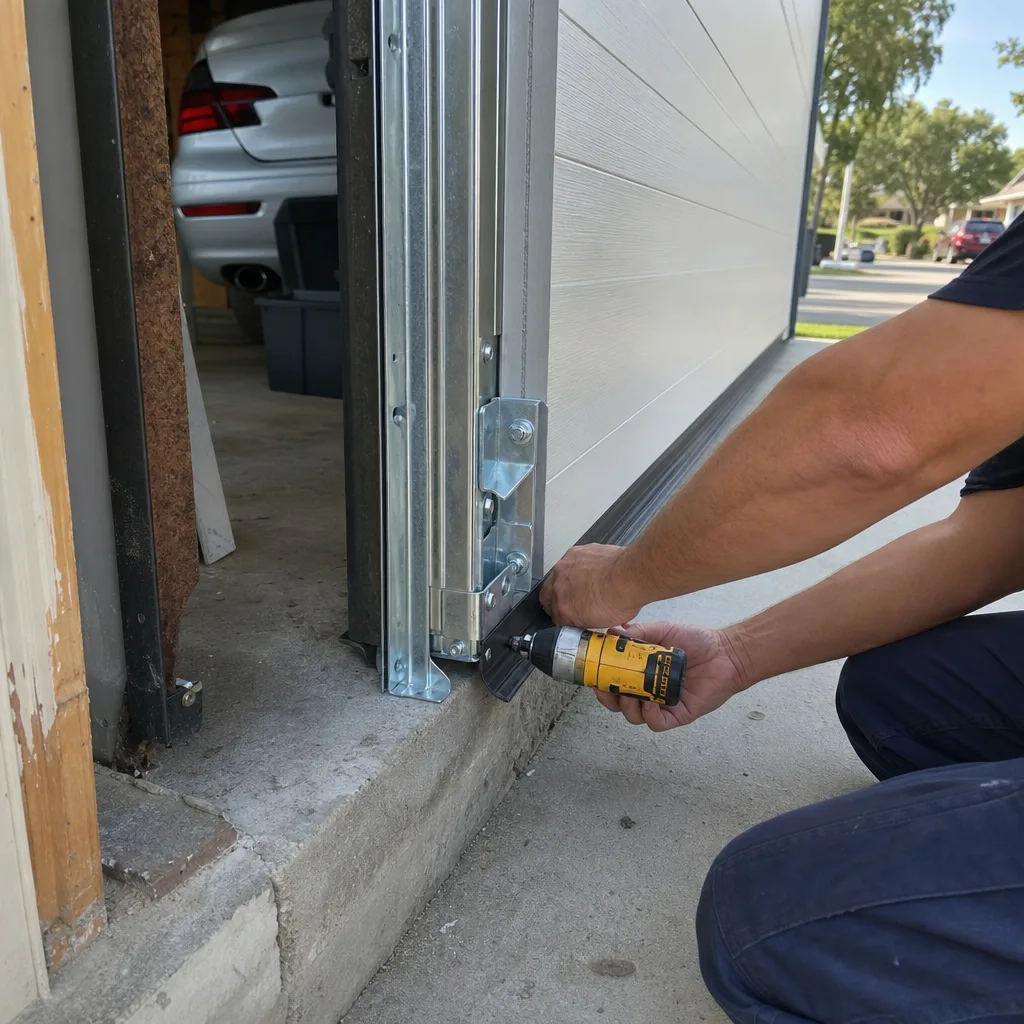
Nylon rollers are rated for continuous operating temperatures that most garage door manufacturers don’t publish prominently. In practice, a standard nylon roller exposed to sustained 95°F-plus garage temperatures - and the radiant heat from a door face that’s 130°F or higher - will start to lose its bearing lubrication. The grease inside the sealed bearing thins, works its way past the seal, and leaves the bearing running dry. A dry bearing wears the roller stem, which then wobbles, which then carves an uneven wear pattern into the track.
The inspection trigger point for Tarzana is seven consecutive days above 95°F. After a week of that, look at the bottom seal and the rollers. For the seal, check the ends first - rubber shrinks and pulls away from the door edges before it cracks in the middle. For rollers, look for white or grey powder at the bottom of the track, which is nylon dust from a roller that’s degrading. If you see the powder, don’t wait until the door starts rattling. That’s the bearing already gone.
The bottom seal’s job is to keep dust, rodents, and cold air out while keeping conditioned air in. A Tarzana garage that sits at 110°F inside during August has already lost the battle if the seal is compromised. Heat-accelerated rubber oxidation looks like fine hairline cracks, then deeper fissures, then chunks that crumble when you flex them. A seal that’s brittle in August will still be brittle in January - but now it’s also letting 40°F night air under the door.
Why the Marine Layer Corrodes Steel Faster Than You’d Expect
Tarzana’s distance from the ocean lulls homeowners into thinking corrosion isn’t a local concern. But Del at the edge of the San Fernando Valley gets a daily injection of marine air through the Sepulveda Pass during May, June, and July. That air arrives cool, saturated, and ready to condense on any surface that’s below the dew point - which is exactly what most garage metal is at 6 a.m.
Here’s the sequence. The garage interior cools overnight. The marine layer arrives before dawn. Moisture condenses on spring coils, hinge plates, track brackets, and any exposed steel. Then the marine layer burns off by mid-morning, the garage heats up, and the moisture evaporates - leaving behind whatever salts and minerals the marine air carried. Repeat daily for six to eight weeks. The result is a corrosion rate that surprises people who think of Tarzana as a desert, because the rust isn’t from rain; it’s from a daily condensation-evaporation cycle that acts like a mild salt-spray test.
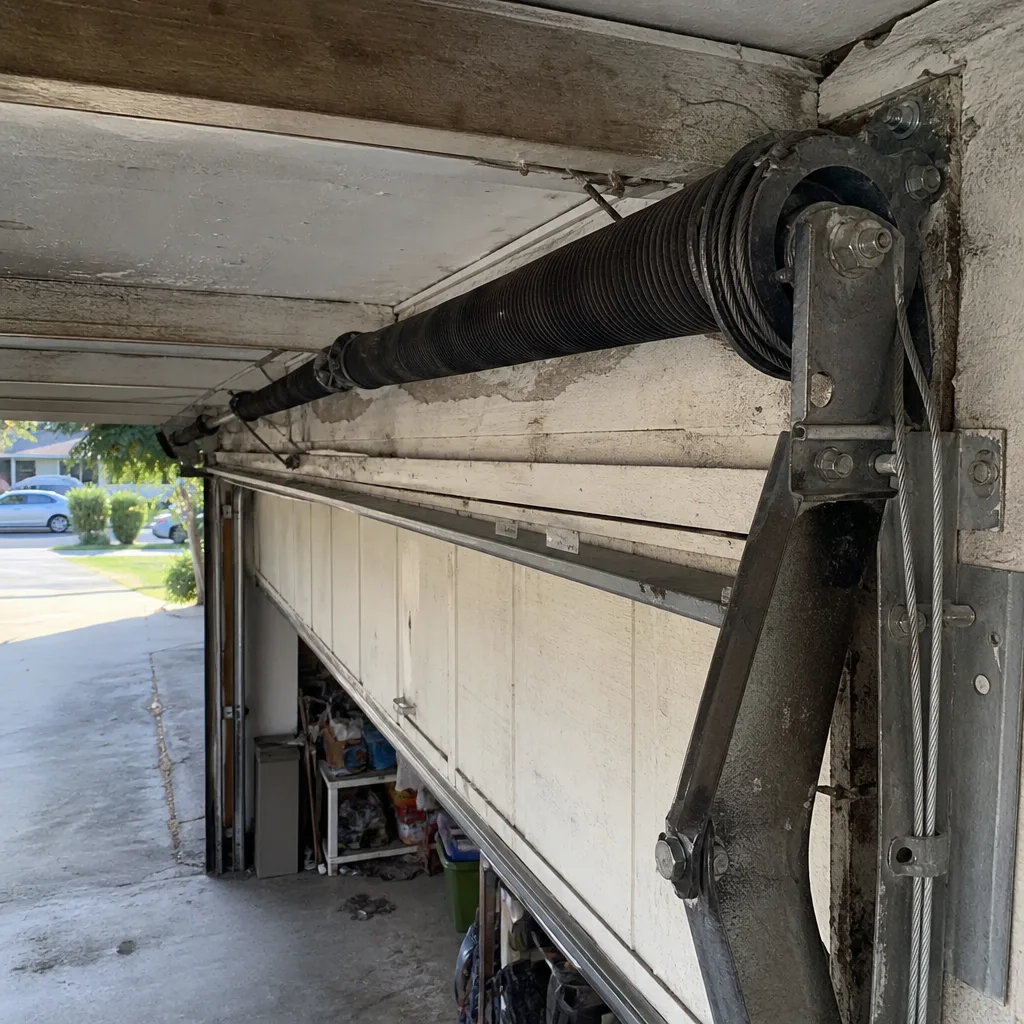
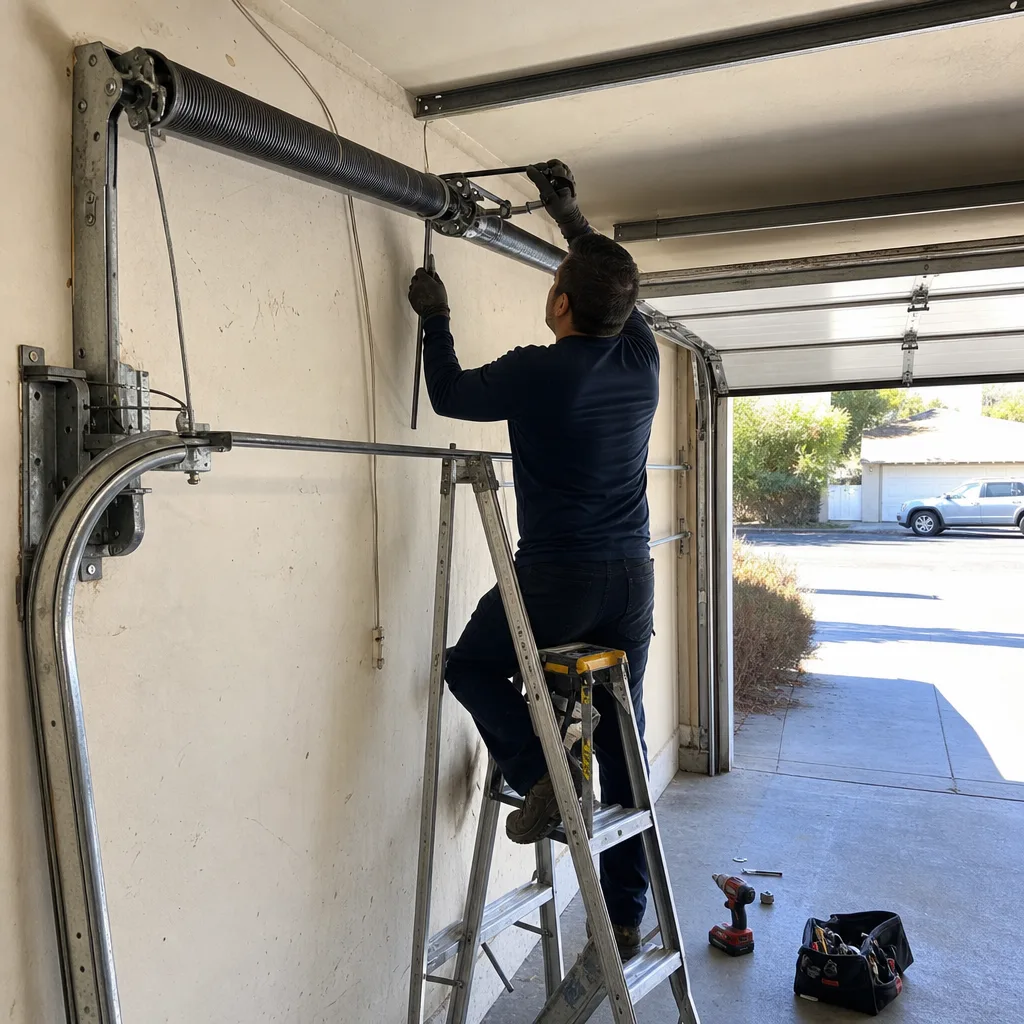
The components at highest risk are the torsion spring coils and the bottom brackets. Both are bare steel with a light factory coating that wears thin at flex points. Once surface rust forms, it creates roughness, which accelerates wear at the coil-to-coil contact points. A spring with surface rust is not necessarily close to failure, but it’s a signal that the protective coating is gone and the steel is now oxidizing.
The preventive measure is simple and low-effort. During marine-layer months, run a dry cloth over exposed steel components every couple of weeks. If you catch rust early, a light wipe of a corrosion-inhibiting lubricant on non-moving steel surfaces can slow it. Avoid spraying directly onto spring coils - the liquid attracts dust and creates a grinding paste. Instead, apply sparingly to a cloth and wipe.
The Lubricant Specification That Works Across Tarzana’s Full Temperature Range
The aerosol WD-40 approach fails in Tarzana’s summer because WD-40 is primarily a solvent and water displacer, not a long-term lubricant. It flashes off quickly in heat, and whatever’s left is too thin to protect moving parts at 110°F. What works in Tarzana is a silicone-based garage door lubricant that stays viscous across a range from roughly 30°F to 140°F.
Here’s the specification that matters:
- Silicone-based, not petroleum-based. Petroleum lubricants attract dust and grit, which turns into grinding paste on T tracks and roller stems. Silicone stays clean.
- Rated for metal-to-metal and metal-to-nylon contact. The spray selection matters less than the formulation - look for “garage door lubricant” on the label, not “multi-purpose.”
- No WD-40 on moving parts. Use it only for cleaning surface rust off non-spring steel, and even then wipe it dry afterward.
The correct application points, in order:
- Hinge pivots - one small spray at each hinge point, both sides of the door.
- Roller stems - where the nylon wheel meets the metal stem. Do not spray the wheel surface; it will collect dirt and sling lubricant onto the track.
- Torsion spring coils - a thin, even coat while the door is closed. The lubricant wicks between coils as the spring expands and contracts.
- Track interior at the curve - a light wipe, not a spray, so the rollers don’t hydroplane.
- Lock mechanisms, if present - a single small spray into the keyhole cylinder.
Lubricate twice a year in Tarzana: once in early June before the heat season begins, and once in early November before the cold season. Anything more frequent is usually overkill unless the door runs unusually often.
Spring Tension Across the Thermal Year: February Balance vs. September Drift
A common Tarzana observation: the door that balanced perfectly in February seems heavier by September, even though nothing visibly broke. The cause is thermal cycling, and it’s most pronounced on torsion springs - the thick, coiled springs mounted horizontally above the door opening that counterbalance the door’s weight.
Here’s what’s happening. Steel expands when heated. A torsion spring that runs a daily cycle of 45°F overnight lows and 110°F daytime highs experiences meaningful expansion and contraction, twice a day, for the months that define Tarzana’s weather. Steel is elastic and survives this well, but the cumulative effect is micro-creep: the spring loses a tiny fraction of its original tension with each extreme cycle. By September, after four months of high-heat cycling, the spring may have settled enough for the door to feel noticeably heavier when tested manually.
This is different from a broken spring. A broken spring snaps loudly, shows a visible separation gap, and the door will not open without assistance. A thermally settled spring is intact but under-tensioned. The test is the same as the February baseline: disconnect the opener, lift the door to waist height, and release. If it drops more than two inches faster than it did in February, the spring has lost tension.
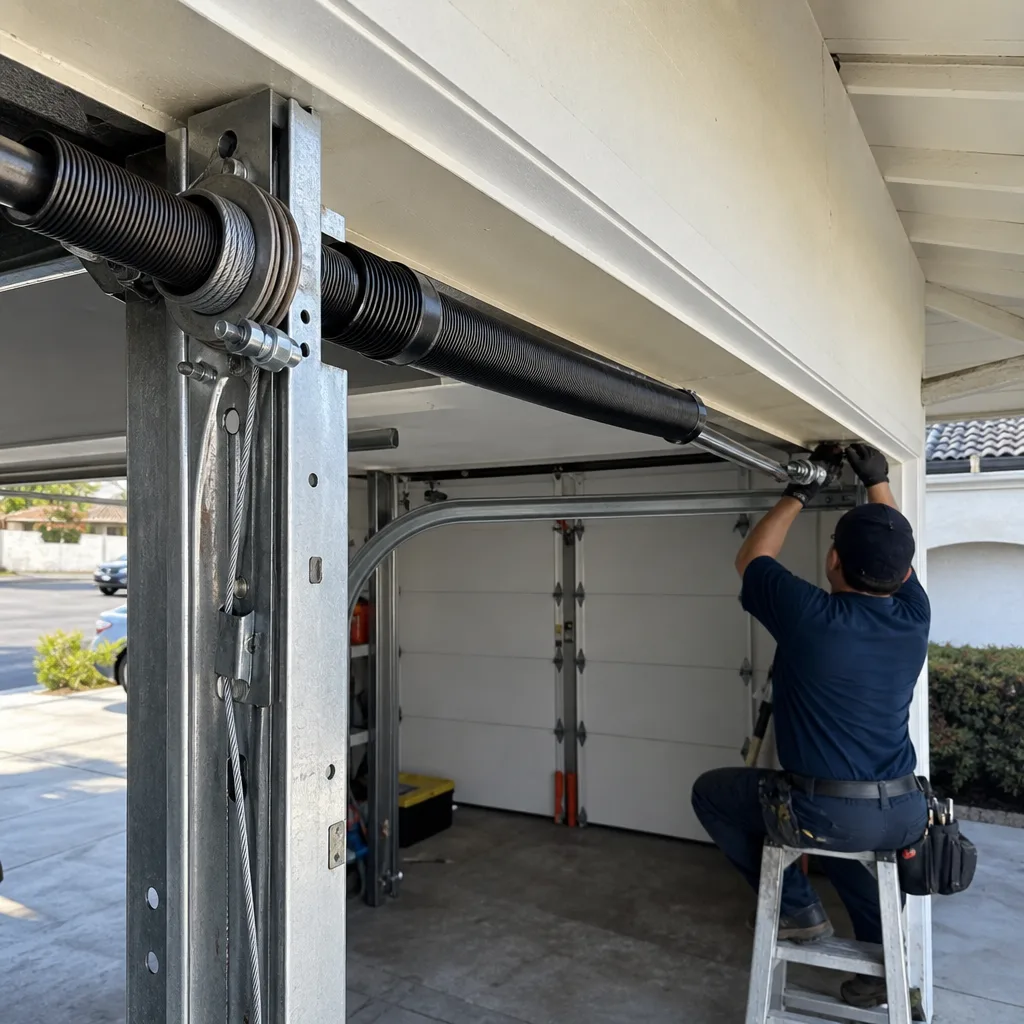
The fix is a tension adjustment - a half-turn or full-turn addition to the spring winding. This is a two-minute job for a technician who owns the right winding bars, and a genuinely dangerous job for anyone who doesn’t. Torsion springs store enough energy to cause serious injury or death when mishandled. That’s not exaggeration; it’s the same reason garage door repair in Tarzana almost always routes spring work to a professional.
If the door balances fine in February and feels normal in September, continue your maintenance routine. If you notice drift, note it and call. A spring adjustment in September costs far less than a broken spring replacement in January.
What to Inspect Yourself vs. What Needs a Technician
Much of seasonal care is visual and hands-off. Some of it is genuinely hazardous. Browse more guides & resources for year-round maintenance help.
Safe for a homeowner:
- Visual inspection of springs, cables, rollers, tracks, and seals
- Balance testing with the door in manual mode
- Lubricating hinges, roller stems, and springs with a silicone-based lubricant
- Cleaning track surfaces and photoelectric sensor lenses
- Tightening track bolts with a hand socket wrench
- Checking and replacing the bottom weather seal (a slide-in replacement for most standard doors)
- Testing auto-reverse with a 2×4
Leave to a technician:
- Spring tension adjustment or replacement - torsion springs are under high tension even when the door is closed
- Cable inspection, adjustment, or replacement - cables carry the same load as springs
- Track realignment - a misaligned track can throw the door off its rollers, and the door weighs 150 to 300 pounds
- Opener force and limit settings on newer units with DC motors and electronic controls
- Any repair to a door with a broken spring - never attempt to lift the door manually with a broken spring unless you’ve released the opener and removed the load
Our rule at Servo Garage Doors Tarzana is simple: if the component stores or carries tension, a professional handles it. If it’s a visual check, a wipe, or a spray, the homeowner can do it. That division keeps people safe and keeps small problems from turning into full garage door installation projects.
Common Mistakes to Avoid
- Treating the garage door as a set-it-and-forget-it system. A door that opens and closes twice a day runs more than 700 cycles a year in Tarzana heat, and the components that fail are always the ones nobody’s looked at in three years.
- Using WD-40 as a lubricant. It’s a cleaner and water displacer, not a lasting lubricant, and it evaporates fast in Tarzana’s summer. Silicone-based garage door lubricant is the standard.
- Ignoring a slightly off-balance door. A door that drifts by an inch in February may drift by four by September, and the opener motor now strains against a spring that isn’t doing its job. That strain shortens the opener’s life - and the replacement cost exceeds a spring adjustment.
- Assuming no rain means no corrosion. Tarzana’s marine layer season produces daily condensation on steel components from May through July. Surface rust forms without a single raindrop.
- Tightening track bolts to “extra snug.” Overtightening deforms the track and creates a pinch point for the rollers. Snug with a hand tool is correct.
- Ignoring nylon dust at the bottom of the track. That dust means a roller bearing is already dry and degrading. Waiting until the door rattles means the roller has failed and the track may now be chewed.
- Attempting a spring adjustment with improvised tools. The winding bars are not optional equipment. A screwdriver or allen key in a spring winding cone is a serious injury waiting to happen.
When to Call a Professional
Call a technician when the spring shows any visible separation gap, when the door won’t stay up in manual mode, when you see fraying on the cables, when the rollers are chipping or flat-spotted, when the auto-reverse fails the 2×4 test, or when the door makes a sharp metallic sound during operation that it didn’t make before. These are not conditions that resolve themselves. Servo Garage Doors Tarzana offers free estimates in Tarzana - call (424) 372-1317. Every visit closes with a documented photo record of what was found and what was done, so you see the same evidence the technician saw.
Frequently Asked Questions
Twice a year: once in early June and once in early November. Tarzana’s summer heat thins lubricants, and the winter cold thickens them. A silicone-based garage door lubricant holds up across the full temperature range.
Yes. The marine layer from May through July creates a daily condensation-evaporation cycle on exposed steel that accelerates surface corrosion, even in a climate with minimal rainfall. Check hinges, spring coils, and track brackets for rust bloom during those months.
For a standard single-door torsion spring replacement in Tarzana, expect a typical range of $250 to $450, including parts and labor. See our Garage Door Cost Breakdown: The Tarzana Homeowner’s Reference for 2026 for detailed pricing factors. The exact price depends on spring wire size, door weight, and whether one or both springs are replaced. Call (424) 372-1317 for a flat, written quote before any work starts.
No. Torsion springs operate under extreme tension and require dedicated winding bars and specific training to adjust safely. A mismanaged spring can cause serious injury. Call a professional for any spring work.
Standard nylon rollers typically last seven to ten years in Tarzana’s climate. Sustained heat above 95°F accelerates bearing lubrication loss, so rollers may fail sooner - especially on west-facing doors exposed to afternoon sun. White nylon dust at the bottom of the track is an early warning sign.
Thermal cycling through Tarzana’s summer causes torsion springs to lose a small amount of tension, even without a visible break. A spring that was balanced in February may be under-tensioned by September. If the door drifts more than two inches in a manual balance test, call for a spring tension adjustment.
The Bottom Line
Tarzana doesn’t punish garage doors with snow and ice; it punishes them with heat cycles, marine-layer condensation, and the thermal whiplash between 110°F days and 40°F nights. The maintenance rhythm that works here is not seasonal in the traditional sense - it’s thermal. Inspect steel for corrosion in May through July, check rollers and seals after the first sustained heat wave, test spring balance in February and again in September, and lubricate with the right specification twice a year. Fifteen minutes a month keeps a garage door running quietly through every thermal regime Tarzana throws at it.
Written by Marcus Deller, Owner at Servo Garage Doors Tarzana, serving Tarzana since 2015.