
Last updated September 20, 2026
Full 25-point door and opener safety check with every visit - springs, cables, rollers, tracks, and your LiftMaster or Chamberlain opener included
You get a price before we start. It does not change when the truck arrives.
 Before
 After
After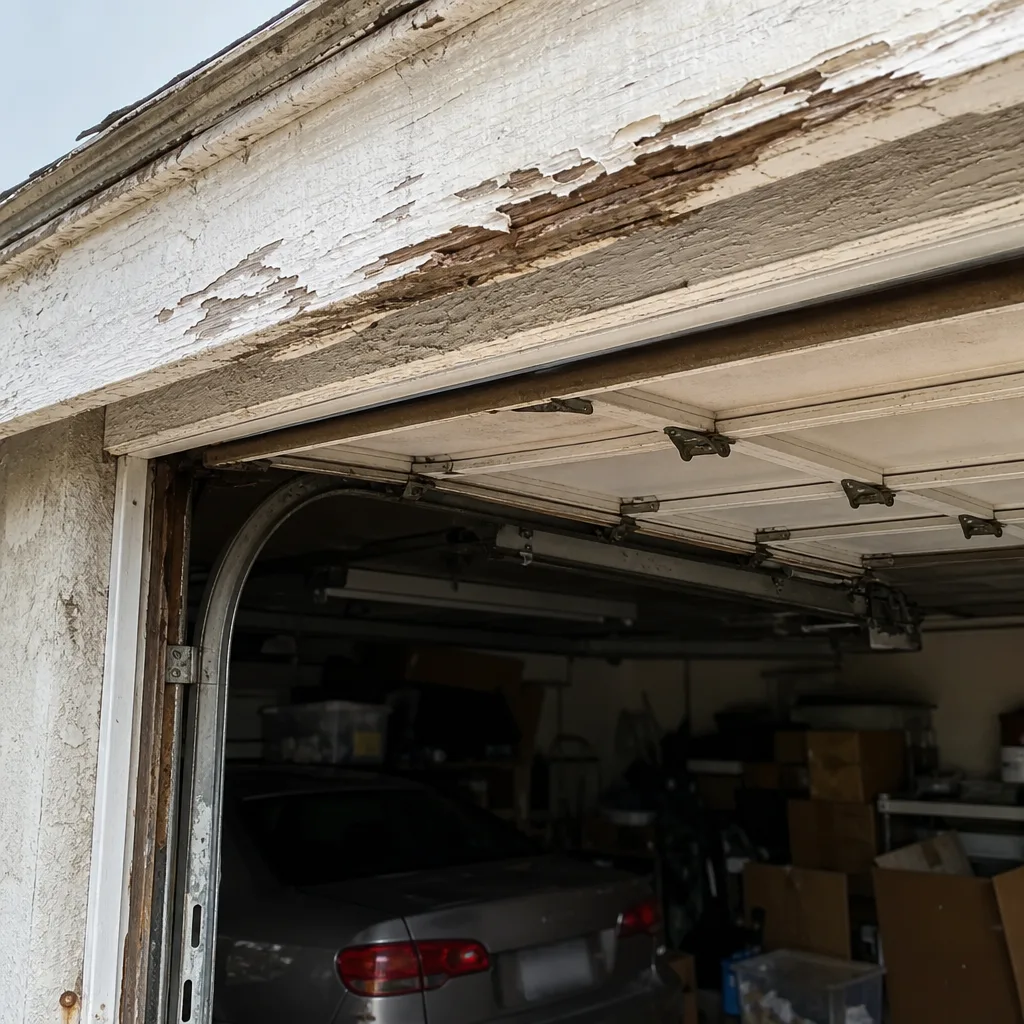 Before
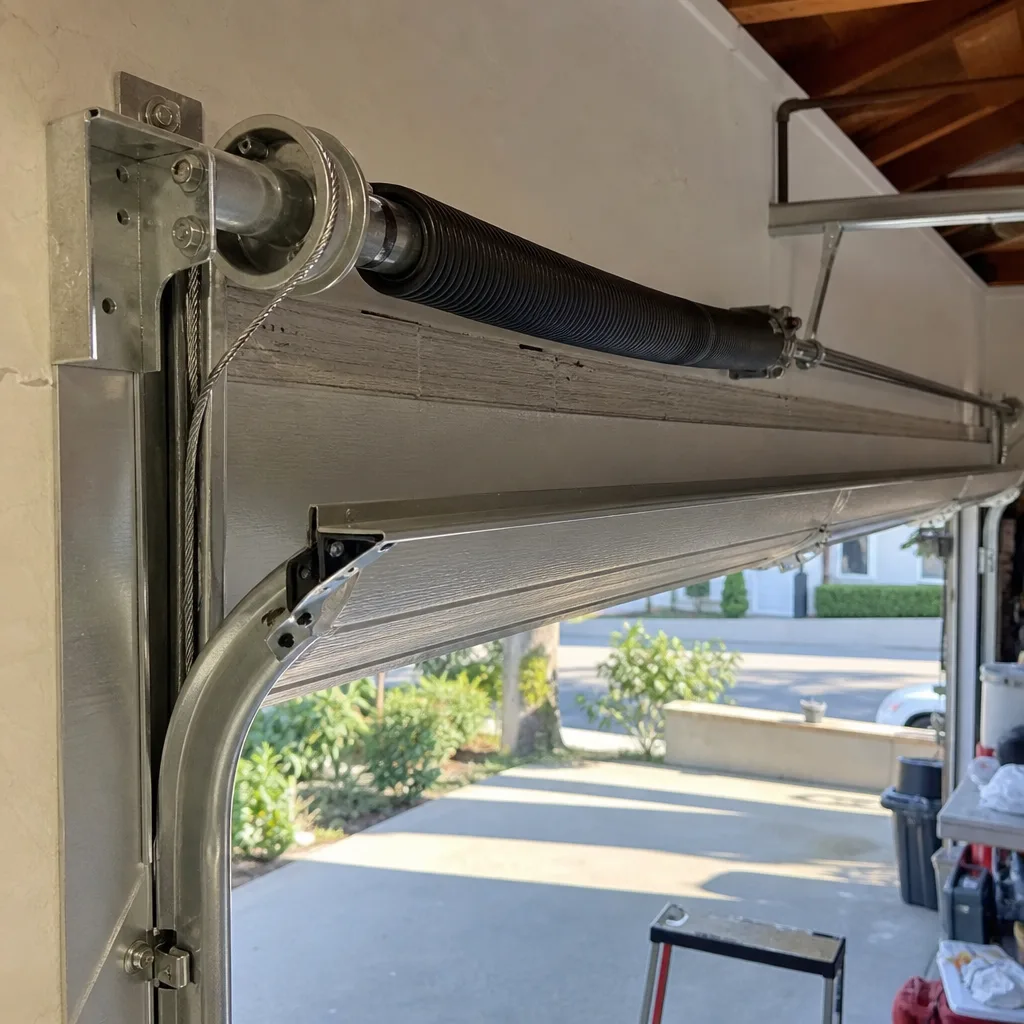 After
After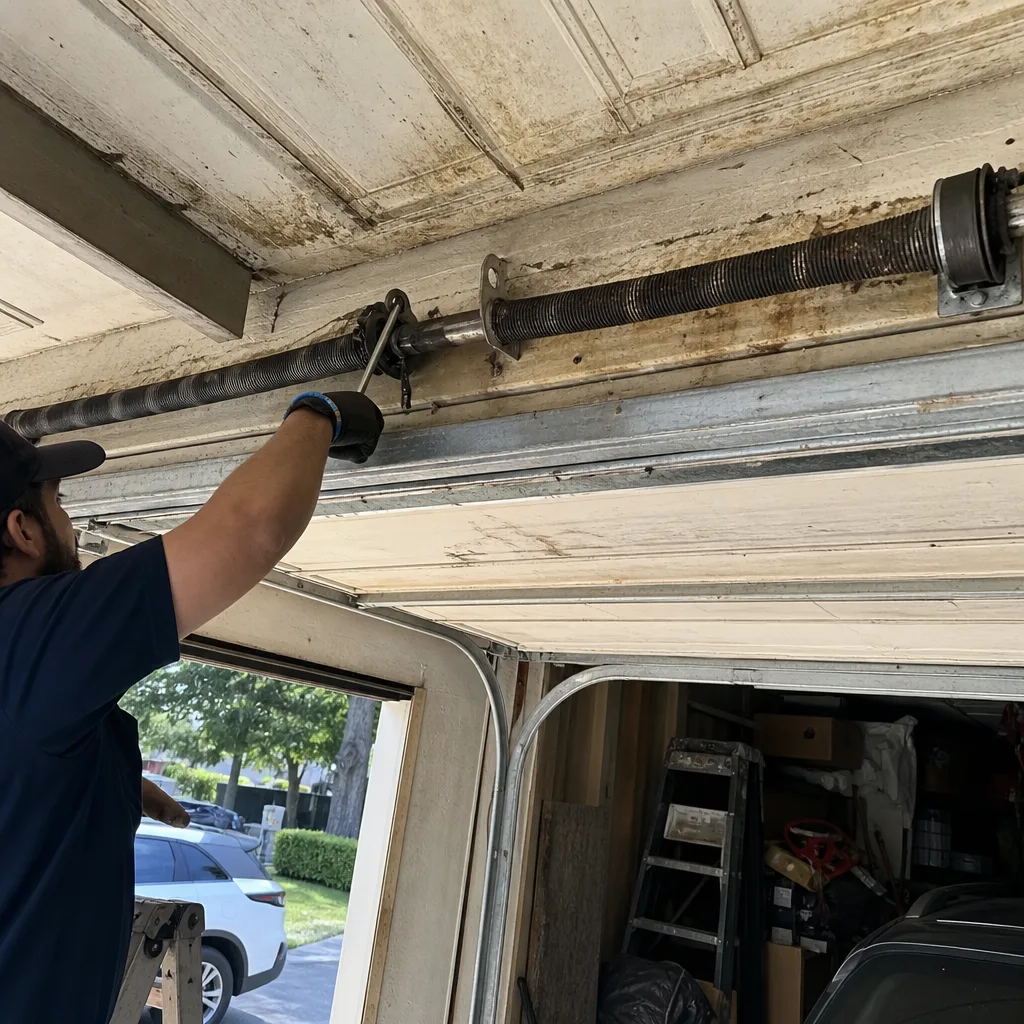 Before
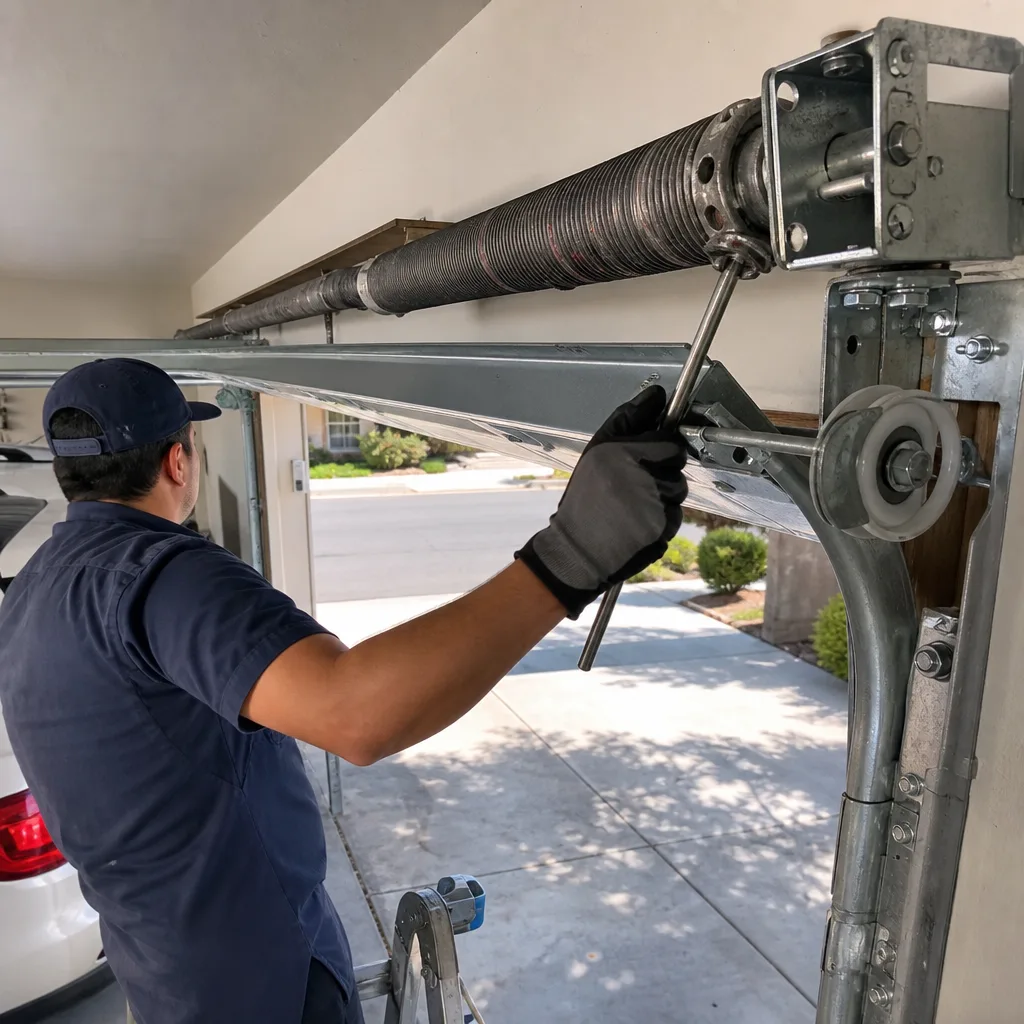 After
AfterGarage Door Warning Signs: A Tarzana Homeowner’s Reference Guide
Most garage door problems are described by the symptom: “it’s making a noise,” “it’s slow,” “it reversed.” But a noise is not a diagnosis, and a slowdown is not a part number. The same grinding sound can come from three different components, and treating the wrong one doesn’t just waste money, it lets the real failure progress until the door stops moving entirely. This guide-along with our Complete Guide to Garage Door in Tarzana-maps what you observe from your driveway to the component actually failing, so you can describe the problem precisely, decide whether it’s urgent or monitor-and-schedule, and know what a fair repair costs before you pick up the phone.
Quick Answer
A garage door needs attention when it makes a new sound (grinding, popping, slapping, squealing), moves unevenly, reverses without an obvious reason, or takes noticeably longer to open than it did six months ago. In Tarzana, where summer heat accelerates spring fatigue and winter Santa Ana winds stress track hardware, the most common culprits are torsion springs (average repair $180-$340), track misalignment ($125-$250), and opener force/limit issues ($90-$200). Three signs justify same-week service: a visible gap in a torsion spring wider than a quarter-inch, cable strands separating, or a door that reverses inconsistently. Everything else can typically wait a few days if you document what you’re seeing.
Table of Contents
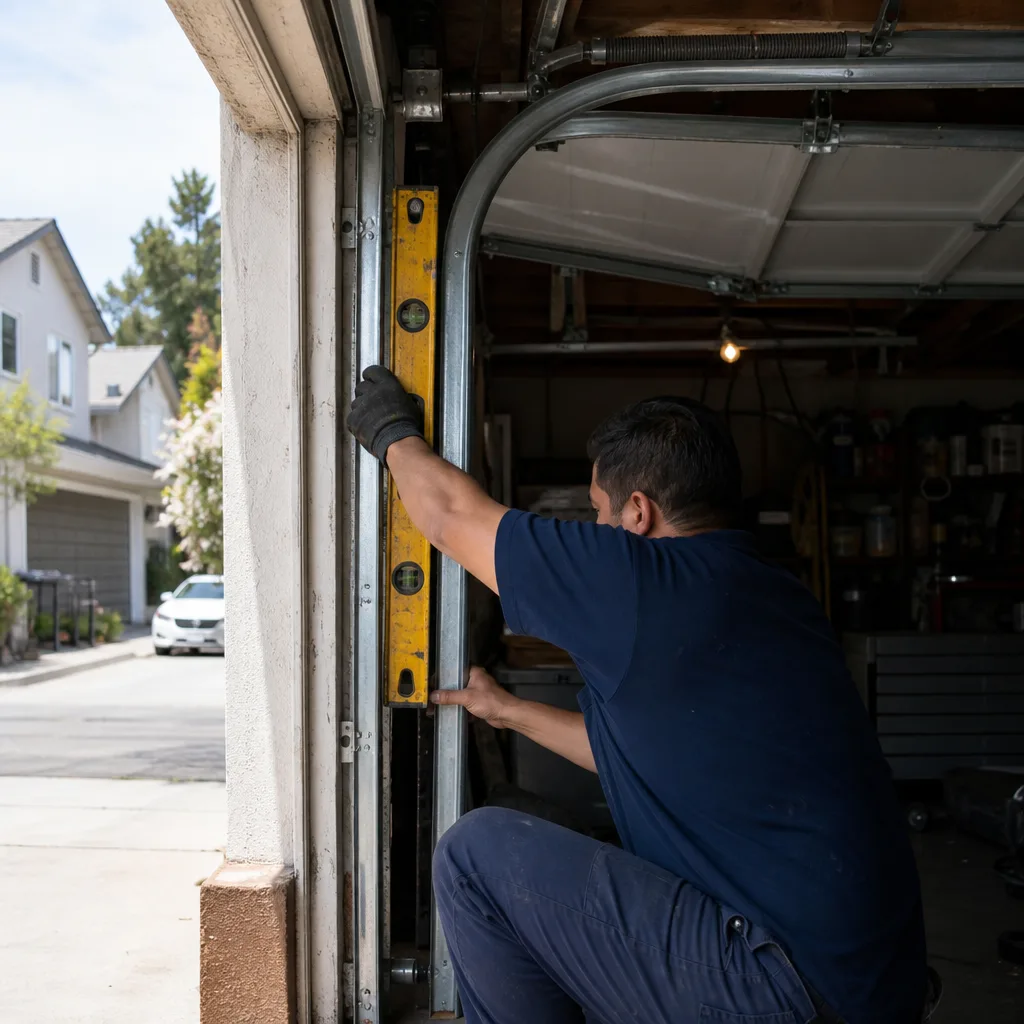
- The Symptom-to-Component Map: What That Sound Actually Means
- Spring, Track, or Opener: Three Problems That Look Identical
- Five Signs That Need Same-Week Service vs. Monitor-and-Schedule
- Why a “Working” Door That’s Slower Is a Load-Measurement Problem
- How to Document a Warning Sign Before You Call
- Tarzana-Specific Factors That Accelerate Warning Signs
- What These Repairs Cost in Tarzana
- Common Mistakes to Avoid
- When to Call a Professional
- Frequently Asked Questions
- The Bottom Line
BeforeAfterThe Symptom-to-Component Map: What That Sound Actually Means
A door that reverses before it closes is almost always described as “the sensor acting up.” In about 60% of the cases we see in Tarzana, the sensor is functioning correctly, it’s detecting an actual obstruction created by a bent track section. Cleaning the sensor eye solves nothing because the problem was never the eye. This is the core reason warning signs get misread: homeowners name the behavior they observe rather than the component that’s failing, and a symptom-based description gets a symptom-based fix instead of a root-cause repair.
Here is what specific sounds and behaviors actually indicate. These ranges reflect what we currently see across Tarzana, Encino, Woodland Hills, and Reseda.
Grinding or metal-on-metal scraping
Almost always a roller issue: the nylon bearing inside the roller has worn through, or the roller itself is seized and sliding along the track instead of rolling. In Tarzana’s dry summers, roller lubrication breaks down faster than in coastal communities, and the fine dust that settles in garages accelerates wear. Typical repair: $95-$160 for a full roller replacement on a double door. If left alone, a seized roller will eventually carve a groove into the track, and then the track needs replacement too, which pushes the job into the $250-$400 range.
Popping or snapping during operation
This is a torsion spring symptom. As a spring fatigues, individual coils bind and release against each other, producing a sharp pop. A single pop is not necessarily urgent. Repeated popping across multiple cycles, especially combined with a door that feels heavier, is a spring approaching end of life. In Tarzana’s heat, springs rated for 10,000 cycles often fail closer to 7,000-8,000 because thermal expansion and contraction accelerate metal fatigue. Expect $180-$340 for torsion spring replacement on a standard 16×7 door, including two springs (both should always be replaced together, even if only one is broken).
Slapping or banging when the door reaches the top or bottom
This is an opener limit-setting problem. The opener is traveling too far in one direction, driving the door hard into the header or slamming it into the ground. It’s often dismissed as “normal” because it’s been happening for years, but every hard stop stresses the J-arm bracket, the top panel, and the opener’s gear assembly. The fix is usually a 20-minute limit adjustment: $80-$120 if that’s the only issue.
Squealing
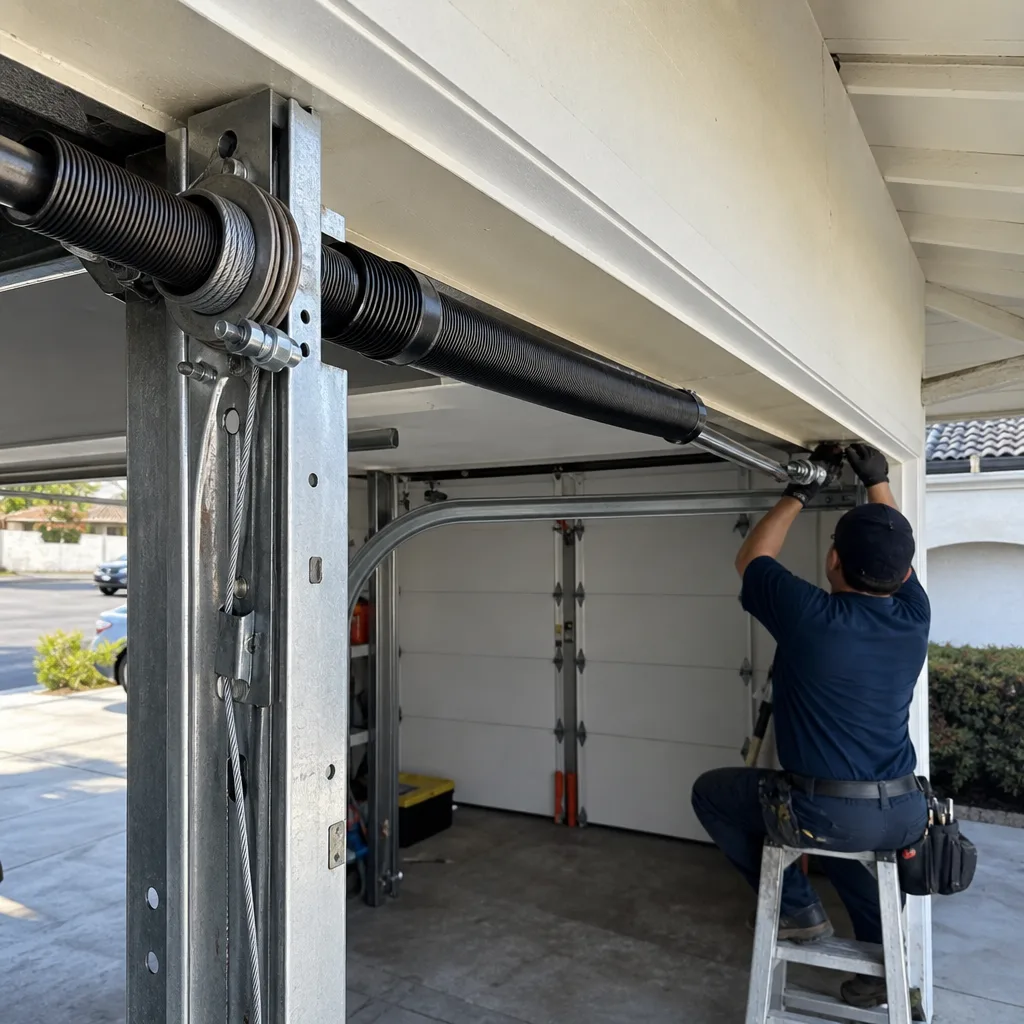
Lubrication is the first suspect, but a persistent squeal after lubricating points to a worn bearing plate or a dry torsion tube. The difference matters: a shot of white lithium grease on the rollers costs nothing, but if the squeal originates at the center bearing or end bearings, the spring assembly must be de-tensioned to replace them. That’s a professional job with a safety component. We’ve responded to homeowners in Tarzana who attempted spring work themselves and ended up with a worse problem than they started with, including a door stuck half-open and a torsion tube scored beyond reuse.
Shuddering or vibration in the horizontal tracks
This is usually a loose track bolt or a worn roller stem, and it’s one of the most ignored warning signs because the door still opens and closes. The vibration transfers through the track mounting brackets into the ceiling framing, and over months it enlarges the bolt holes. Eventually the track shifts while the door is mid-travel, and the door jams. Tightening bolts and replacing the affected rollers typically runs $100-$180.
Spring, Track, or Opener: Three Problems That Look Identical
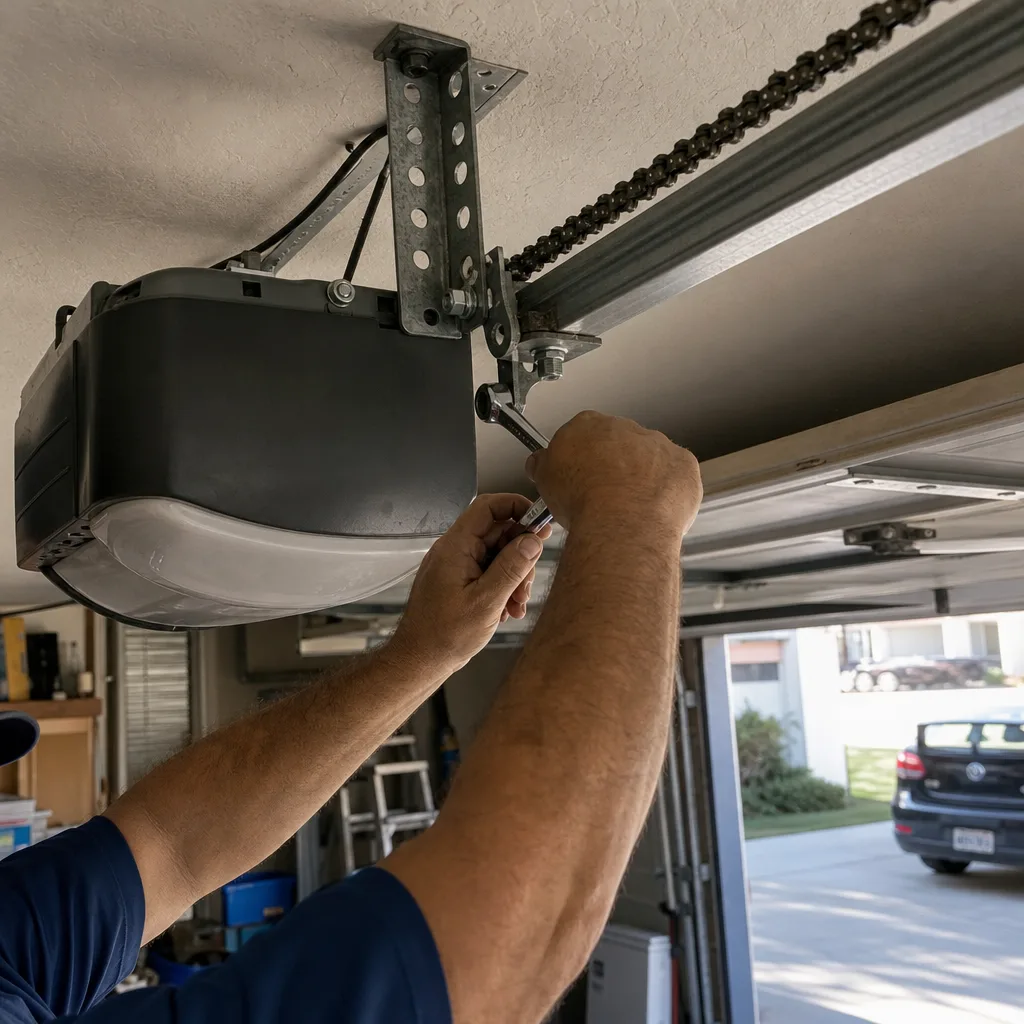
From the driveway, a spring-balance problem, a track-alignment problem, and an opener-force problem all present the same way: the door moves slowly, hesitates, or reverses. But the repairs are completely different, and so are the price tags. Here’s how to tell them apart with a simple test sequence.
Step 1: Pull the manual release handle
Disengage the opener by pulling the red cord hanging from the trolley. Now try to lift the door by hand. A properly balanced door should lift smoothly with roughly 10-15 pounds of effort and stay in place when you let go at chest height.
If the door feels heavy and drops when released: you have a spring problem. The springs are no longer counterbalancing the door’s weight. This is the most urgent finding because the opener is now lifting the full 150-200 pound door by itself, which will destroy the opener’s gear assembly, typically within 200-400 cycles. Continuing to use the door is the most expensive mistake you can make.
If the door binds or catches at a specific point mid-travel: you have a track or roller problem, not a spring problem. The spring is fine. The door is encountering physical resistance at one spot, usually where the vertical track meets the horizontal radius, or where a section has shifted out of alignment. You can often see a scuff mark or bright metal wear at the exact point of contact.
If the door moves freely by hand but struggles under opener power: the problem is the opener itself, specifically the force settings, the motor capacitor, or the gear/sprocket assembly. When an opener’s force threshold has been set too low, it reverses because it interprets normal door weight as an obstruction. When the capacitor is failing, the motor can’t reach full torque. Both are opener repairs, not door repairs.
Step 2: Watch the gap between spring coils
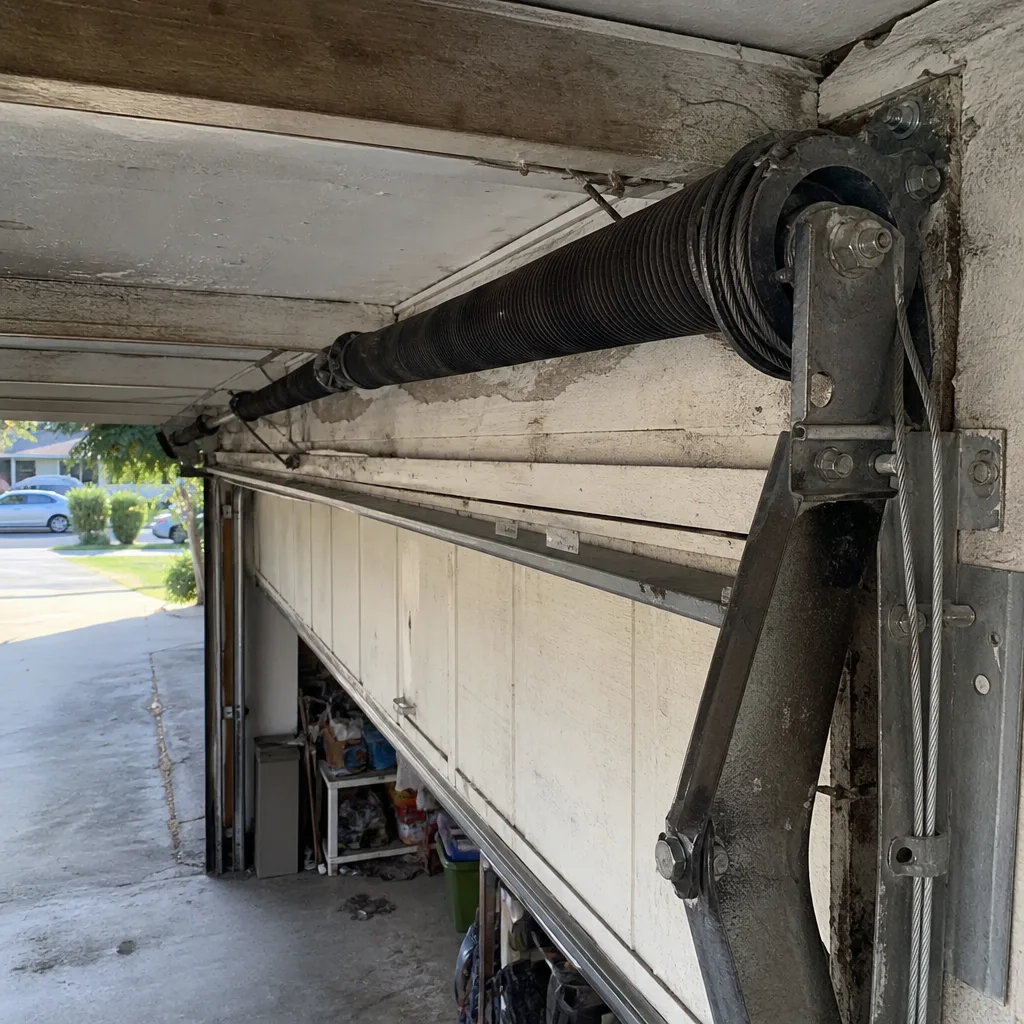
With the door closed, inspect the torsion spring above the center of the opening. A healthy spring under tension shows even gaps between coils. A spring showing an obvious open gap, wider than a quarter-inch at any point, is either broken or has lost temper. This is a same-week repair. When torsion springs break in Tarzana, it’s frequently the one nearest the center bearing plate because that’s where heat concentration and torque stress are highest.
Step 3: Check track alignment visually
Stand inside the garage and sight down each vertical track. The gap between the track edge and the door edge should be consistent top to bottom. If the door edge sits closer to the track at one end than the other, or if you see fresh metal wear on one track face, the track has moved. The fix is realignment and re-torquing the mounting bolts, sometimes with a small track splice if the section is worn. This is not a DIY job in most cases because the bottom track brackets carry significant load when the door is in the open position.
In our experience across Tarzana’s older garage stock (much of it built between the late 1960s and the 1980s), track problems are more common than spring problems in homes on the southern and western edges of the neighborhood. The soil movement in those areas shifts door frames, and the track follows the frame.
Five Signs That Need Same-Week Service vs. Monitor-and-Schedule
Not every warning sign is an emergency. Some can be watched. Others cannot. Here’s the distinction, based on what we tell homeowners when they call our garage door repair in Tarzana line.
Same-week service: five signs that justify immediate scheduling
- A visible gap in a torsion spring wider than a quarter-inch. The spring has failed or is failing. When it goes completely, the door becomes unmovable and the opener risks damage.
- Cable strands separating or a cable that’s no longer seated in its drum groove. The cable is the only thing holding the door’s weight path in line. A cable that lets go while the door is moving becomes a projectile hazard.
- A door that reverses inconsistently. If it closes fine four times and reverses on the fifth, something is changing between cycles: a worn gear, a fluctuating force reading, or a track section shifting. Problem is, you won’t know which, and the next cycle could be the one that jams the door open.
- A door that visibly shifts left or right during travel. This indicates a track or hinge failure that will only worsen under load. A door that comes off its track rarely does so without warning, the warning is the shift.
- A loud bang followed by a door that’s suddenly unbalanced. The spring broke. The bang is the sound of stored energy releasing. The door may still open under opener power, but every cycle from this point forward is causing secondary damage.
Monitor-and-schedule: signs that can wait a few days, not a few months
- A persistent squeal that doesn’t resolve with lubrication: bearing wear, schedule within two weeks.
- A roller that wobbles as it passes a specific track point: roller stem fatigue, schedule within a month.
- A door that’s slightly noisier than it was a year ago but still moves smoothly: normal component aging, schedule a maintenance check when convenient.
- A slight gap developing at one corner of the door when closed: hinge or weather-seal wear, not urgent unless the gap exceeds half an inch.
- An opener that occasionally requires a second button press to start: possible logic board fatigue, monitor for two weeks and call if it worsens.
The rule of thumb: if the symptom involves the spring, the cable, or the door’s physical attachment to the track, it’s same-week. If it involves noise only, or a slow change in operation quality, you have time to schedule wisely.
Why a “Working” Door That’s Slower Is a Load-Measurement Problem
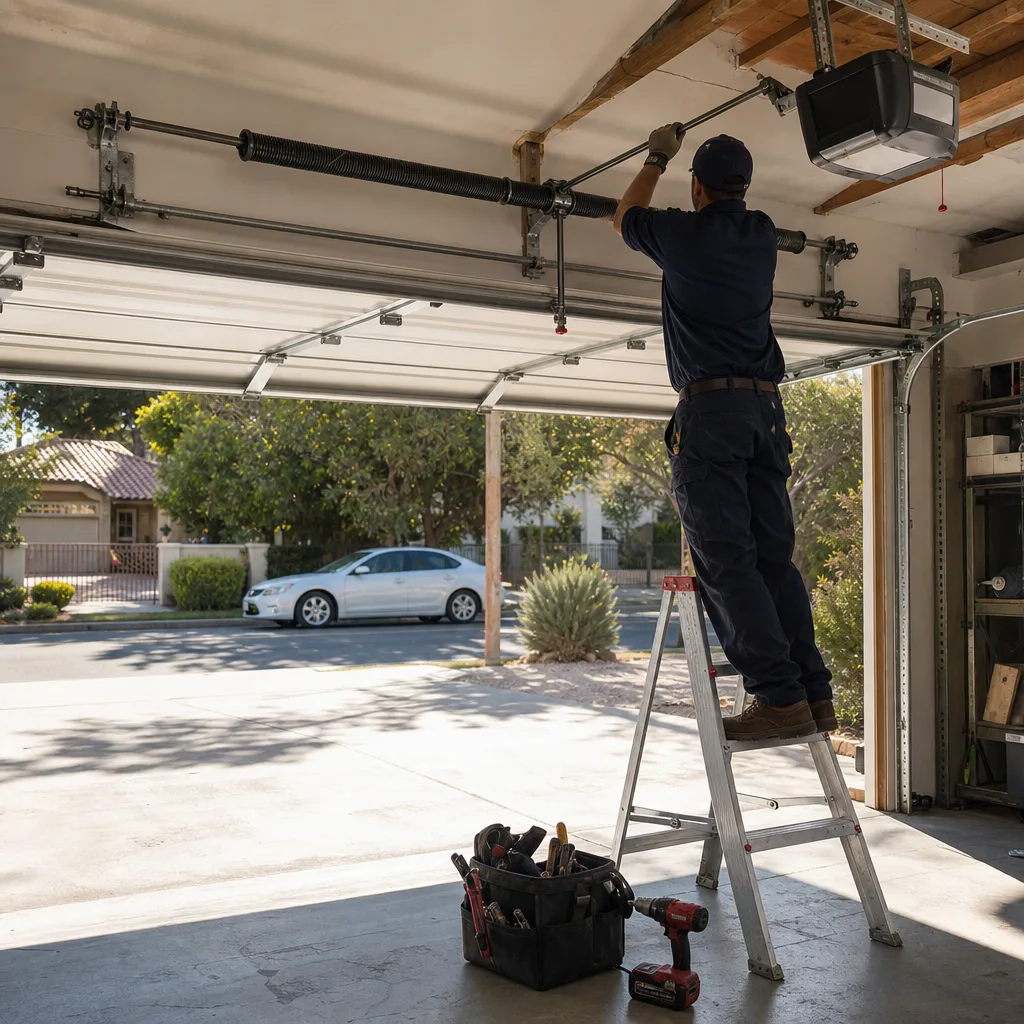
Homeowners routinely dismiss a door that takes four seconds longer to open than it used to. “It works fine,” they say. But an opener motor has a finite torque output, and the speed at which it moves the door is a direct readout of how hard it’s working. When a door that opened in 8 seconds begins taking 12, the opener is working 50% harder to move the same mass. That extra load is coming from somewhere: a weakening spring, a dry roller bearing, a hinge that’s beginning to bind. The door isn’t slower because the opener is tired. The door is slower because something else has changed.
There’s a specific diagnostic step for this, and it’s the one we perform on every single Servo Garage Doors Tarzana home service call: pull the manual release and weigh the door. A technician can feel the difference between a 15-pound balanced door and a 40-pound heavy door in about two seconds. That measurement alone tells us whether we’re looking at a spring problem before we’ve touched a single bolt. You can perform the same test yourself, and it’s the single most useful piece of information you can give a technician over the phone.
If you can lift the door with one hand and it stays up, the spring is fine and we look elsewhere. If you struggle to lift it or it drifts downward when released, we’ve already named the problem: the spring has lost tension, the door is out of balance, and the opener has been compensating. In Tarzana, where garage doors often sit closed for 12+ hours overnight and heat builds in west-facing garages through summer afternoons, this slow-load transition is especially common. The heat accelerates the loss of spring temper, and the load shifts gradually enough that the homeowner never notices the 8-second door becoming a 12-second door.
The opener’s force adjustment is not a fix for this. Crank up the force setting and the opener will push through the imbalance, for a while. Then the gear assembly strips, or the motor burns out, and you’re replacing a $300 opener on top of a spring repair that could have been $220. Opener force settings exist to protect the door and the opener, not to compensate for spring fatigue. If you find yourself adjusting force upward, the spring is already failing.
How to Document a Warning Sign Before You Call
Documentation changes the entire economics of a service call. When a homeowner sends photos and video before the technician arrives, the technician arrives already knowing which parts to bring and roughly what the job involves. The visit becomes diagnosis and repair instead of discovery and quote. Here’s how to document effectively.
- Photograph the warning sign in context. A photo of the entire door from inside the garage tells us the door type and track layout. A photo of the specific area (spring, cable, roller, track section) tells us what we’re dealing with. Take the wide shot first, then the close-up. Two photos.
- Video the door cycling twice, no more. Film from inside the garage, standing at the midpoint of the door, so the camera captures the full travel path. Ten to fifteen seconds per cycle. Send the video as-is, unedited. We’re listening for the sound and watching for the hesitation point, not evaluating your cinematography.
- Photograph the spring gap with a reference object. Hold a quarter horizontally against the widest gap between coils. This gives us a scale reference we can read in the photo. If the gap is wider than the quarter, it’s visible. If it’s narrower, the photo still tells us what we need.
- Photograph the cable at the bottom bracket. This is where cable fraying and separation starts, and it’s the area most photos miss. Aim the camera upward at the point where the cable enters the bottom fixture.
- Note the door’s age and brand. Most doors have a manufacturer label inside the top panel or on the frame. A photo of that label tells us whether parts are still current production or need to be cross-referenced. Brands we service daily include Chamberlain, Genie, Clopay, and Amarr, but the label photo matters more than the brand name from memory.
Send all of it before the visit. The technician shows up with the right parts on the truck, the diagnostic step is already underway, and you’ve saved yourself a second visit. This is the same principle behind our documented photo record on every service call: evidence first, explanation second, repair third.
Tarzana-Specific Factors That Accelerate Warning Signs
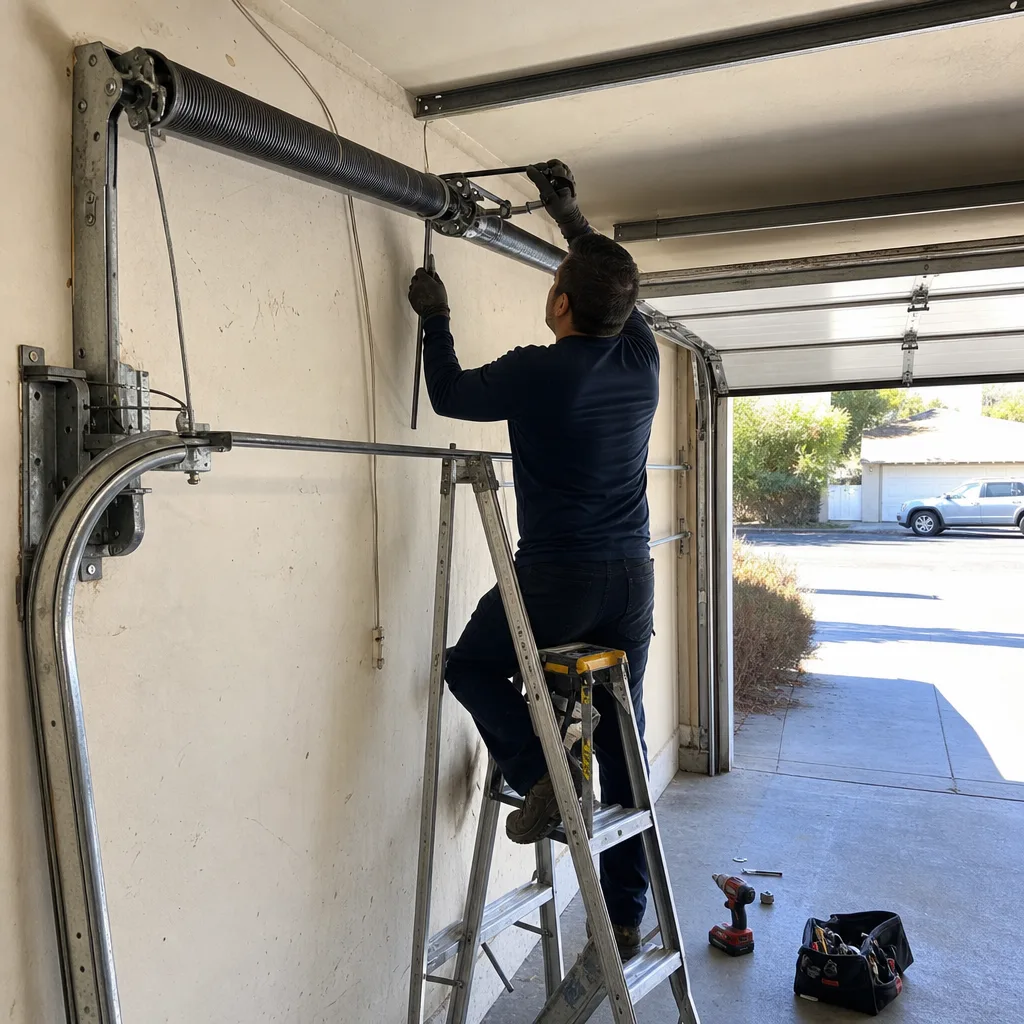
Tarzana’s geography and climate affect garage door components in ways that national guides never mention. Here’s what actually shows up in our service area.
The heat is the dominant variable
Tarzana sits in the San Fernando Valley’s heat zone. Summer garage temperatures routinely exceed 110 degrees, and a west-facing garage door can reach 140 degrees on the surface by 4 PM. Metal expands under heat, and torsion springs under tension expand unevenly across their coil length. This uneven thermal expansion is a primary contributor to premature spring fatigue in Tarzana compared to coastal communities like Santa Monica or Pacific Palisades. A spring that would last 12,000 cycles in a 75-degree garage might fail at 8,000 in Tarzana.
Santa Ana winds stress exposed hardware
The winter and fall Santa Ana events push sustained winds through the Valley, and a garage door is a giant sail when it’s open. Doors on homes in the southern section of Tarzana near the State Route 101 corridor see more consistent wind loading, and that loading translates directly into track-bracket loosening over time. Wind pushes against the door, the door pulls on the track brackets, the bolts elongate their holes, and one day the door jams itself. We check bracket torque on every service call, and in Tarzana it’s the single most common track-related remedy.
Older housing stock with mixed door ages
Much of Tarzana’s housing stock was built between the 1950s and the 1980s, with a significant wave of renovation in the 2010s. That means a typical neighborhood block contains doors from four different decades and three different manufacturers. Door hardware has not been standardized across that span. Track profiles, roller diameters, spring wire gauges, and opener mount patterns all vary. This is why the label photo matters so much when you’re documenting a warning sign: we can pre-stage the right hardware before we arrive, and you avoid the second-visit problem that generic parts cause.
If you’re in an older Tarzana home with a door from the 1990s or earlier, and you’re seeing any of the same-week warning signs, we recommend scheduling sooner rather than later. Parts for those doors sometimes require one to two business days to source, and if the door fails completely before then, you’re paying for emergency service on top of the repair.
What These Repairs Cost in Tarzana
Here’s a realistic price map for the warning signs covered in this guide, reflecting what we currently quote across Tarzana and the surrounding Valley communities. Every price below is a flat, written quote agreed to before work begins, per Clause 1 of The Haven Standard. No job starts without a written scope and a written price, and no price changes once the work is underway.
- Torsion spring replacement (pair, standard 16×7 door): $180-$340
- Extension spring replacement (pair, older single-panel or lightweight doors): $150-$250
- Roller replacement (full set, nylon-bearing): $95-$160
- Cable replacement (pair, including re-tensioning): $150-$220
- Track realignment (no parts, adjustment only): $125-$250
- Track splice or section replacement (with parts): $250-$450
- Opener limit/force adjustment: $80-$120
- Opener logic board replacement: $180-$280
- Center bearing or end bearing plate replacement: $110-$200
- Hinge replacement (per hinge): $25-$45
- Full bearing and lubrication service: $90-$150
These ranges assume a standard residential sectional door in typical Tarzana housing stock. Custom doors, high-lift tracks, or doors with unusual hardware configurations will shift the numbers, but the written-price-first system means you know the exact number before you make any commitment. If you’re looking at a garage door installation in Tarzana because the current door is beyond repair, pricing follows a different structure entirely, and it starts with a free measure and a written quote.
Common Mistakes to Avoid
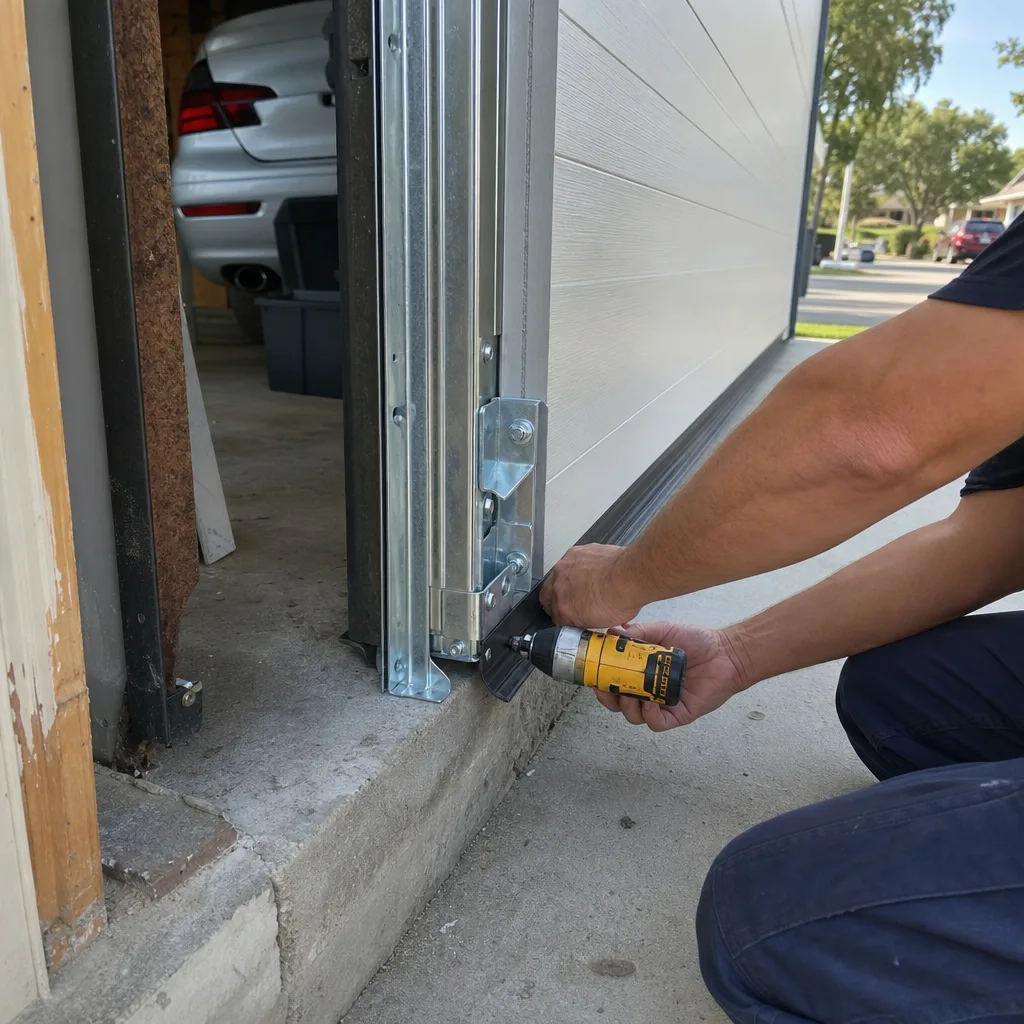
- Lubricating a worn roller. Grease cannot restore a bearing that’s already gone. It masks the noise for a week or two, then the roller fails and scores the track. By the time it’s quiet-failed-and-loud-again, the track may need replacement too. The roller replacement is $100. The roller plus track is $300.
- Adjusting opener force to compensate for a heavy door. This is the most expensive mistake we see repeated across Tarzana. The opener is designed to protect itself by reversing when it hits its force limit. Overriding that setting moves the failure from the spring (a few hundred dollars) to the opener gear assembly and motor (a full opener replacement). Every time.
- Replacing only one spring. Both torsion springs on a standard door are rated for the same cycle count. They wear at the same rate. If one has failed, the other is within weeks or months of doing the same. Replace both, pay for the job once.
- Ignoring a door that hesitates at a single point. A hesitation is a physical obstruction, not an opener personality trait. The obstruction will not self-correct. It will get worse as the interference point wears a groove or bends a track section, and the repair will cost more every month you wait.
- Calling a service without photos or video. When you can show the technician the problem before they arrive, you shorten the visit, get a more accurate first-trip diagnosis, and often reduce the total cost because the right parts are on the truck from the start.
- Confusing the emergency release cord for a repair tool. Pulling the release handle disengages the opener. Pulling it while the door is in the open position and the spring is broken will send the door crashing to the floor under its full weight. Never pull the release unless the door is fully closed or you have confirmed the door is balanced.
- Assuming a new opener will fix an old door problem. An opener cannot fix a bad spring, a binding track, or a failed roller. If we install a new garage door opener in Tarzana and the underlying door problem remains, the new opener will fail early. The door must be right before the opener can be right.
When to Call a Professional
Call when you see a spring gap wider than a quarter-inch, cable strands separating, a door reversing inconsistently, a door shifting sideways during travel, or the loud bang that signals a spring break. Call when the manual-release test reveals a door that doesn’t stay put at chest height. Call when the door has been getting slower for weeks and you’ve ruled out lubrication. In any of these cases, continuing to operate the door is actively damaging it. Servo Garage Doors Tarzana offers free estimates in Tarzana, and because our pricing is written and flat before any work begins, you’ll know exactly what the repair costs before you authorize it. Call (424) 372-1317 and a real person answers, day or night.
Frequently Asked Questions
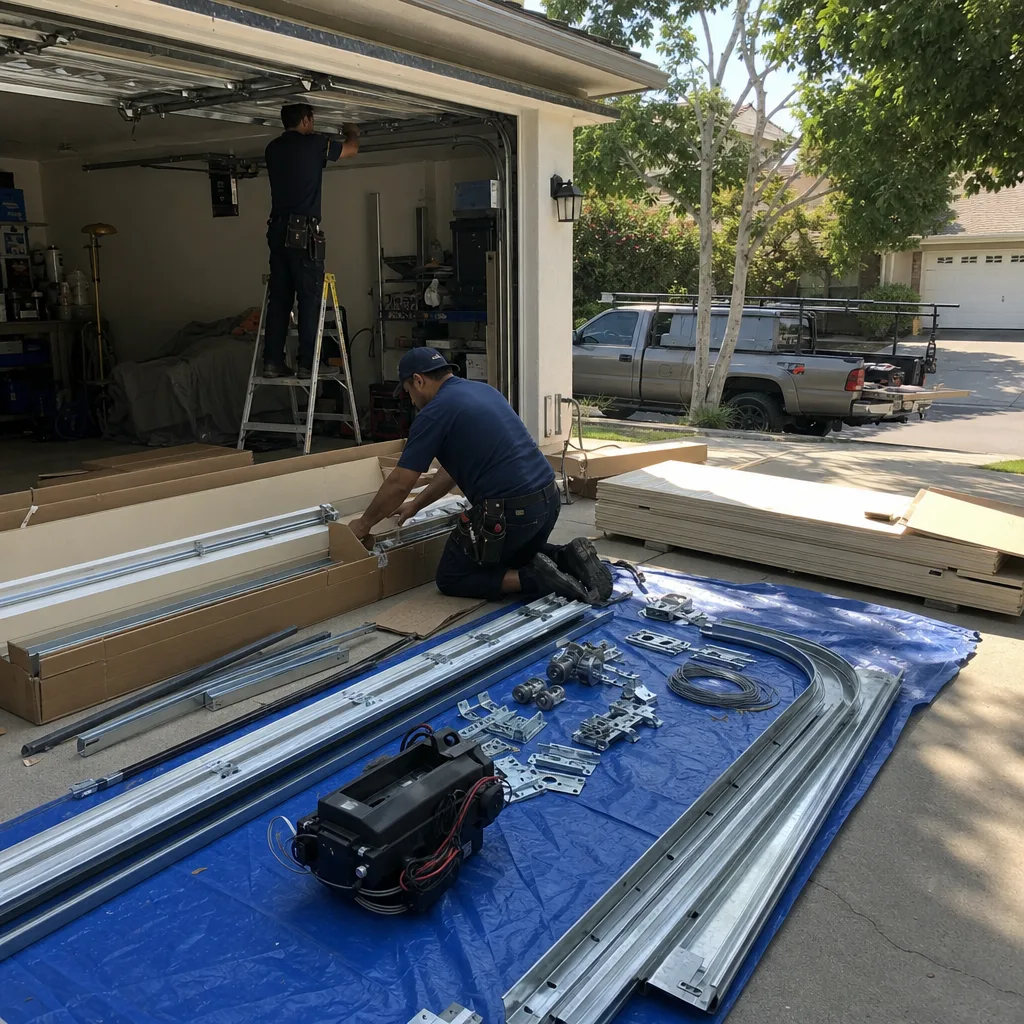
Torsion spring replacement in Tarzana typically runs $180-$340 for a standard 16×7 door, including both springs and the labor to tension them safely. Extension spring pairs run slightly less, $150-$250. The exact price depends on the door’s weight, spring wire gauge, and whether the bearing plates need attention at the same time. Call (424) 372-1317 for a flat written quote, the estimate is free and the price is agreed before any work starts.
For emergency repairs like a broken spring or a door that’s stuck open, yes, same-day service is available across Tarzana and the surrounding Valley. Standard maintenance and non-urgent repairs are scheduled within one to three business days. When you call 24/7 at (424) 372-1317, a live person answers and can tell you whether same-day service is available in your part of Tarzana that day.
No. Our pricing is written and flat before work begins, per Clause 1 of The Haven Standard. If the technician finds an additional issue during repair, that issue gets its own written quote and your approval before it’s addressed. The original quoted price for the original scope never changes.
In most cases we see in Tarzana, the sensor is working correctly and is detecting an actual obstruction caused by a bent track section or a worn roller binding the door. The opener interprets the resistance as an obstruction and reverses. Cleaning the sensor eyes won’t fix a mechanical interference problem. The fix is a track or roller repair, not a sensor replacement.
Standard springs rated for 10,000 cycles typically last 7-9 years in Tarzana’s heat, which accelerates spring fatigue compared to coastal climates. High-cycle springs rated for 20,000 or 30,000 cycles can last 15-20 years. If you’re not sure which springs you have, the spring wire gauge and coil length tell us the rating, and we can identify them during any service visit.
Yes. Our trucks carry torsion springs in common wire gauges, cable pairs, full roller sets, hinges, bearing plates, and common opener components for the brands we service daily, including Chamberlain, Genie, Clopay, and Amarr. Sending photos before the visit helps us confirm we have the specific parts your door needs when we pull up. Call (424) 372-1317 and we’ll walk you through what to photograph.
The Bottom Line
Garage door warning signs are component failures announcing themselves. The sound, the slowdown, the reverse: each maps to a specific part with a specific repair cost, and knowing the difference changes what you pay and how long the fix lasts. In Tarzana, heat and wind make springs and track hardware fail faster than the national averages, and the warning signs show up earlier than most homeowners expect. Document what you observe, test the door manually, and get a written price before any work starts. That’s how a warning sign becomes a $150 repair instead of a $700 emergency. We’ve been doing it this way since 2015.
Written by Marcus Deller, Owner at Servo Garage Doors Tarzana, serving Tarzana since 2015.