
Last updated September 20, 2026
Full 25-point door and opener safety check with every visit - springs, cables, rollers, tracks, and your LiftMaster or Chamberlain opener included
You get a price before we start. It does not change when the truck arrives.
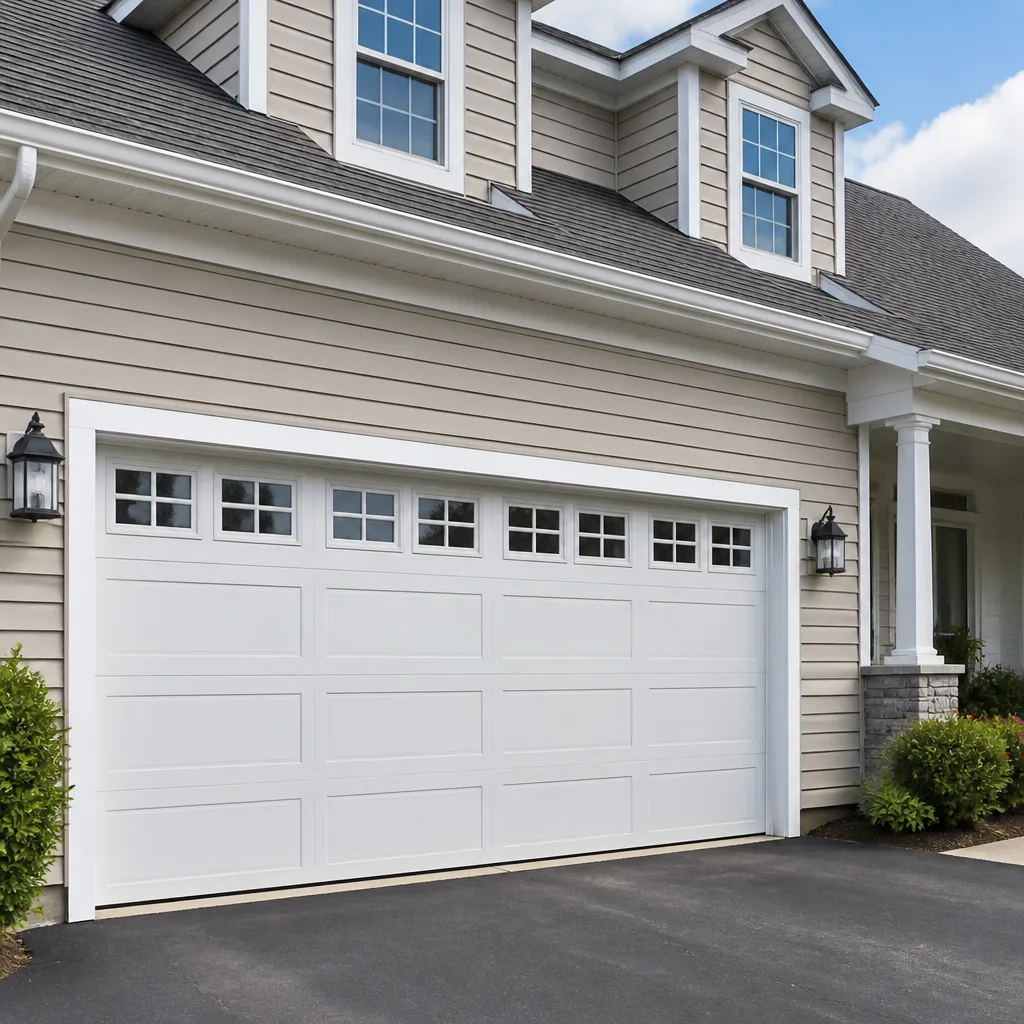
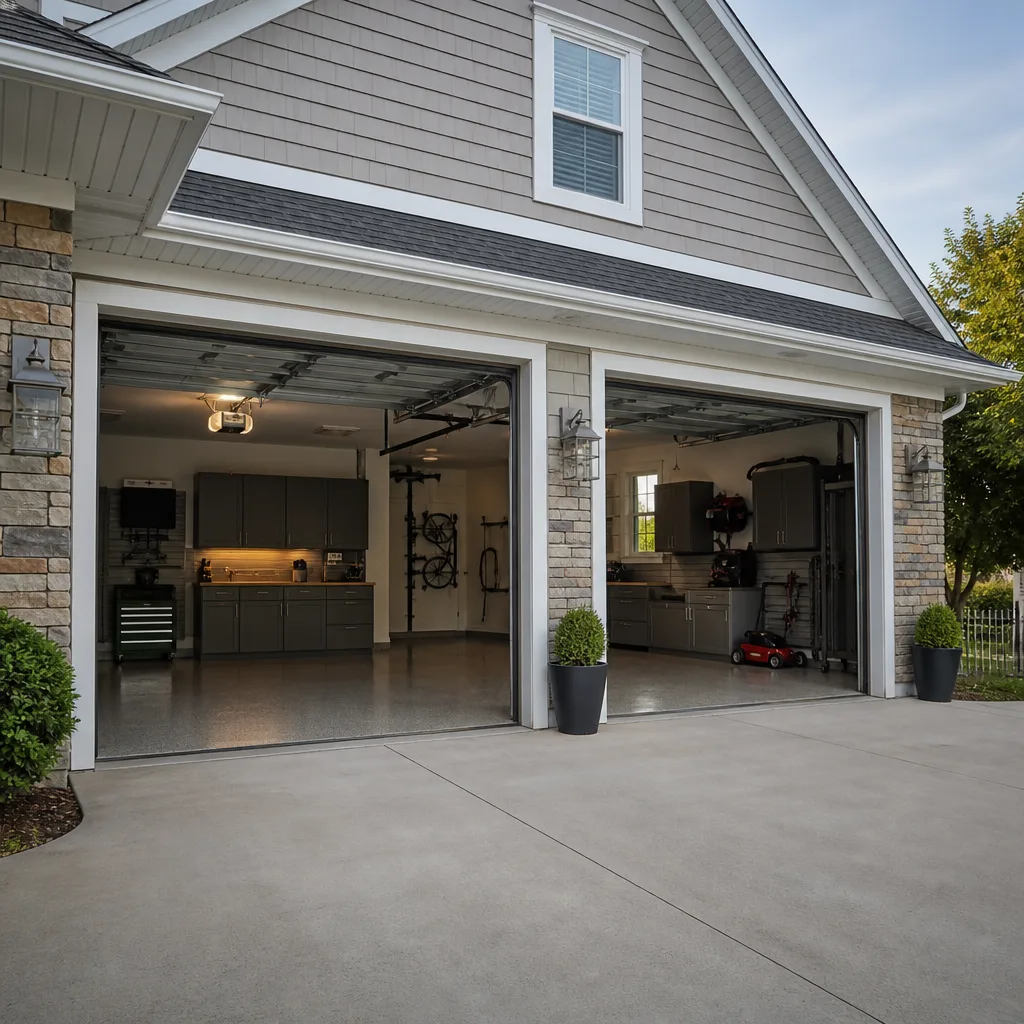
 Before
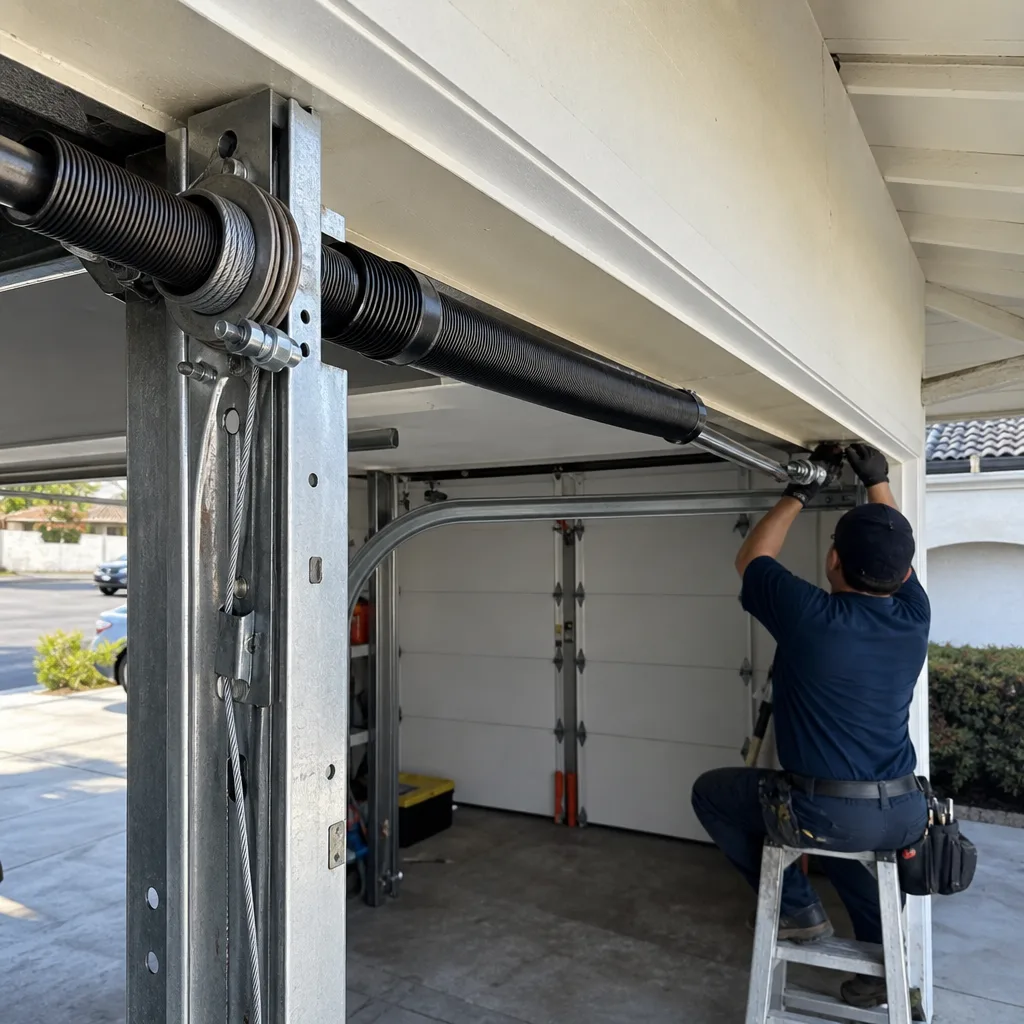 After
After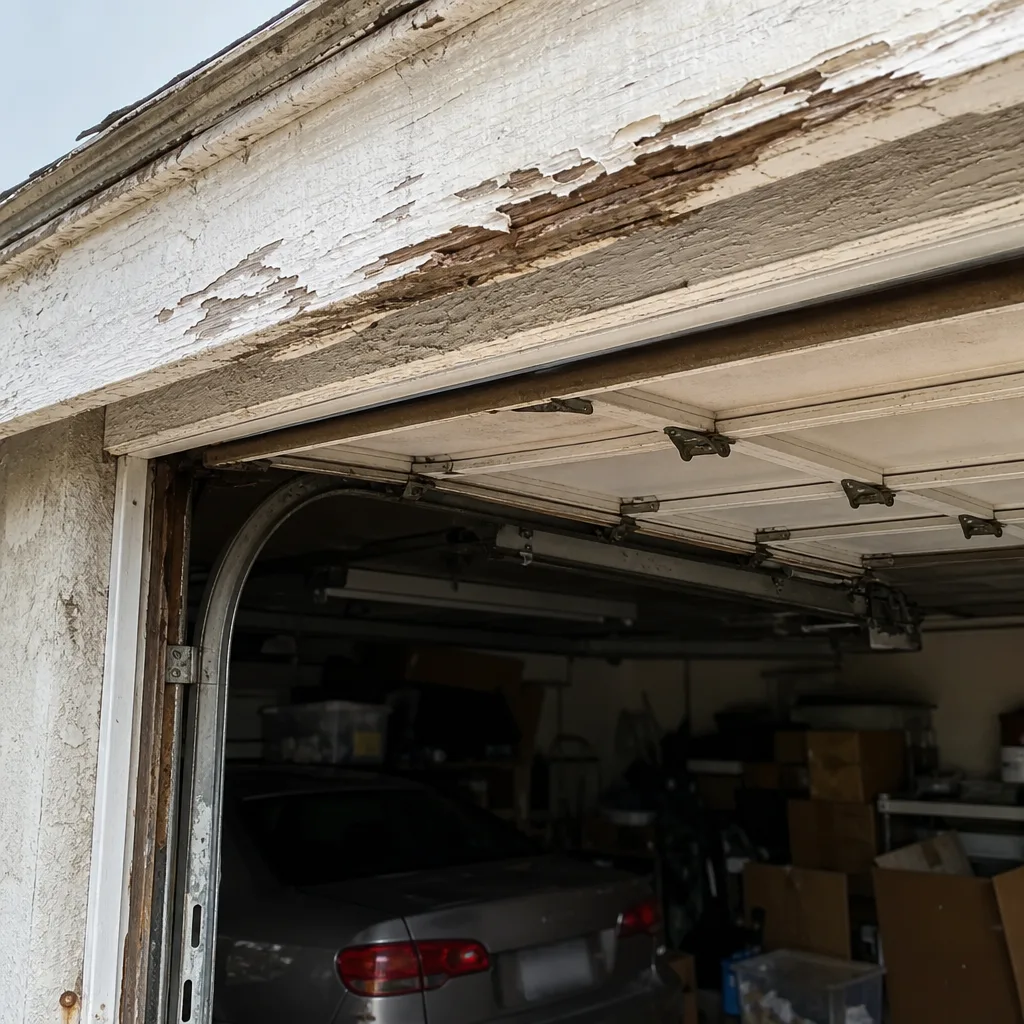 Before
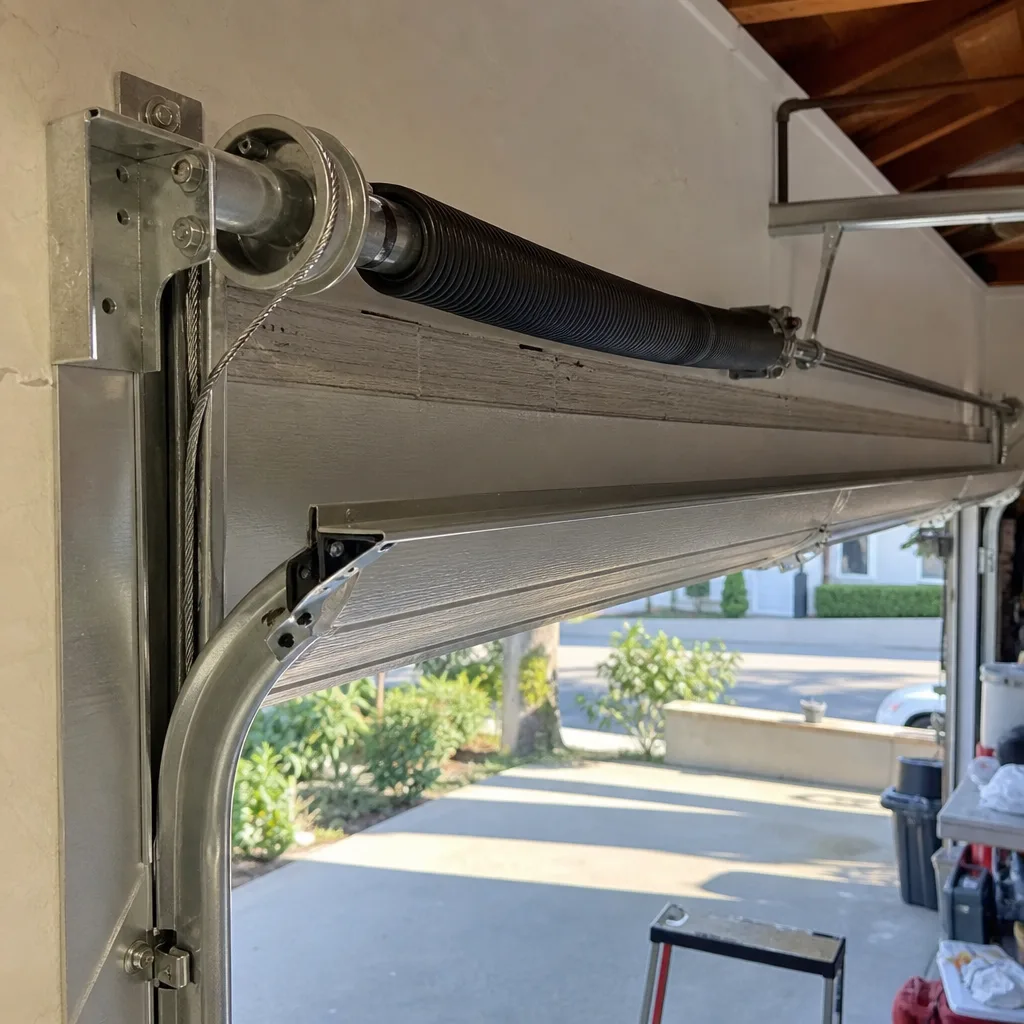 After
After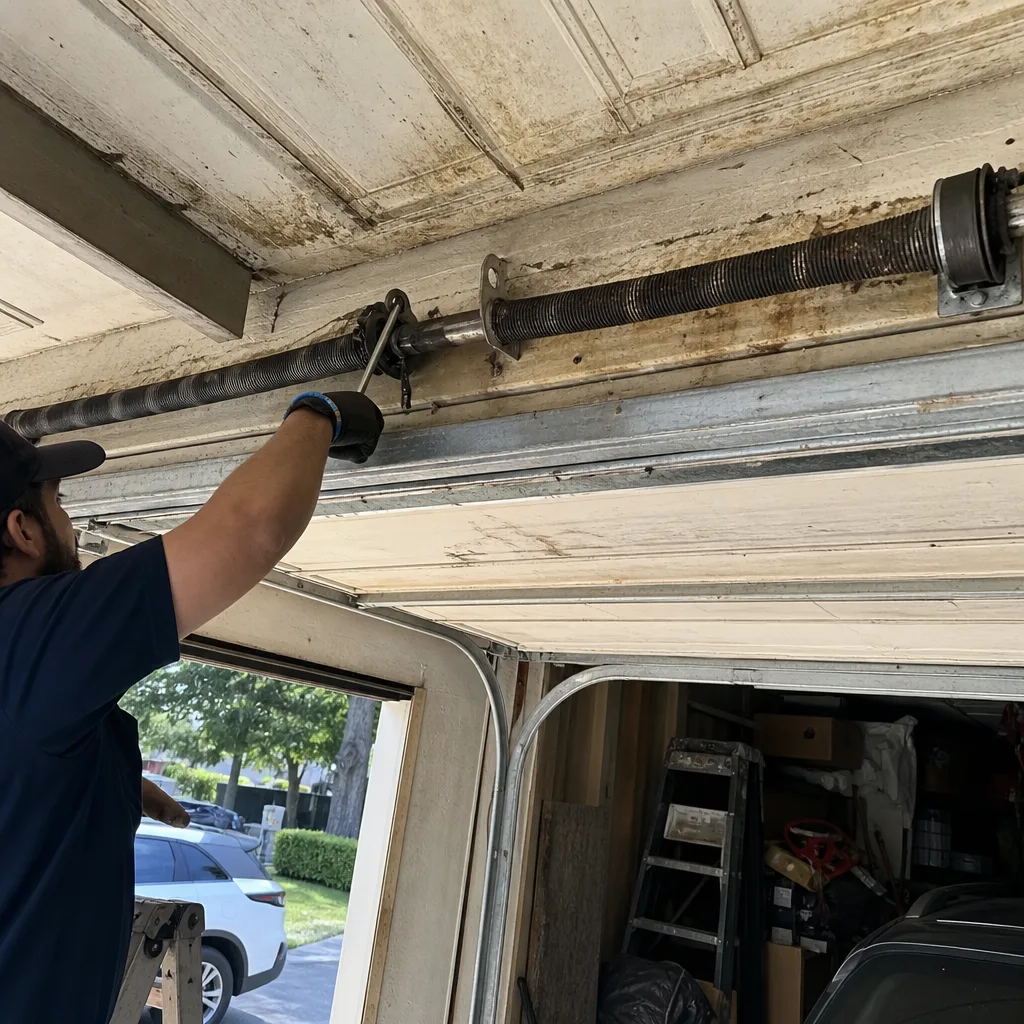 Before
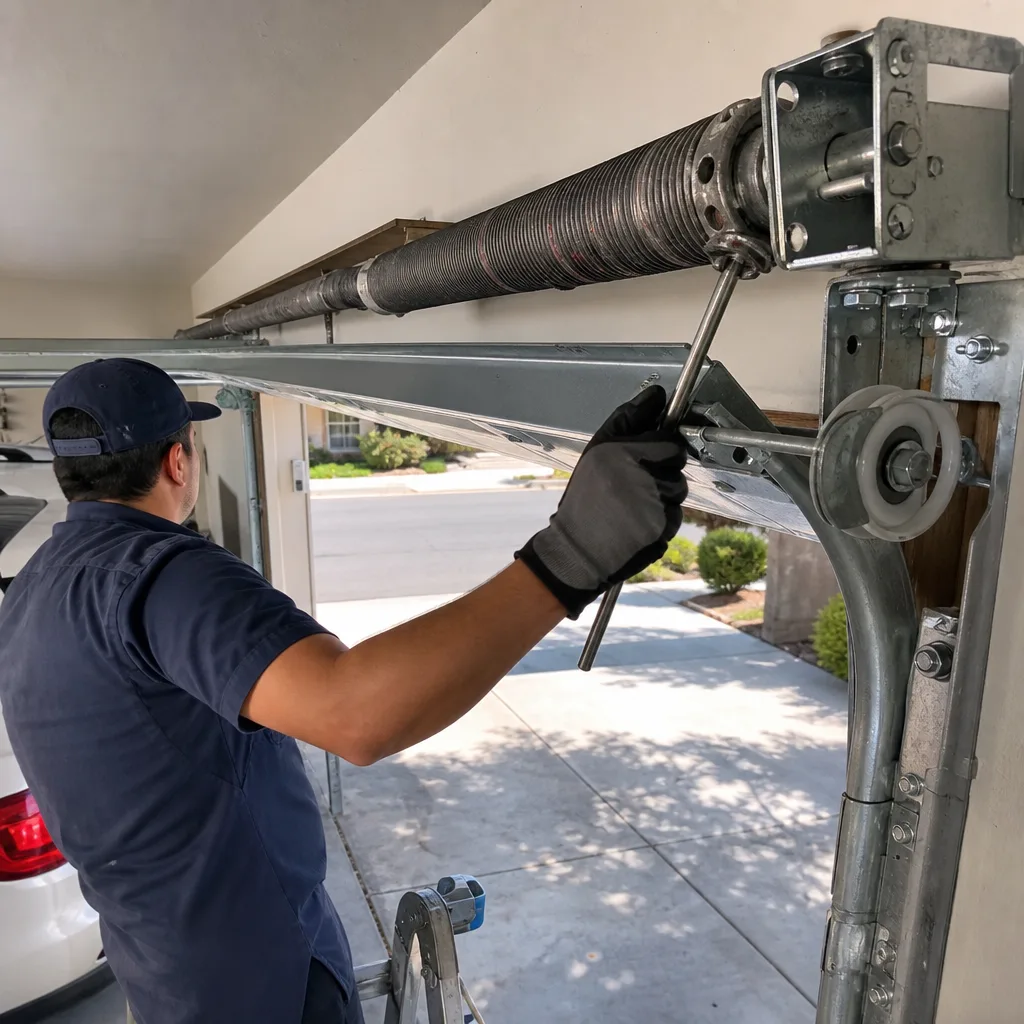 After
AfterDIY vs Professional Garage Door: The Tarzana Homeowner’s Decision Guide
A torsion spring stores enough energy to break a wrist at full wind. That is not a caution. It is a torque calculation. The decision to replace one yourself is not about how handy you are. It is about whether you own a set of winding bars, know the wire diameter you are working with, and can read the inch-pounds stamped on the spring. Most people in Tarzana can’t, and that is the correct reason to call someone who can. This guide draws that line task by task, so you know exactly which jobs are yours and which ones are not, and you can explore more guides & resources for related maintenance topics.
Quick Answer
For a Tarzana homeowner, the safe DIY list is short: weatherstripping, bottom seal replacement, opener remote programming, and lubrication. Everything involving torsion springs, lift cables, or track realignment carries a genuine injury or property-damage risk and should go to a professional. On your own property, California does not require a contractor license for your own garage door work, but some tasks void manufacturer warranties and can turn a $90 parts job into a $600-plus repair.
Table of Contents
- The Task-by-Task Decision Matrix
- What California Law Actually Says About DIY Garage Door Work
- The True Cost of a Torsion Spring Mistake in Tarzana
- Which DIY Repairs Void Your Warranty (and the Clause Language to Check)
- The Four Jobs a Tarzana Homeowner Can Safely Do
- How to Prepare for a Professional Visit and Cut Diagnostic Time
- Common Mistakes to Avoid
- When to Call a Professional
- Frequently Asked Questions
- The Bottom Line
BeforeAfterThe Task-by-Task Decision Matrix
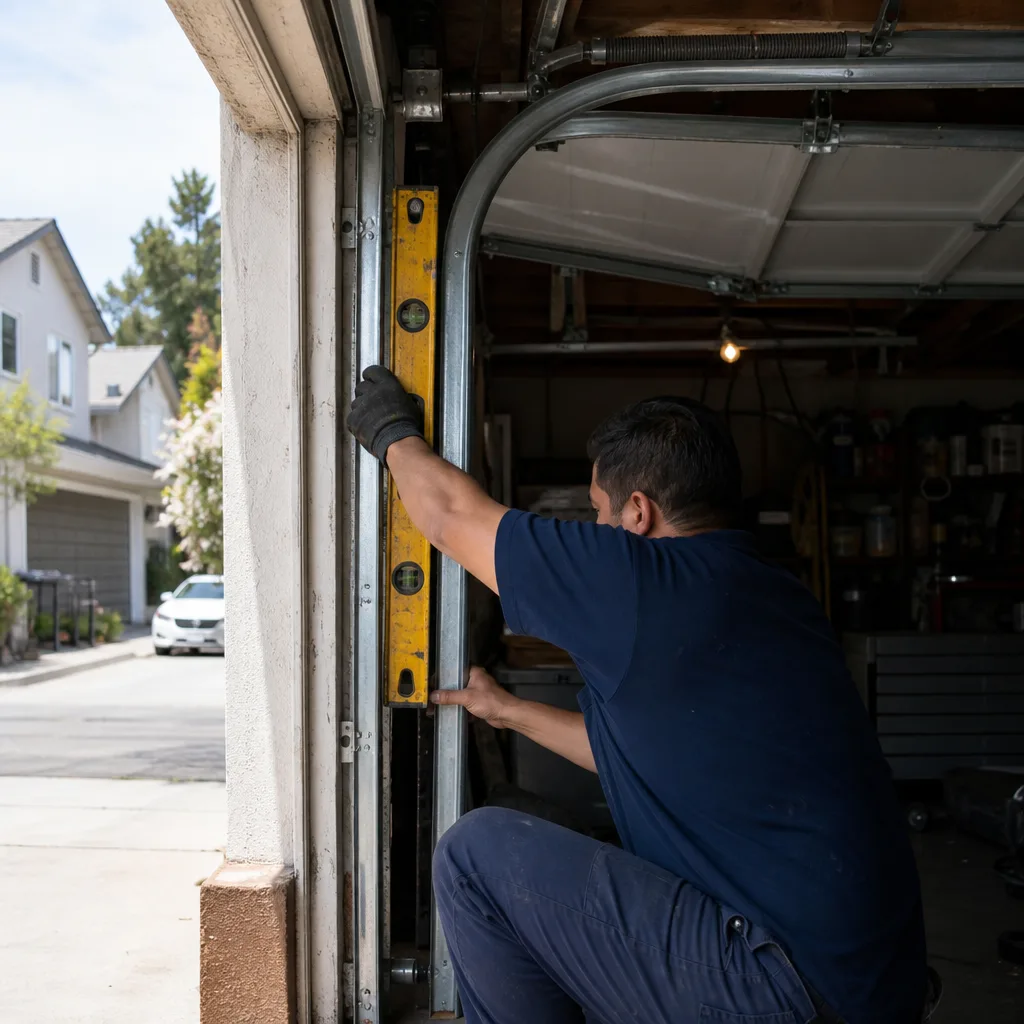
The DIY-versus-professional decision on a garage door is not a question of skill level. It is a question of which specific tasks carry a physical injury risk or a statutory liability that makes DIY inadvisable, and which ones do not. In our experience across Tarzana, the line is drawn by part, not by person.
Safe for a Careful Homeowner
- Weatherstripping and perimeter seal replacement: The vinyl strip along the doorframe degrades in Tarzana’s dry summer heat. Replacing it requires a utility knife and about 40 minutes. No tensioned parts are involved.
- Bottom seal (astragal) replacement: The rubber strip at the bottom of the door. It slides into a T-channel or screws onto the bottom panel. Safe, straightforward, and about $30 in parts.
- Opener remote programming and keypad battery replacement: Follow the manufacturer’s sequence. No ladder work, no springs.
- Lubrication of rollers, hinges, and tracks: A white lithium grease on hinges and rollers, and a silicone spray on the torsion spring. Five minutes, done twice a year.
Not a DIY Task. Period.
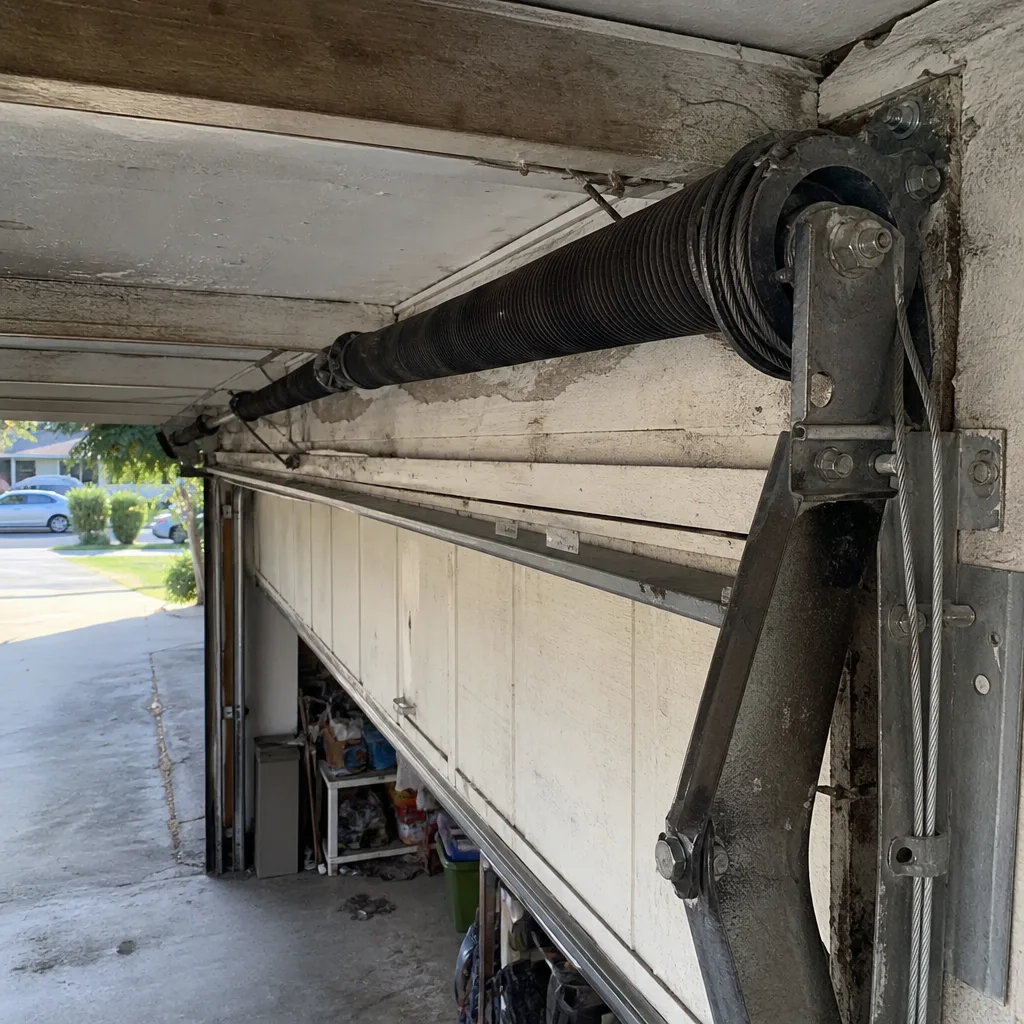
- Torsion spring winding or replacement: The spring above the door holds the entire counterbalance load. When it breaks, the stored energy is released instantly. Technicians use hardened winding bars and count quarter-turns precisely.
- Lift cable replacement or tensioning: Cables run alongside the door and wrap around drums. They are under constant tension. A snapped cable can slice skin or take out an eye. This is not an exaggeration. The cable carries the same load as the spring.
- Track realignment or bracket replacement: The track guides the door’s full weight. If a vertical track is pulled off its bracket, the door can fall inward. In Tarzana homes with older residential doors, we regularly see bottom brackets that have corroded from years of coastal moisture drifting through the Sepulveda Pass. That bracket holds the cable that holds the load. When it fails, it fails violently.
- Opener logic board replacement: This sits inside the motor unit and controls the safety sensors, the force settings, and the travel limits. The task itself is not physically dangerous, but programming errors can cause the door to close too hard, bypass safety reverse, and damage panels or injure someone.
The Gray Zone
Some tasks sit between. Roller replacement on a standard lift door requires removing a hinged roller from a track. The bottom roller on a torsion-spring door is under tension. If you remove that roller without first securing the door, the cable can unwind and the door can drop. A homeowner who understands this can replace top and middle rollers safely. The bottom roller is better left to a technician. Sensor realignment is mostly safe, unless the misalignment is caused by a bent track, at which point it becomes a track problem.
For jobs in the gray zone, we recommend reading through the manufacturer’s documentation for your specific door and opener. If the documentation requires a tension check or load test before the part can be reached, call a professional. The documentation is telling you something.
What California Law Actually Says About DIY Garage Door Work
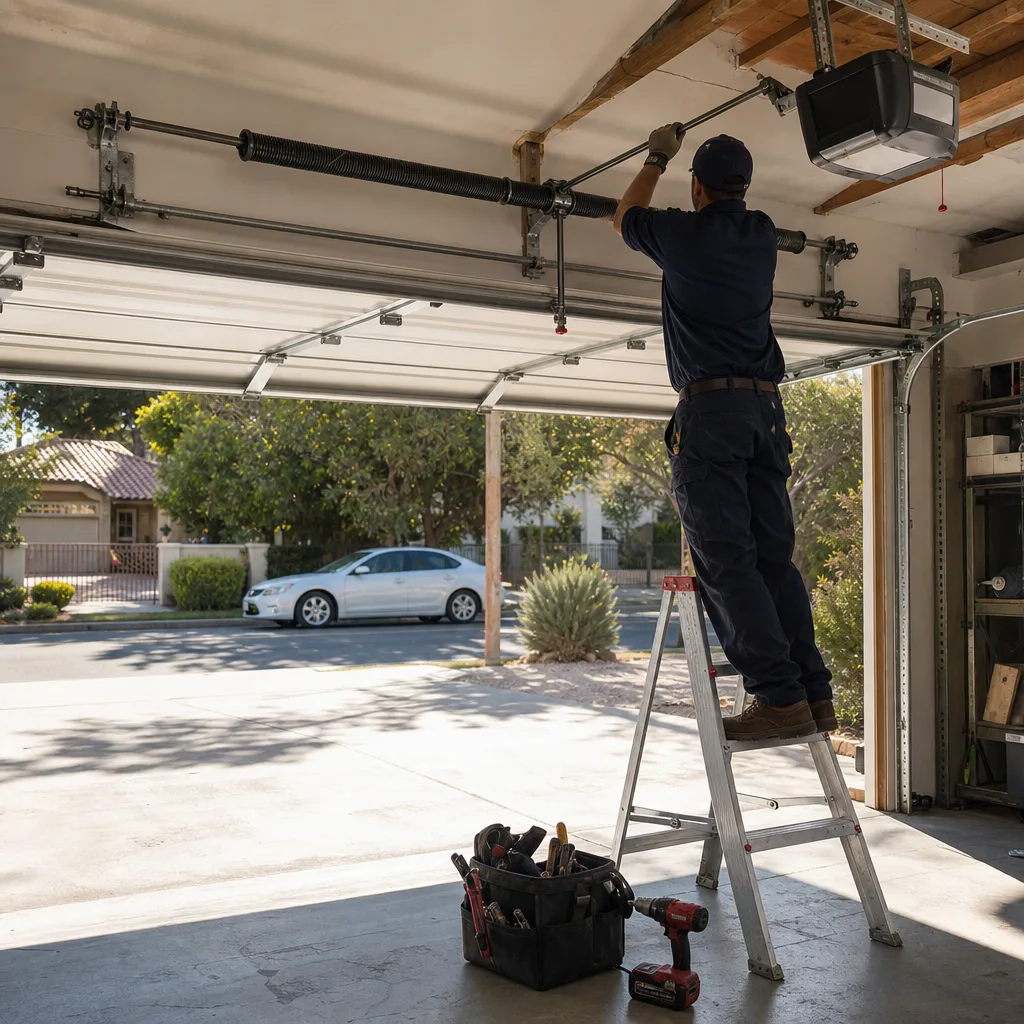
The short answer: work you do on your own property, on your own residence, does not require a contractor license under the California Business and Professions Code. The Contractor State License Board regulates work performed for compensation. You are not compensating yourself. But the exemption ends the moment you hire someone else, and that is where Tarzana homeowners get into trouble; for details, see our guide to Garage Door Permits, Codes & Inspections in CA: What You Need to Know.
The $500 Threshold
California requires any person performing home improvement work for compensation where the total contract price, including labor and materials, is $500 or more to hold a valid contractor license. Below $500, unlicensed work is permitted but capped. Above $500, unlicensed work is a misdemeanor. In the garage door trade, almost any spring replacement, opener installation, or panel replacement with labor crosses that $500 line. So if you hire a handyman who is not licensed and the job goes over $500, you have hired someone operating illegally, and you have limited recourse if the work fails.
What This Means for Your DIY Decision
There is no law stopping you from replacing your own torsion spring in Tarzana. But if the repair goes wrong and the door comes off its track, and that door falls and damages a neighbor’s property or injures a family member, your homeowner’s insurance may scrutinize the claim. Many policies contain an exclusion for damage caused by self-performed work that violates the manufacturer’s installation instructions. We are not attorneys, and this is not legal advice. But we have seen the claims process from the repair side, and it is not forgiving.
The Practical Reading
The law does not prohibit DIY. The law protects you when you hire someone with a license. If you are hiring anyone for garage door work in Tarzana, verify the license number on the CSLB website. Our license number appears on every written quote we provide, per Clause 2 of The Haven Standard. If a contractor will not show you a license before quoting, that is the end of the conversation.
The True Cost of a Torsion Spring Mistake in Tarzana
The most common DIY failure we repair is not a broken spring. It is the aftermath of a repairable spring that a homeowner attempted to replace with a generic part and incorrect winding. Here is the arithmetic, in Tarzana market dollars, as of early 2026.
The DIY Attempt (Parts Only)
- Generic torsion spring from a big-box store: $35 to $60
- Winding bar set: $25 to $50 (often included with the spring at the low end)
- Instructional video watched twice: free
- Total spent before failure: roughly $60 to $110
What a Failed Winding Costs to Correct
A spring wound with too few turns leaves the door counterbalance short, which overloads the opener. The opener’s force setting detects the excess load and either stalls or strips the plastic drive gear. A spring wound with too many turns can snap under the excess tension, or the door will rise too fast and slam into the opener rail. When we arrive at a Tarzana home after a DIY spring failure, the invoice often includes the following:
- New correctly sized torsion spring (wire diameter and coil count matched to door weight): $95 to $220 installed
- Opener drive gear replacement (if damaged): $140 to $260
- Top panel damage repair or panel replacement (if the door slammed into the rail): $250 to $600
- Cable replacement (if the unwound spring allowed the cable to jump the drum): $85 to $160
In the worst case we have seen in Tarzana, a homeowner in the cluster of homes south of Ventura Boulevard attempted a spring replacement, the door dropped, the top panel bent, and the final repair invoice was $780. The spring itself was a $42 part.
The point is not to frighten you out of DIY. The point is that the parts cost is the smallest variable. The risk is not the money spent on the spring. The risk is what the spring takes with it when it goes.
If you are already in that position, start at the Garage Door Repair in Tarzana page for the fastest path to a written quote.
Which DIY Repairs Void Your Warranty (and the Clause Language to Check)
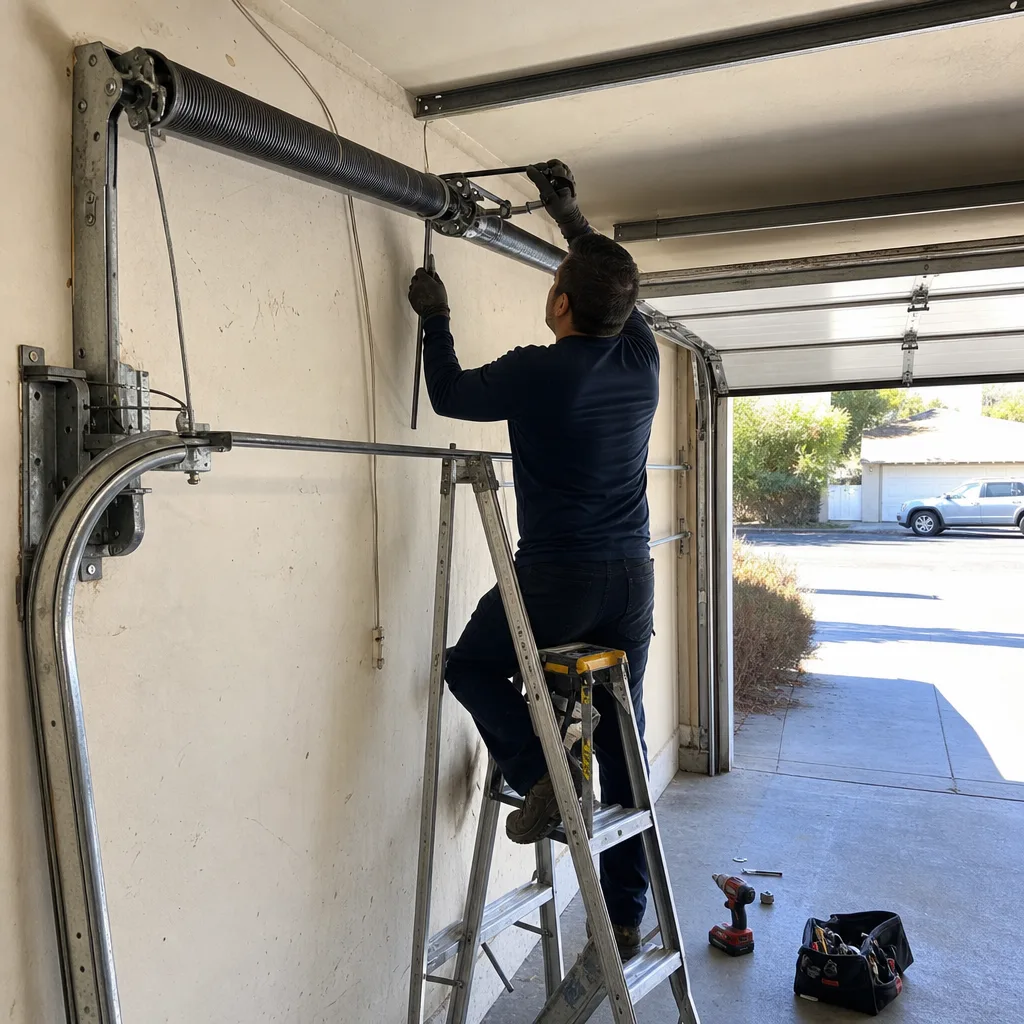
Manufacturer warranties on doors and openers are conditional contracts, not promises. The condition is usually buried in a section titled Exclusions or What This Warranty Does Not Cover. Tarzana homeowners who attempt their own repairs often void a warranty they did not know they were reading.
The Clause Language to Check
Most major brands, including Genie, Clopay, and Amarr, include language similar to one of the following in their warranty documents:
- “This warranty does not cover damage or malfunction caused by installation, adjustment, or repair performed by anyone other than an authorized dealer or qualified professional.”
- “Any modification, alterations, or installation of parts not manufactured by [Brand] voids this warranty in its entirety.”
- “Improper installation, including incorrect spring tensioning, is not covered under this warranty.”
What This Means for Specific DIY Tasks
Replacing a torsion spring yourself with a generic part, on a door from Clopay or Wayne Dalton, will void the door’s section warranty unless the spring is the exact specification match and the installation is documented. The warranty does not require a specific installer in all cases. It requires that the installation be performed correctly. But “correctly” is defined by the manufacturer, and when a claim is filed, the manufacturer asks for proof. A receipt for a spring and a weekend of work is not proof.
Opener logic board work is an even clearer case. Genie and Chamberlain warranty language routinely states that any opening of the motor unit housing, other than to replace a light bulb, voids the warranty. The logic board, limit switch, and force-sensing circuit are designed to be replaced by trained technicians. If you open the housing and the unit later fails, the manufacturer will deny the claim.
Lubrication and weatherstripping do not void anything. Those are routine maintenance tasks, and manufacturers recommend them.
The Practical Check Before You Pick Up a Tool
- Find the warranty document for your door model and opener model. If you cannot find it, search the manufacturer’s site with the model number.
- Read the Exclusions section. Specifically look for the words unauthorized, improper installation, and qualified.
- Identify whether your planned task touches any part named in the exclusions: springs, cables, drums, logic board, motor housing.
- If it does, call a professional. The warranty is part of the value of your door and opener, and you are allowed to keep it.
We replace garage doors in Tarzana under The Haven Standard, and every installation closes with the warranty documentation handed to the homeowner along with the photo record. You should not have to ask for either. If a company installs a door and leaves without warranty paperwork, that is a tell.
The Four Jobs a Tarzana Homeowner Can Safely Do
There is real money to be saved by doing simple work yourself, and there is no reason not to. These four tasks require no tensioned parts, no contractor-level tools, and no risk of voiding a warranty.
1. Bottom Seal Replacement
The astragal, or bottom seal, is the rubber or vinyl strip screwed or slid into the bottom of the door. In Tarzana, the combination of summer heat and winter rain cycles means bottom seals harden and crack every three to five years. Replacing one takes under an hour.
- Measure the width of the door panel to the nearest inch.
- Purchase a seal that matches the retainer type: T-channel, U-channel, or screw-on.
- If T-channel, pull the old seal out from one end and slide the new one through. If screw-on, remove the old screws, strip the old seal, and screw the new one on.
- Leave the seal about an inch long on each end and let it relax for a day before trimming. The seal has a memory and will shrink slightly after installation.
2. Weatherstripping Along the Perimeters
Perimeter weatherstripping reduces the dust that blows into Tarzana garages from the hills, especially during the dry season from May through October. The vinyl strips nail or screw into the doorframe on the sides and top. This is a utility knife and screwdriver job. No ladder should be required for a standard 7-foot door, and if it is, it is a short one, not the kind you should be doing real work on.
3. Opener Remote Programming
Every major opener brand uses a slightly different programming sequence. The remote, the keypad, and the motor unit all need to speak to each other. The process typically takes less than two minutes.
- Locate the Learn or Smart button on the motor unit. It is usually near the antenna wire.
- Press and release it. An LED will begin blinking.
- Within 30 seconds, press and hold the button on the remote you want to program.
- Release when the garage door opener light blinks.
- Test the remote from outside the garage.
If the remote does not program, the issue may be a failing logic board, not the remote. At that point, the job moves out of the DIY column.
4. Lubrication
Twice a year, lubricate the hinges, the rollers (metal rollers only; nylon rollers do not need it), the bearing plates, and the torsion spring, as outlined in our Garage Door Repair Maintenance Checklist for Tarzana Homeowners. Use a white lithium grease on hinges and rollers, and a silicone spray on the spring. Do not use WD-40. It is a solvent, not a lubricant, and it will strip the spring coating and accelerate rust. In Tarzana’s marine-influenced air, that rust appears faster than you would expect.
For any of these tasks, we recommend taking before and after photos. That is not just a good practice. It is how we work, per Clause 4 of The Haven Standard: if you ever need to call us later, the photos help our technician understand the door’s service history before they arrive.
Related: if the door you are maintaining is older and you are considering a replacement, see Garage Door Installation in Tarzana.
How to Prepare for a Professional Visit and Cut Diagnostic Time
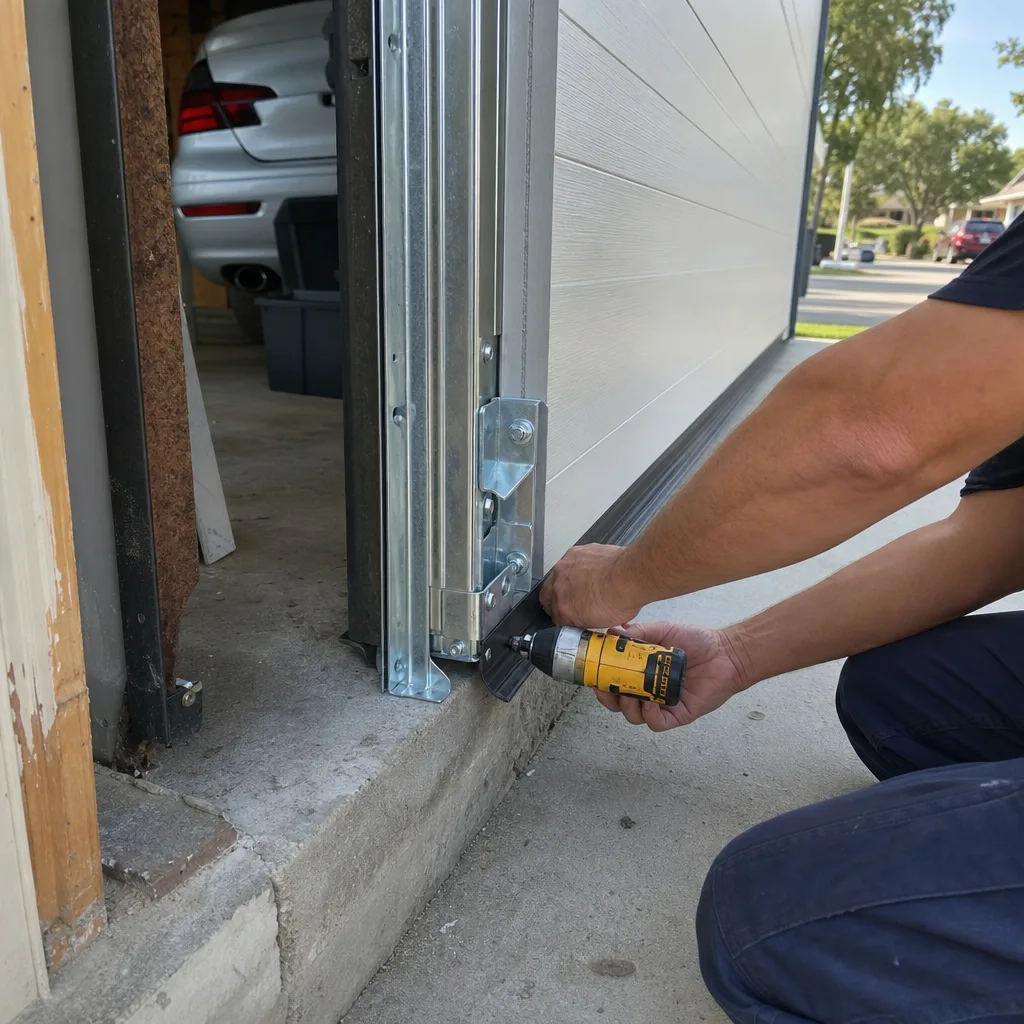
Diagnostic time is billable time, and you can reduce it. When we arrive at a Tarzana home, the first 20 minutes often go to measuring, examining, and testing before we can quote a price. If you have the right information ready, we can quote faster, and the visit costs less.
Before You Call
- Take photos of the problem. A clear photo of the broken spring, the misaligned track, or the opener unit speeds up the phone conversation. Even better, a short video of the door in operation if it moves at all.
- Locate the model numbers. The door model is on a label on the door edge or the top panel. The opener model is on the motor unit. The spring size, if visible, is printed on the spring’s end cone or color-coded on the coil.
- Measure the door width and height. Standard Tarzana doors run 8×7 or 16×7. Custom sizes exist and matter for parts matching.
- Note the door material. Steel, wood, fiberglass, or composite. The weight of the door determines the spring specification.
- Check your warranty papers. If the door or opener is under warranty, have the document ready. The technician needs to know the original installation date.
When the Technician Arrives
You do not need to clear the garage. You do not need to be home the entire time, though someone over 18 needs to grant access. What helps is:
- The photos you already took.
- The model number information in one note.
- A clear path to the door and the electrical outlet.
- Your questions written down. Most Tarzana homeowners have two or three things they have noticed and never asked about. Ask now.
We operate exactly this way on every job: the technician photographs the failed component before quoting a replacement. Clause 4 of The Haven Standard exists because a homeowner should never pay for a part without seeing evidence of why. If the company you call will not show you the failed part, find another company.
For opener-specific issues, the Garage Door Opener Repair & Installation in Tarzana page covers the most common failure symptoms and the diagnostic process.
Common Mistakes to Avoid
- Replacing just one torsion spring: Garage doors with two springs wear both equally. If one breaks, the other is near failure. Replacing only the broken one leaves you with an unbalanced door and a spring that will fail soon. Replace both. It is cheaper than a second service call.
- Using WD-40 as a lubricant: It cleans, it does not lubricate. The spring coating strips away and rust begins. In Tarzana’s moist winter air, that rust cycle shortens spring life by years.
- Disconnecting the opener emergency release while the door is up: If the door is raised and the opener is disconnected, the full door weight rests on the springs, which may be near failure. If a spring breaks at that moment, the door drops. Always run the door to the closed position before pulling the release cord.
- Assume the door is the problem when the real issue is the opener: A door that sticks, reverses, or fails to close is often misdiagnosed as a spring or track problem. In our Tarzana service calls, roughly one in four “door problems” is actually an opener force setting or sensor issue.
- Waiting to address a fraying cable: A cable that shows any fraying strands is already failing. The cable is under constant tension and can snap without any additional warning. The repair is inexpensive compared to the door damage a snapped cable can cause.
- Hiring an unlicensed contractor for work over $500: It is illegal under California law, and it voids the protections you would otherwise have. We have seen Tarzana homeowners pay cash, get no receipt, and then have no recourse when the spring snapped two weeks later.
When to Call a Professional
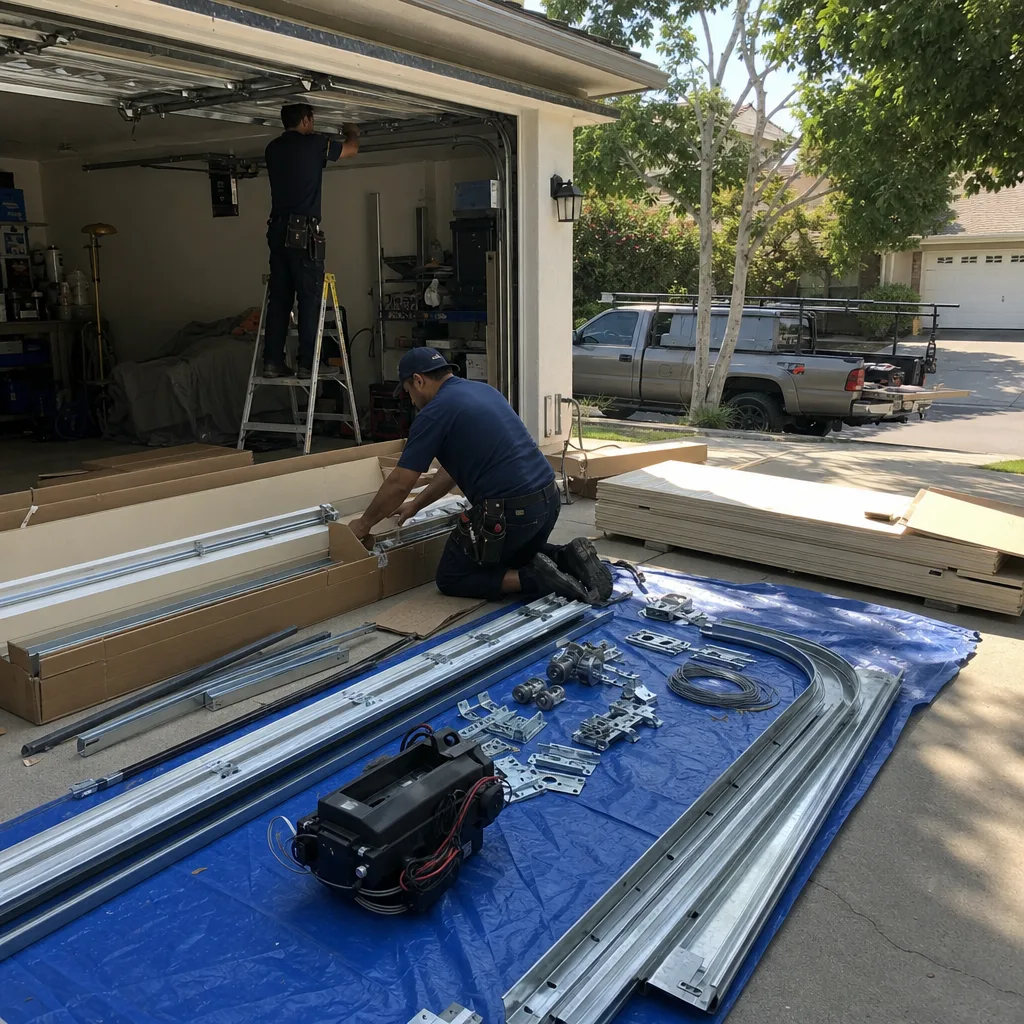
Call a professional when the task involves a torsion spring, a lift cable, a bottom bracket, or any part under tension. Call when the opener’s motor unit housing has to be opened. Call when the door is off its track or visibly leaning. Call when the warranty documents are in play and the work needs to be documented. Call when you are not certain, and the cost of being wrong is measured in stitches or a bent panel. For homeowners in Tarzana, Servo Garage Doors Tarzana home offers free estimates and written pricing before any work begins, per Clause 1 of The Haven Standard. Call (424) 372-1317 and a person will answer.
Frequently Asked Questions
A torsion spring replacement in Tarzana typically runs $180 to $340 for a single spring installed, including the spring and labor. A double spring replacement, which is recommended when the door has two springs and one has failed, runs $280 to $520. These are installed prices with a written quote before work starts. Call (424) 372-1317 for an exact number for your door weight and model.
Yes. California law does not prevent a homeowner from repairing their own garage door on their own property. The licensing requirements apply to anyone performing work for compensation when the total job exceeds $500. That threshold is where unlicensed handymen cross into illegal territory.
Bottom seal replacement, perimeter weatherstripping, opener remote programming, and lubrication are all safe for a careful homeowner. None of these tasks involves tensioned parts or requires opening the opener’s motor housing. All four can be done in under an hour with basic tools.
You can, but the risk is not in the watching. Torsion springs are wound under hundreds of pounds of tension. An incorrect turn count leaves the door unbalanced, damaging the opener or causing the door to drop. We regularly repair doors in Tarzana where a DIY spring replacement created a $500-plus repair. The correct question is not “can I” but “what does the failure cost if I get it wrong.”
It can. Most manufacturers, including Genie, Clopay, and Amarr, include exclusions for improper installation or repair performed by anyone other than a qualified professional. Replacing a torsion spring yourself with a generic part will often void the door’s section warranty. Lubrication and seal replacement do not void warranties.
Servo Garage Doors Tarzana answers calls 24 hours a day, 7 days a week, with a live person. For a broken spring, we aim for same-day service in most Tarzana neighborhoods when called before mid-afternoon. The spring is replaced the same visit, with a written price agreed before any work begins. Call (424) 372-1317 and you will speak to a person, not a recorded message.
The Bottom Line
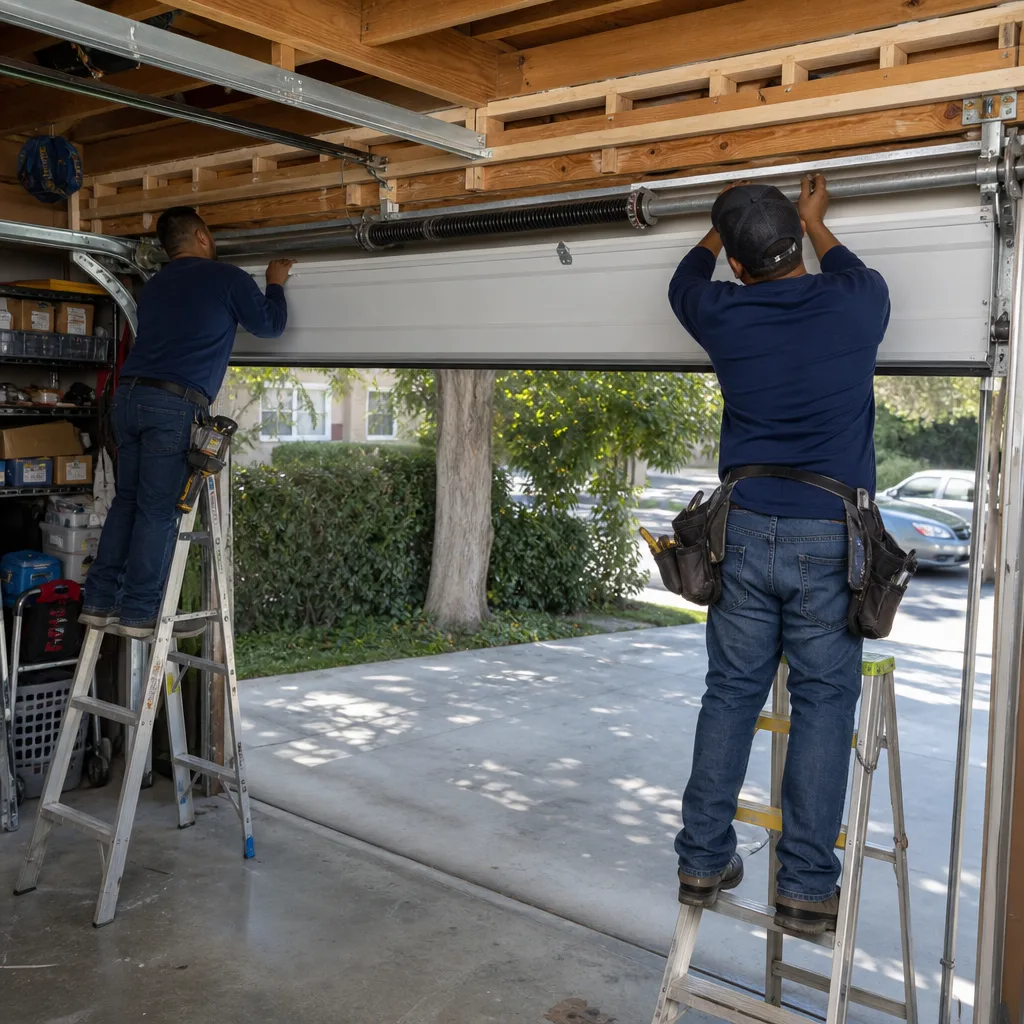
The DIY-versus-professional line is drawn by the part, not the person. Weatherstripping, seals, remotes, and lubrication belong to you. Springs, cables, tracks, and logic boards belong to the trained technician. In Tarzana, the heat, the marine air, and the age of the housing stock all add wear to garage door systems, which means failure is predictable. The decision you make before the failure is the one that saves money. The decision you make after the failure is the one that costs it. When the job is beyond the safe column, call (424) 372-1317 and get a written price before any work starts.
Written by Marcus Deller, Owner at Servo Garage Doors Tarzana, serving Tarzana since 2015.