
Last updated September 20, 2026
Full 25-point door and opener safety check with every visit - springs, cables, rollers, tracks, and your LiftMaster or Chamberlain opener included
You get a price before we start. It does not change when the truck arrives.
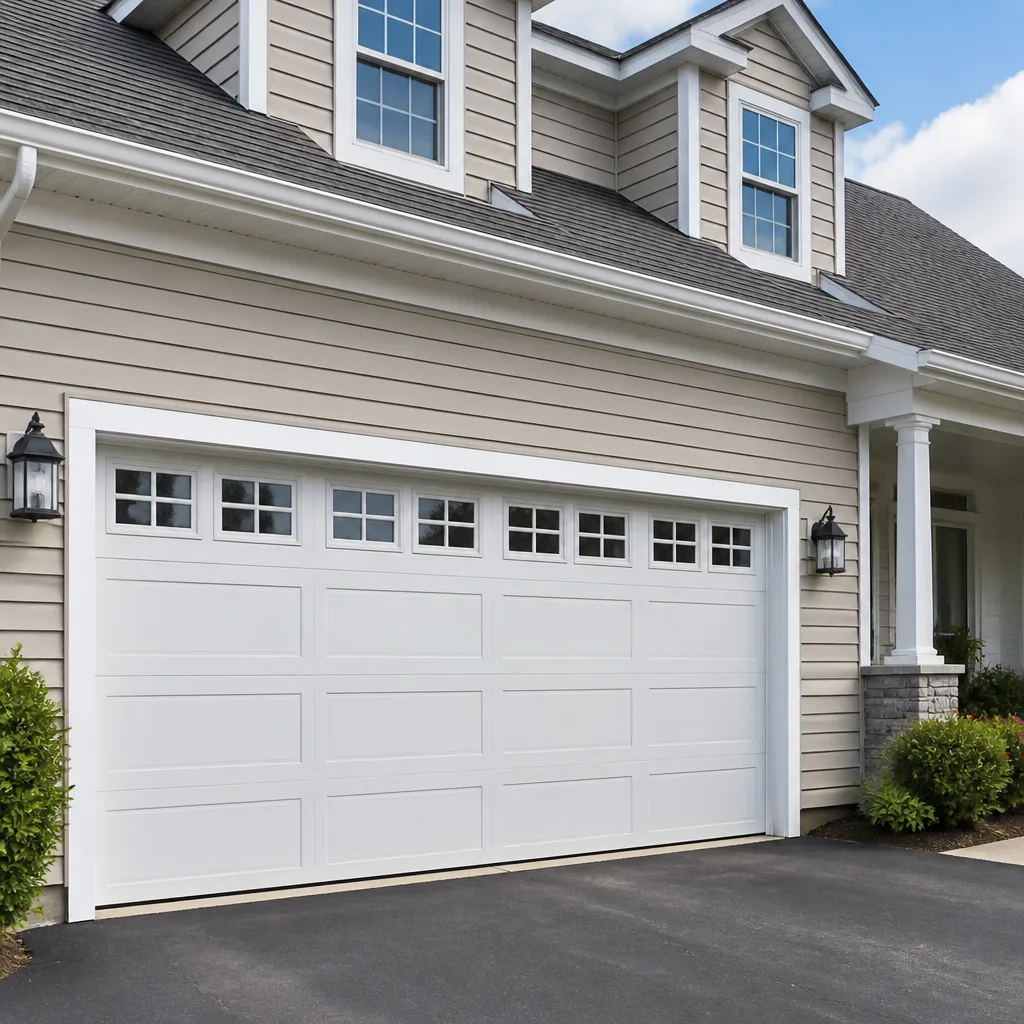
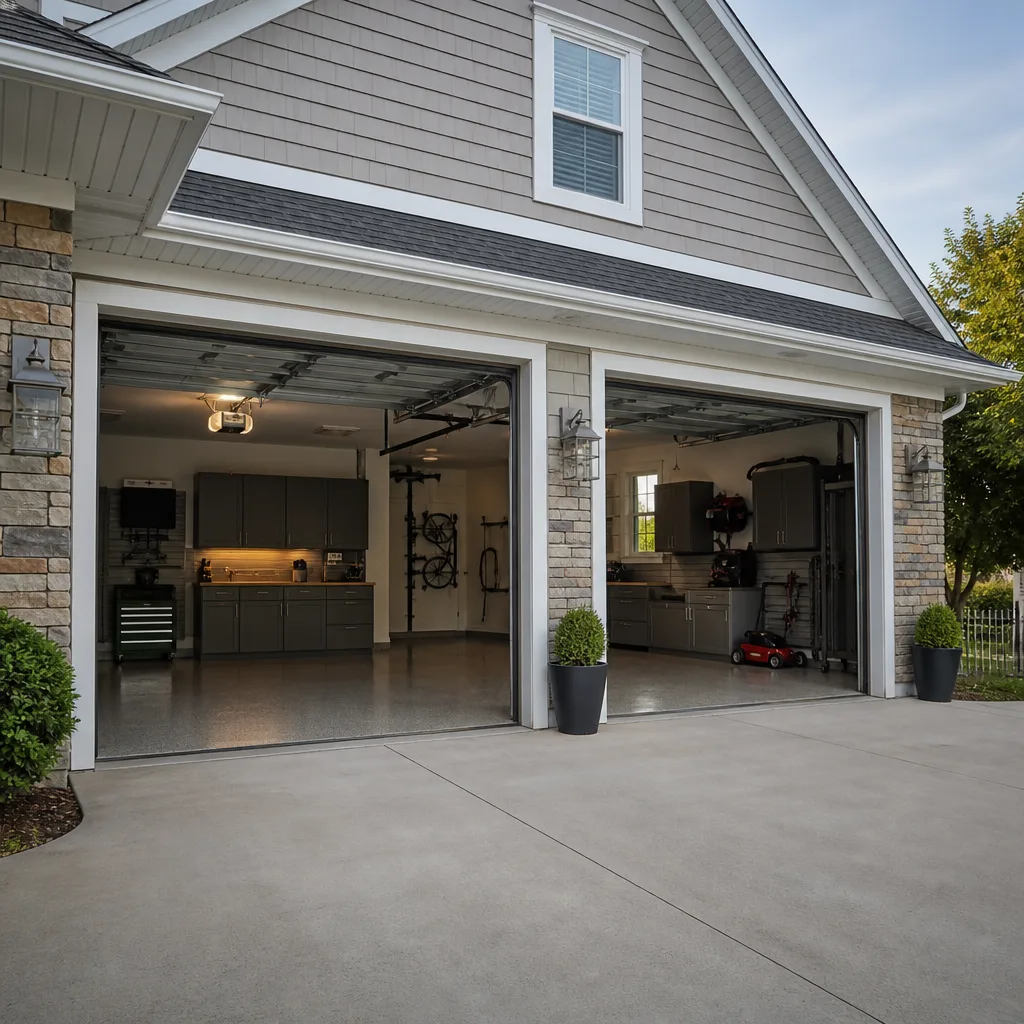
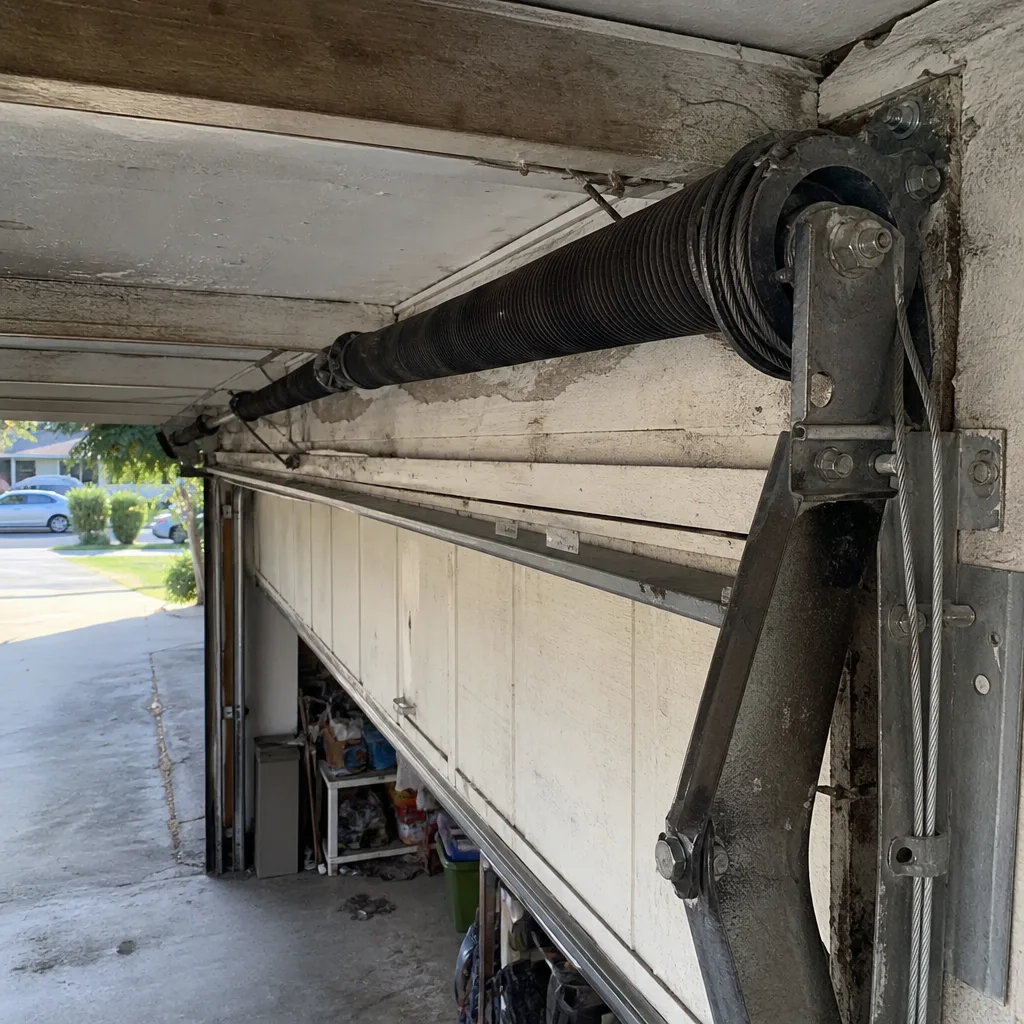 Before
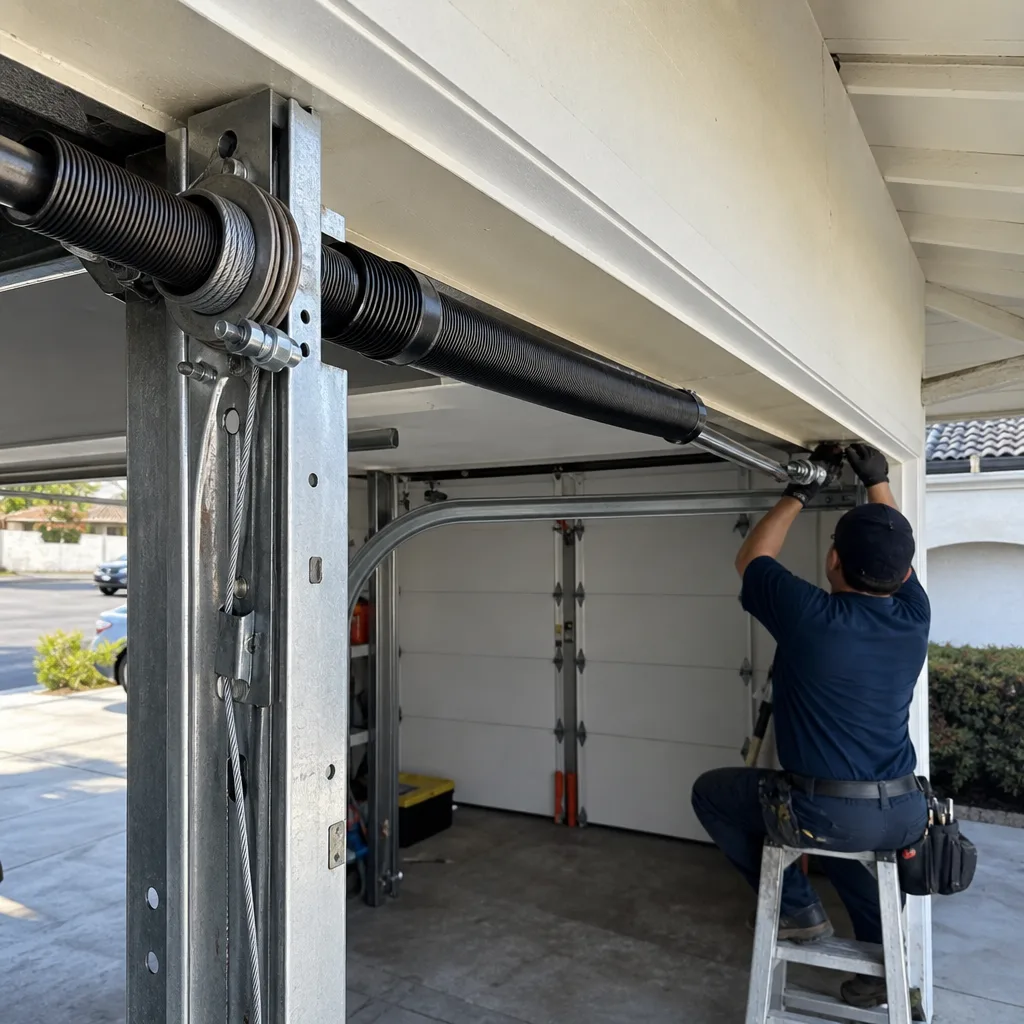 After
After Before
 After
After Before
 After
AfterHow to Hire a Garage Door Contractor in Tarzana: A Step-by-Step Guide
Most Tarzana homeowners spend more time researching a $400 phone purchase than a $1,800 garage door replacement. The asymmetry is striking when you consider what’s at stake: a garage door is the largest moving object in your home. It weighs between 150 and 400 pounds depending on the model, cycles open and closed roughly 1,500 times a year, and sits directly above your cars, your tools, and sometimes the entrance your kids use most. A poorly installed door doesn’t just squeak. It fails, and it fails loudly. This guide - alongside our Complete Guide to Garage Door in Tarzana - walks through the hiring process the way the good contractors in Tarzana actually wish you would: methodically, with paperwork as the backbone, and with a specific eye toward the California licensing and quoting rules that separate a legitimate garage door company from a guy with a truck and a toolbox. By the end, you’ll know exactly what to ask, what to demand on paper, and how to spot a contractor who’s pricing before they’ve looked.
Quick Answer
Hiring a garage door contractor in Tarzana comes down to three verifiable steps: confirm the contractor holds an active California C-61/D28 license through the CSLB, require a written quote that itemizes parts, labor, and scope before any work starts, and verify the warranty covers both parts and labor in writing. A contractor who refuses to put the price on paper or won’t show you the damaged component before quoting a replacement has just told you everything you need to know.
Table of Contents
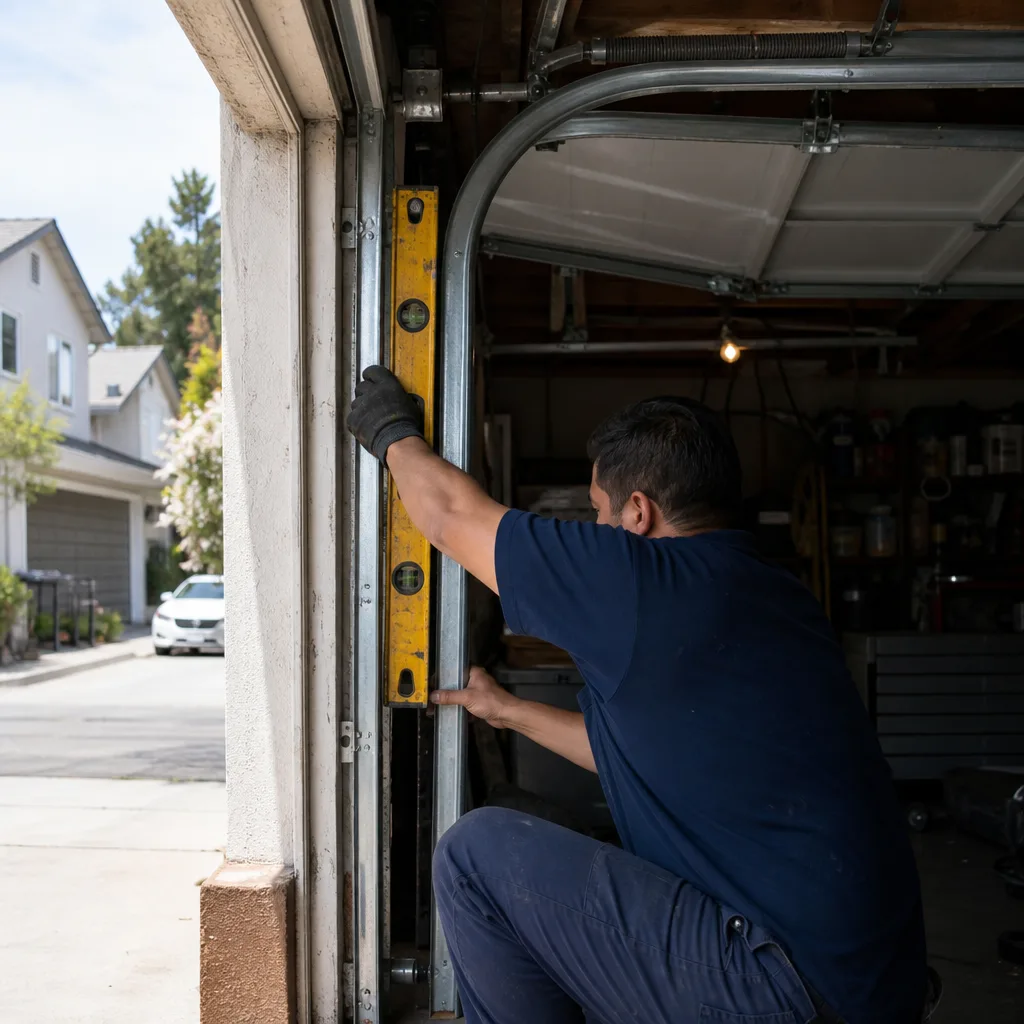
- Step 1: Verify the California C-61/D28 License Before Anything Else
- Step 2: The Phone Script That Separates Diagnosis-Driven Contractors From Upsellers
- Step 3: What a Written Quote Must Contain Under California Law
- Step 4: How to Read a Warranty Clause So It Actually Protects You
- Step 5: The Red Flags That Appear Before the Van Even Arrives
- What Garage Door Work Actually Costs in Tarzana
- Parts, Brands, and Local Conditions: What Matters in Tarzana
- Common Mistakes to Avoid
- When to Call a Professional
- Frequently Asked Questions
- The Bottom Line
BeforeAfterStep 1: Verify the California C-61/D28 License Before Anything Else
California is one of the easiest states to verify contractor credentials, and the process takes about 90 seconds. The Contractors State License Board (CSLB) maintains a public database at cslb.ca.gov where you can search by business name, owner name, or license number. You want to see a C-61/D28 classification: the C-61 is the limited specialty class, and D28 is the specific sub-classification for “Door and Gate” work. Any contractor doing garage door repair or installation in Tarzana for a job exceeding $500 in combined labor and materials must hold this license. No exceptions.
Here’s the step-by-step verification flow:
- Go to cslb.ca.gov and click “Check a License.” Enter the license number the contractor provided. If they haven’t provided one yet, that’s your first data point.
- Confirm the status reads “Active” - not “Expired,” “Suspended,” or “Revoked.” A suspended license means the CSLB has taken disciplinary action, often for a reason you’d want to know about before hiring.
- Check the “Workers’ Compensation” field. If a contractor has employees and no workers’ comp, that’s a red flag. If you’re injured on the job at your property and the contractor has no coverage, your homeowner’s insurance may be the one paying.
- Match the name on the license to the name on the contract. This sounds basic. It’s one of the most common things people skip. The company that shows up in the van should be the company on the license, not a “subcontractor” who happens to share a phone number.
- Look for the CSLB bond and liability insurance fields. The license bond is a $25,000 surety bond required by the state. Liability insurance is separate. Both should be current.
In Tarzana, you’ll occasionally see unlicensed operators advertising on community apps and posting flyers near the Ventura Boulevard corridor. The math is simple: an unlicensed contractor can quote lower because they’re not paying licensing fees, bonds, workers’ comp, or insurance premiums. The savings lands entirely on your side of the risk. If a garage door spring fails and takes out a car windshield, the unlicensed guy is going to disappear and your insurance claim gets complicated.
We’ve written about this extensively in our Garage Door Repair in Tarzana guide, but the license check is the gate. Everything else in this guide assumes you’ve gotten past it.
Step 2: The Phone Script That Separates Diagnosis-Driven Contractors From Upsellers
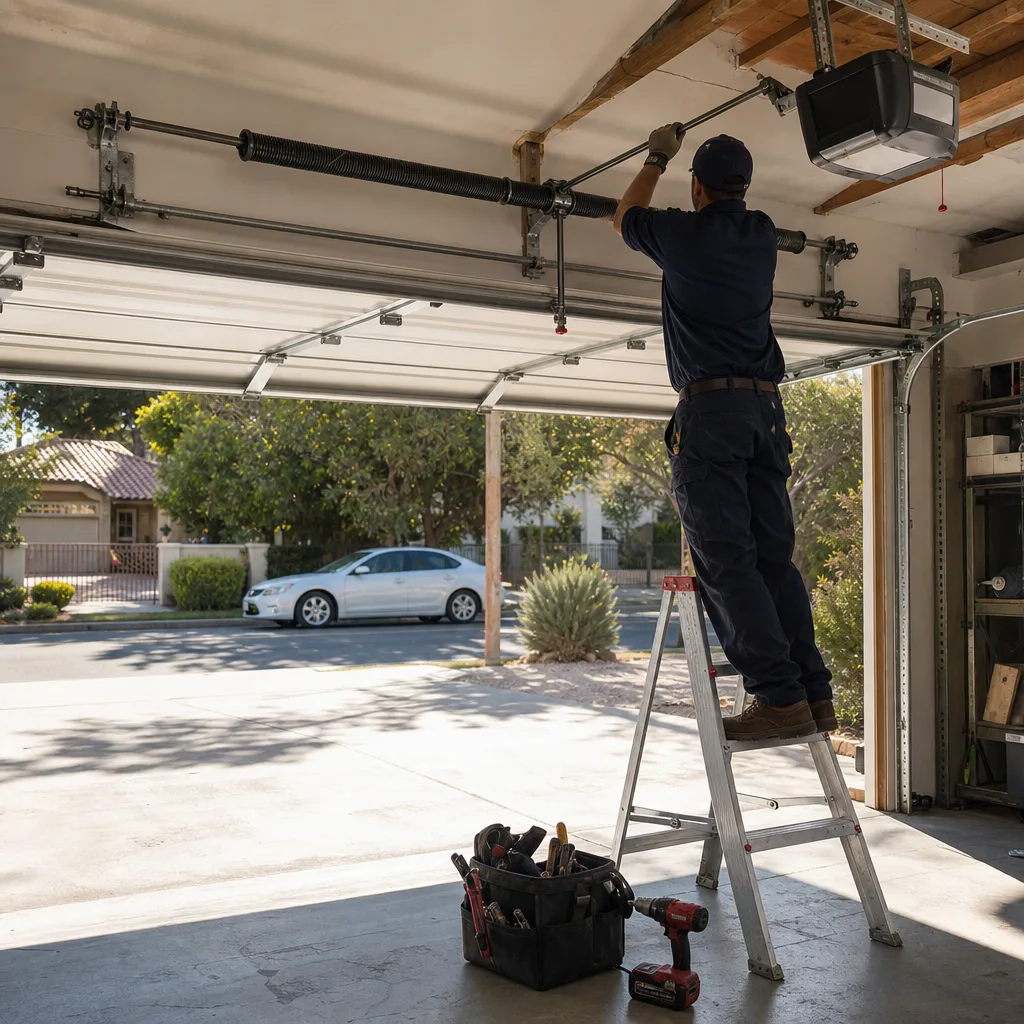
When you call a garage door contractor in Tarzana, the conversation follows one of two paths. On the first path, the person on the phone asks what’s wrong, then immediately starts quoting prices: “A spring replacement runs $350 and we can be there this afternoon.” That’s a price-first contractor. They’re not necessarily dishonest, but they’ve quoted a repair they haven’t seen, on a door they haven’t measured, in a home they haven’t visited.
On the second path, the person says: “What are you seeing when the door tries to open? Is the spring on the left side of the door intact or does it look split?” They’re diagnosing. They’ll give you a range, sure, but they’ll tell you the exact number comes after they see the door. That’s the contractor you want.
Here’s a script you can use on any call:
- “What’s your CSLB license number?” - Then verify it on the CSLB site while you’re still on the phone. If they hesitate or say they’ll text it later, that’s a signal.
- “When you quote the job, do you put the full price in writing before any work starts?” - The correct answer is “yes.” A California contractor doing garage door work over $500 is legally required under Business and Professions Code §7159 to provide a written contract. If they say “we’ll just figure it out on site,” end the call.
- “Do you carry the common parts on the truck - torsion springs, extension springs, rollers, hinges, circuit boards?” - This tells you whether the first visit is a diagnostic and repair or just a diagnostic with a second appointment needed. A well-stocked truck is a mark of a contractor who actually repairs doors in Tarzana, not one who bids and then delays while parts get shipped.
- “What does your warranty cover - parts only or parts and labor?” - This question catches more price-first contractors than any other. We’ll cover the warranty clause in detail below, but the phone answer sets expectations.
- “Will the technician photograph the failed component before quoting a replacement?” - This is the question that reveals the most. A contractor confident in their diagnosis says yes. A contractor driving toward a replacement sale pauses.
The last question matters more than most people realize. The founding rule at Servo Garage Doors, the one that predates everything else, is that the customer sees the failed part before anyone quotes a replacement. That rule is now Clause 4 of The Haven Standard, the operating framework under which we work. It exists because a broken torsion spring looks a specific way - a clean break at the coil or a stretched section - and a logic board failure looks a different way. If the technician can show you the photo and explain the failure, there’s nothing else to argue about. The evidence speaks.
Step 3: What a Written Quote Must Contain Under California Law
The single most useful thing you can do when hiring a garage door contractor in Tarzana is to demand a written quote before the work starts. Not a text message. Not a number scrawled on a business card. Not a verbal agreement confirmed by a handshake. A written document.
Under California Business and Professions Code §7159, any home improvement contract - which explicitly includes garage door repair and installation - must include:
- The full name of the contractor as it appears on the CSLB license, and the license number itself.
- A description of the work to be performed in specific terms. “Fix garage door” is not a description. “Replace one pair of 0.25-inch diameter torsion springs, both cable drums, and three galvanized hinges” is.
- A total contract price in a single dollar amount. If the price says “estimated” or “TBD,” it is not a quote.
- The schedule of payments. For a standard repair, payment is typically due upon completion. For larger installations, a deposit of up to $1,000 or 10% - whichever is less - is allowed, but the full payment schedule must be stated.
- The start and completion dates, expressed as calendar dates or an agreed-upon range. “Late this week” is not a start date.
- A notice of the contractor’s right to a mechanics lien. This is boilerplate, but its presence is a sign the contractor uses compliant paperwork.
In Tarzana, the typical garage door repair quote runs 2 to 4 pages. It itemizes the failed component by part name and sometimes by specification - for example, “torsion spring, 0.225-inch wire, 32-inch length, 2-inch ID, wind to left” - then lists labor as a separate line, then adds any applicable parts like rollers, cables, or a reinforcement bracket, then totals everything. The most revealing line items are the ones that are specific. If the quote says “spring replacement: $250” with no other detail, you’re looking at a contractor who doesn’t write their own quotes carefully.
There’s a meaningful distinction between a contractor who quotes a total and a contractor who quotes a scope. The scope tells you what’s included. The total tells you only what you’ll pay. Both are necessary. Clause 1 of The Haven Standard requires a flat, written price and a written scope delivered before any work begins on every job, with no exceptions. “Call for a quote” is how a contractor avoids putting numbers on paper. You don’t have to accept that. In California, you shouldn’t.
For a deeper look at what a garage door repair involves when it happens on your property, see our Garage Door Installation in Tarzana guide.
Step 4: How to Read a Warranty Clause So It Actually Protects You
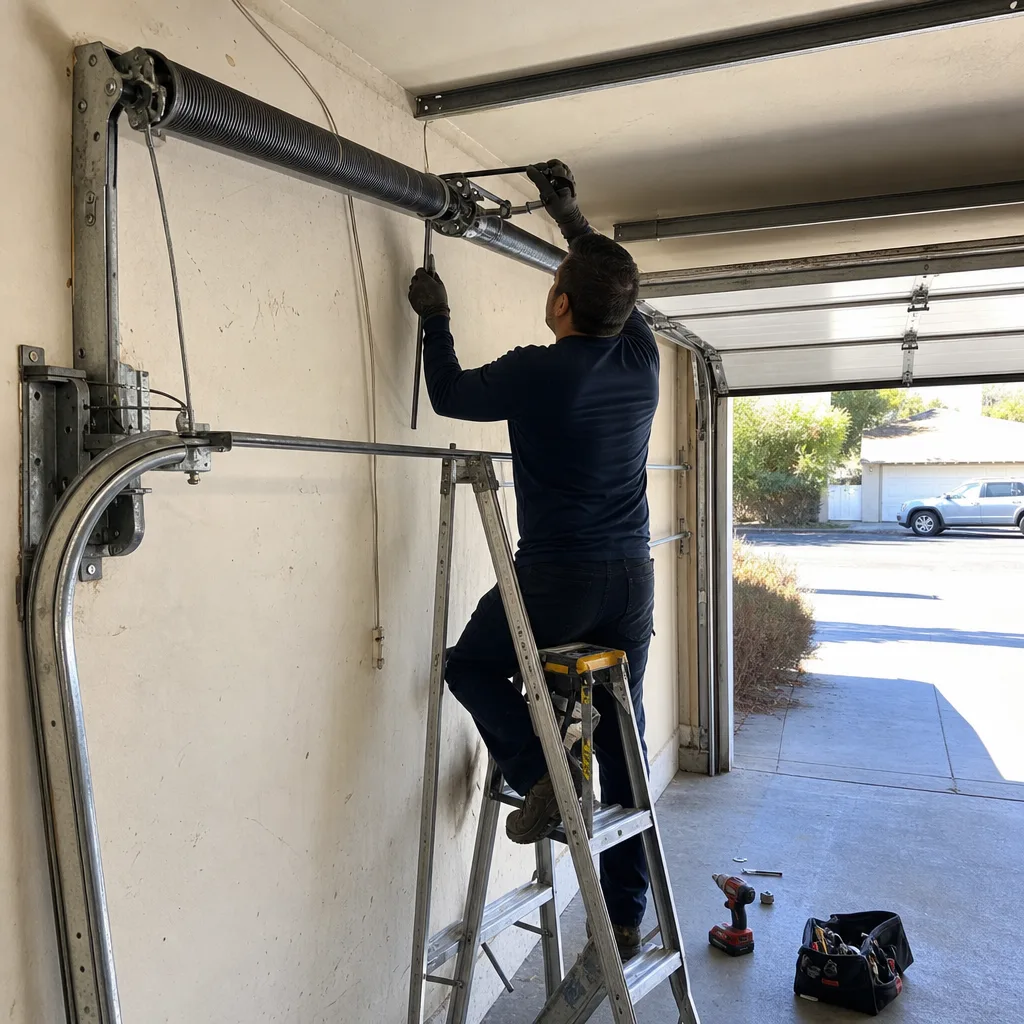
Every garage door contractor in Tarzana will say they offer a warranty. The question is what the warranty actually covers. The clauses vary widely, and the differences are where the real protection is, or isn’t.
A warranty clause should answer three questions:
- What’s covered? The part, the labor, or both? A “parts-only” warranty means the spring itself is replaced free, but you’re paying $180 in labor to have it swapped. A “parts and labor” warranty means the whole replacement is covered.
- For how long? One year is the minimum reasonable standard for a garage door repair. Springs, depending on the cycle rating, may carry a longer manufacturer warranty, but the installer’s labor warranty is what matters for your wallet.
- What voids it? Some clauses are reasonable - damage from impact, misuse, or modifications. Others are traps - any DIY adjustment, any other contractor touching the door, or any failure to perform “recommended maintenance” twice a year. Read the exclusions before you sign.
Here’s the practical version: a warranty that says “we’ll fix it if it breaks” means nothing. A warranty that says “springs covered for 5 years, labor covered for 1 year, activation and travel covered under normal usage as defined by the manufacturer’s cycle rating” is a warranty written by someone who has actually replaced a spring that failed at month 14.
The 365-Day Done Right Promise we operate under at Servo Garage Doors works this way: if a repair is not right, we make it right. The promise is backed by the Haven Standard and available as a terms page, not a handshake. If a contractor’s warranty is verbal only, it isn’t a warranty. Ask to see it in writing. Then read it. The only warranty that matters in Tarzana is the one on paper.
Step 5: The Red Flags That Appear Before the Van Even Arrives
By the time a garage door contractor from Tarzana pulls up to your driveway, you should already have a strong sense of whether they’re worth hiring. The red flags start early, often on the first call. Here’s what you’re looking for, in order of how serious a signal it is:
- Pressure to decide same-day. Any contractor who tells you the price is only valid if you sign today is pricing a decision, not a job. The springs don’t know what day it is. A legitimate quote has a validity period, typically 30 days. If it expires in 4 hours, walk away.
- Refusal to photograph the failed component. This one is diagnostic. A technician who won’t show you the broken spring, the worn cable, or the fried circuit board is asking you to trust them rather than verify anything. The entire point of a photo record is that it removes the trust requirement.
- A quote delivered only as a total. “That’ll be $650.” No parts line. No labor line. No spring spec. No written document. $650 is a number, not a quote. Under California law, it’s also not a valid contract for work over $500.
- Unsafe DIY suggestions from the technician. If a contractor suggests you can replace your own torsion spring to save money, that contractor is not serious about safety. Torsion springs hold hundreds of pounds of torque. A spring that unwinds during a DIY replacement is a trip to urgent care at minimum. Any competent pro will tell you not to touch them.
- A van with no company markings but a magnetic sign that gets removed before they leave. This is the classic unlicensed operator pattern in the San Fernando Valley. The CSLB license number should be on the van, on the paperwork, and on the contract. If any of those are missing, ask why.
- No answer about workers’ compensation. If the contractor has a helper in the van and no workers’ comp policy, you’re accepting liability for an injury that happens on your property. The CSLB license check in Step 1 gives you this answer in 30 seconds.
None of these red flags are subtle. They’re the kind of thing you notice in the moment and talk yourself out of because you want the door fixed and the guy is standing in your driveway. The way to avoid the talking yourself out of it is to do the checks before the van arrives.
What Garage Door Work Actually Costs in Tarzana
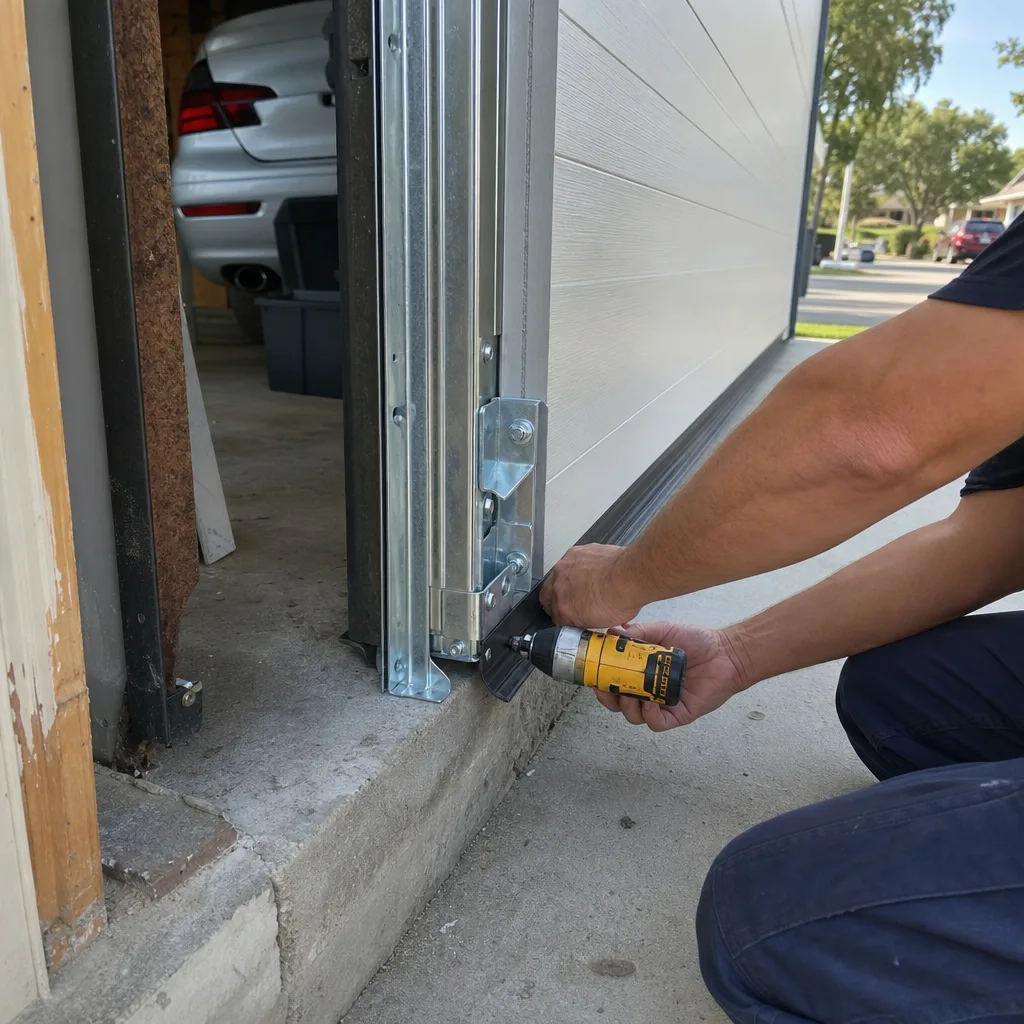
Garage door pricing in Tarzana tracks fairly closely with the broader San Fernando Valley market, with some upward pressure from the area’s older housing stock. Homes in the neighborhoods south of Ventura Boulevard were largely built in the 1960s and 1970s, which means the doors are often original or first-generation replacements. That means more worn rails, more fatigued springs, and more openers with obsolete control boards. It also means the quote ranges skew slightly higher than new construction areas because the work often requires more adaptation.
Here’s what you can expect, based on what we see across Tarzana, Woodland Hills, and Encino on a regular basis:
- Spring replacement (single torsion spring): $180-$320 installed, including the part and labor. Two-spring systems: $340-$560. The price varies by the spring’s wire diameter, cycle rating, and whether the technician replaces both springs on a two-spring system (recommended) or only the failed one.
- Garage door opener replacement: $480-$750 installed, including the opener unit, labor, and programming. Higher-end units with battery backup and smart-home integration run toward the top of that range. If you’re quoted under $400 for a full opener replacement with a name-brand unit, ask whether that’s the labor only.
- Full garage door replacement (single door, standard 16×7): $1,400-$2,900 installed, depending on the material (steel, aluminum, wood composite), the insulation R-value, and the hardware. Executive homes in the hills south of the Boulevard with custom wood or carriage-style doors can run $4,000-$8,000.
- Roller and hinge replacement: $80-$180, typically done as part of a larger repair. The rollers themselves are inexpensive; the labor is the access and the disassembly.
- Cable replacement: $150-$260. Broken cables are dangerous because they can cause the door to drop unevenly and damage the tracks, the panels, or the opener carriage.
- Diagnostic only (no repair needed): $60-$100. If a repair is done on the same visit, the diagnostic fee is typically waived.
Some of these ranges may look broad. The spread reflects real differences in the equipment the contractor is quoting. A torsion spring with a 10,000-cycle rating costs more than a 5,000-cycle spring and lasts roughly twice as long. A garage door opener with a DC motor and belt drive costs more than an AC-motor chain drive and operates noticeably quieter. The quote should specify which you’re getting. If it doesn’t, ask for the specification.
One principle applies across the board: the price you’re quoted before the work starts is the price you pay. In California, a contractor cannot show up with a “revised” total after the job is done unless you agreed to the change in writing. The written scope from Step 3 is your protection here. If a contractor quotes $480 and then presents an invoice for $850 because “the rails needed more work than expected,” you have a CSLB dispute on your hands, not a legitimate bill.
Parts, Brands, and Local Conditions: What Matters in Tarzana
The garage door industry has consolidated around a small set of manufacturers, and any contractor in Tarzana should be able to work with the major names: LiftMaster, Chamberlain, Genie, Clopay, Amarr, Wayne Dalton, Craftsman, and Raynor. If a contractor tells you they only work on one brand, they’re not a repair company. They’re a dealer who sells one product line. That’s not necessarily disqualifying for an installation, but it’s limiting for a repair.
Here’s a useful frame for Tarzana specifically: the climate and the housing stock interact with your garage door in ways that show up during the hiring conversation, as detailed in our Seasonal Garage Door Care for Tarzana: Year-Round Homeowner’s Guide.
First, Tarzana is inland enough that summer temperatures in July and August regularly push past 95 degrees, and on the hottest days a garage can hit 110°F to 120°F. That heat accelerates the fatigue of garage door springs, which are under constant tension regardless of whether the door moves. A spring rated for 10,000 cycles might fail at 7,000 cycles in a hot Southern California garage if it wasn’t properly lubricated. The contractors who know Tarzana homes will mention this when they quote a spring replacement. The ones who don’t are quoting a generic number.
Second, many homes south of the Boulevard are on hillside lots with a specific access pattern: the garage opens onto a driveway that slopes, which puts different stress on the door’s weight distribution. A garage door on a sloped approach can be slightly out of level without anyone noticing, and that out-of-level condition shortens roller and hinge life. A careful contractor will check the level during any repair and flag it if it needs addressing.
Third, a significant percentage of Tarzana homes have detached garages at the rear of deep lots, which means the opener’s range matters more. If the detached garage is 40 feet from the main house, a basic opener with a single-frequency remote may struggle. That’s a reason to consider a better opener when the time comes, and the conversation should come up during an opener quote. For more on that topic, see our Garage Door Opener Repair & Installation in Tarzana page.
The brand question usually surfaces during an installation, not a repair. When you’re replacing a full door, the major decisions are material, insulation value, window placement, and hardware finish. The brand matters less than the panel construction and the R-value. An experienced contractor will walk you through the options without defaulting to the most expensive line.
One final note on brands: the installer matters more than the door. A well-installed budget door will outlast a poorly-installed premium door, and the failure mode is always the same - misaligned tracks, incorrect spring tension, or a door that isn’t balanced. That’s why the written scope and the installation details on the quote are worth more than the brand name on the panel.
Common Mistakes to Avoid
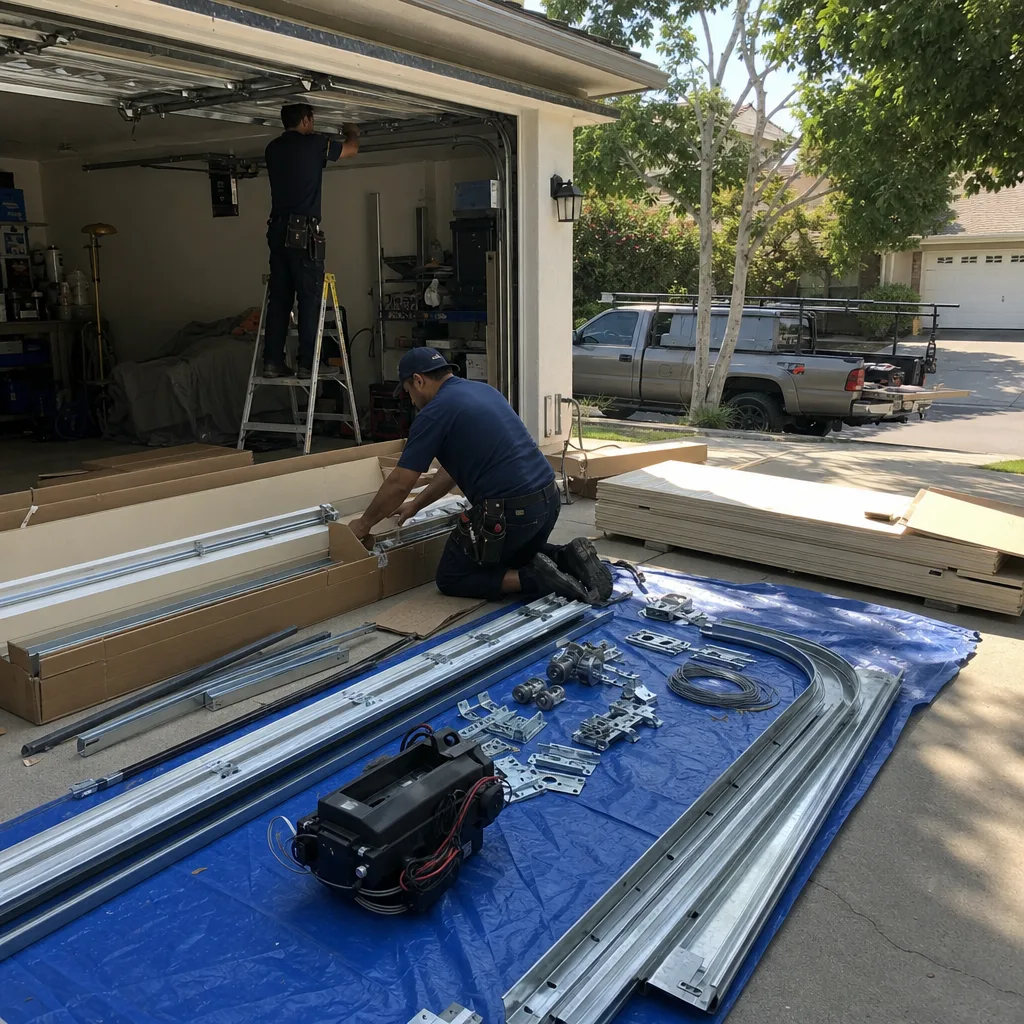
- Accepting a verbal quote and treating it as binding. In California, a verbal quote for work over $500 isn’t a contract. If the contractor doesn’t put it in writing, you have no enforceable agreement. The time it takes to write the quote is the same time it takes to protect yourself.
- Skipping the CSLB license check because the contractor “seemed professional.” Professionalism is a performance. The license check is a ledger entry. One takes 90 seconds on cslb.ca.gov. The other takes a $1,500 invoice to discover was an act.
- Hiring the lowest quote without comparing scopes. A $350 spring quote that doesn’t include replacing the second spring on a two-spring system is not cheaper. It’s a different, smaller job. Compare the scopes, not just the totals.
- Agreeing to same-day work without a written price. The urgency is rarely legitimate. A broken spring is urgent. A garage door that’s slightly noisy is not. If the contractor is pushing you to decide before the van leaves the driveway, they’re selling pressure, not repair.
- Not asking for a photo record of the findings. This is a new enough practice that many Tarzana homeowners don’t know to ask for it. But the photo is the evidence. If the technician can’t show you the split spring or the worn cable, ask why not.
- Ignoring the workers’ comp field on the CSLB license. Very few homeowners check this. It matters. A contractor with employees and no workers’ comp is transferring liability to you, and you won’t know it until there’s an injury.
- Scheduling a full-door replacement without seeing sample panels in person. The renderings on a manufacturer’s website and the actual panel in daylight are different things. A contractor with a showroom or sample kit in Tarzana is worth the visit.
When to Call a Professional
There’s a version of this hiring guide - and our DIY vs Professional Garage Door: The Tarzana Homeowner’s Decision Guide - that encourages you to handle small garage door issues yourself: lubricating rollers, tightening loose hinges, replacing a remote battery. That’s all fine. But any work involving the torsion spring system - the springs mounted above the door under tension - should be treated as professional-only. A torsion spring under full wind carries several hundred pounds of torque, and when it releases uncontrolled, the result is a serious injury. The same goes for cable replacement. Cables connect the springs to the door and transfer that tension; a snapped cable can whip with enough force to cause deep lacerations.
If the door is off its tracks, if the springs have snapped, if the opener’s logic board is dead and the door won’t respond to any input, call someone who does this work every day. That’s what the license, the insurance, the written quote, and the photo record are all for.
Servo Garage Doors Tarzana offers free estimates in Tarzana. Call (424) 372-1317 and you’ll speak to a live person, not a recording, and we’ll walk through the scope and the written price before anything is touched.
Frequently Asked Questions
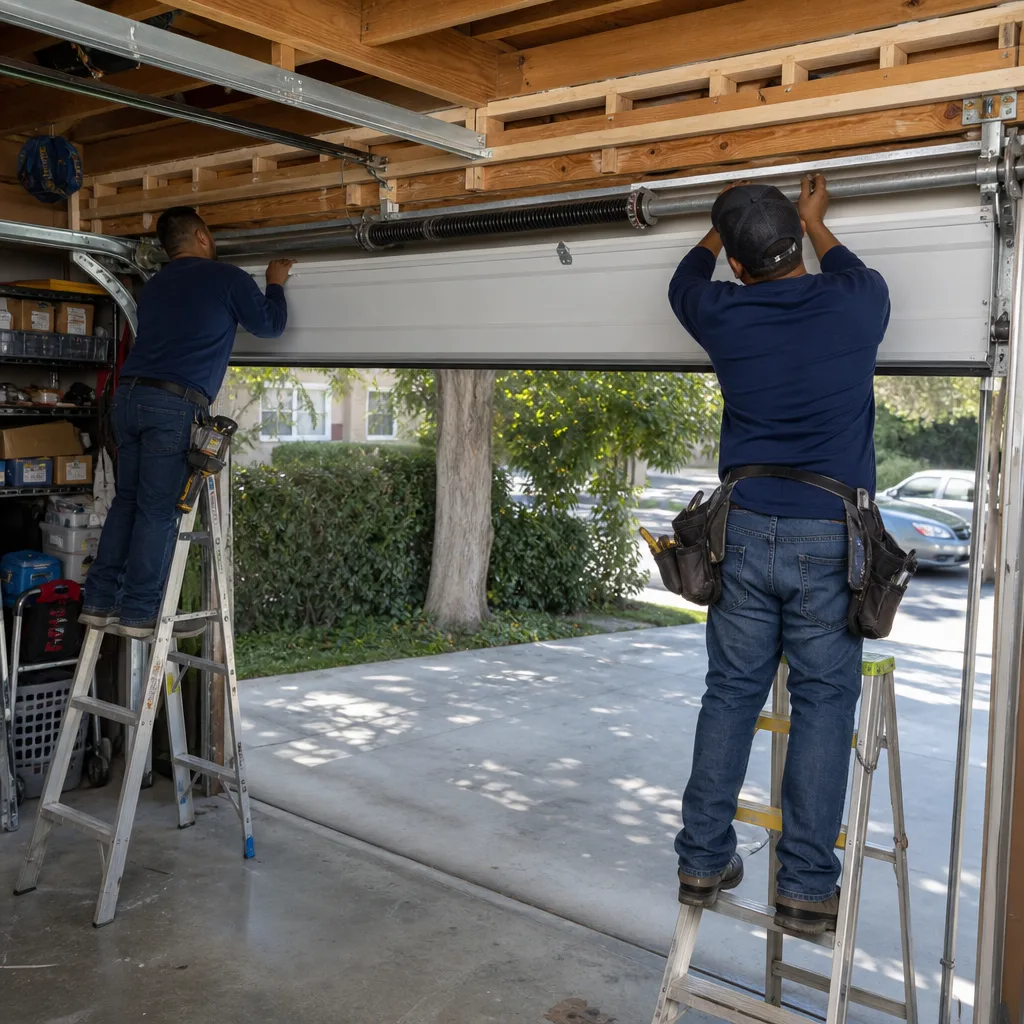
Go to cslb.ca.gov, click “Check a License,” and enter the contractor’s license number. The license should be Active, the classification should include C-61/D28 for door and gate work, and the workers’ comp and bond fields should be current. The entire check takes under two minutes, and you should do it before the technician arrives - not after the work is done.
A spring replacement in Tarzana typically runs $180 to $320 for a single spring and $340 to $560 for a two-spring system, installed. An opener replacement runs $480 to $750. A full door replacement runs $1,400 to $2,900 for a standard 16×7 door, with custom and premium options going higher. The exact price depends on the part specifications and the labor involved, which is why a written, itemized quote before work starts is non-negotiable.
A compliant written quote in California must include the contractor’s full name and CSLB license number, a specific description of the work, a total contract price, the payment schedule, and start and completion dates. For a garage door repair in Tarzana, the quote should itemize parts and labor separately - for example, the spring specification, the number of springs, and the labor line. If the quote is a single total with no detail, ask for a more specific one.
Replace both. If your door has a two-spring system and one spring has snapped, the second spring has cycled the same number of times and is near the end of its life. Replacing only the broken spring means the door will be balanced with one new spring and one old one, which causes uneven wear and will likely lead to another repair within a year or two. A good contractor in Tarzana will recommend replacing both and will show you the reason on the quote.
No. A torsion spring holds hundreds of pounds of tension, and when it releases without the proper winding bars and technique, the energy is catastrophic. The injuries from spring failures are among the most serious in home repair. The cost of professional spring replacement is a fraction of the medical bill from a failed DIY attempt. Call a licensed C-61/D28 contractor instead.
The standard spring is rated for 10,000 cycles, which translates to roughly 7 to 10 years of normal residential use. But in Tarzana, where summer garage temperatures regularly exceed 100°F, the heat accelerates metal fatigue and the effective lifespan often lands closer to 6 to 8 years without regular lubrication. A contractor familiar with the area’s climate will factor this into their recommendation, including whether higher-cycle-rated springs make sense for your door.
The Bottom Line
Hiring a garage door contractor in Tarzana is not about trusting the right person. It’s about building a paper trail that makes trust unnecessary. Verify the C-61/D28 license on the CSLB site before the van arrives. Demand a written, itemized quote before the work starts. Read the warranty clause for what it covers and what it voids. And if the contractor won’t photograph the failed component or put the scope on paper, the quote doesn’t matter because the process already failed. For more guides & resources, see our blog. Every legitimate garage door company in the San Fernando Valley runs on documentation. The company that pushes back on documentation is telling you something about how they’ll handle the invoice.
Written by Marcus Deller, Owner at Servo Garage Doors Tarzana, serving Tarzana since 2015.