
Full 25-point door and opener safety check with every visit - springs, cables, rollers, tracks, and your LiftMaster or Chamberlain opener included
You get a price before we start. It does not change when the truck arrives.
 Before
 After
After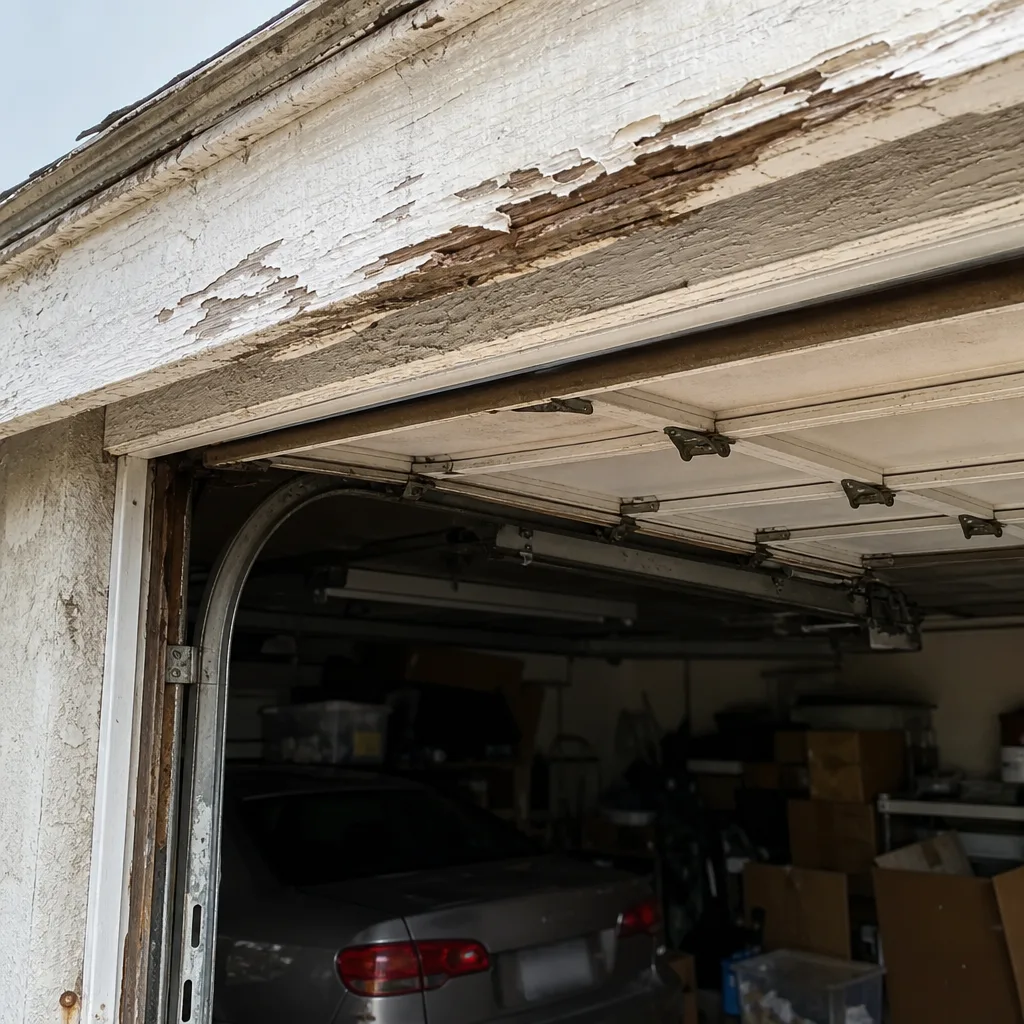 Before
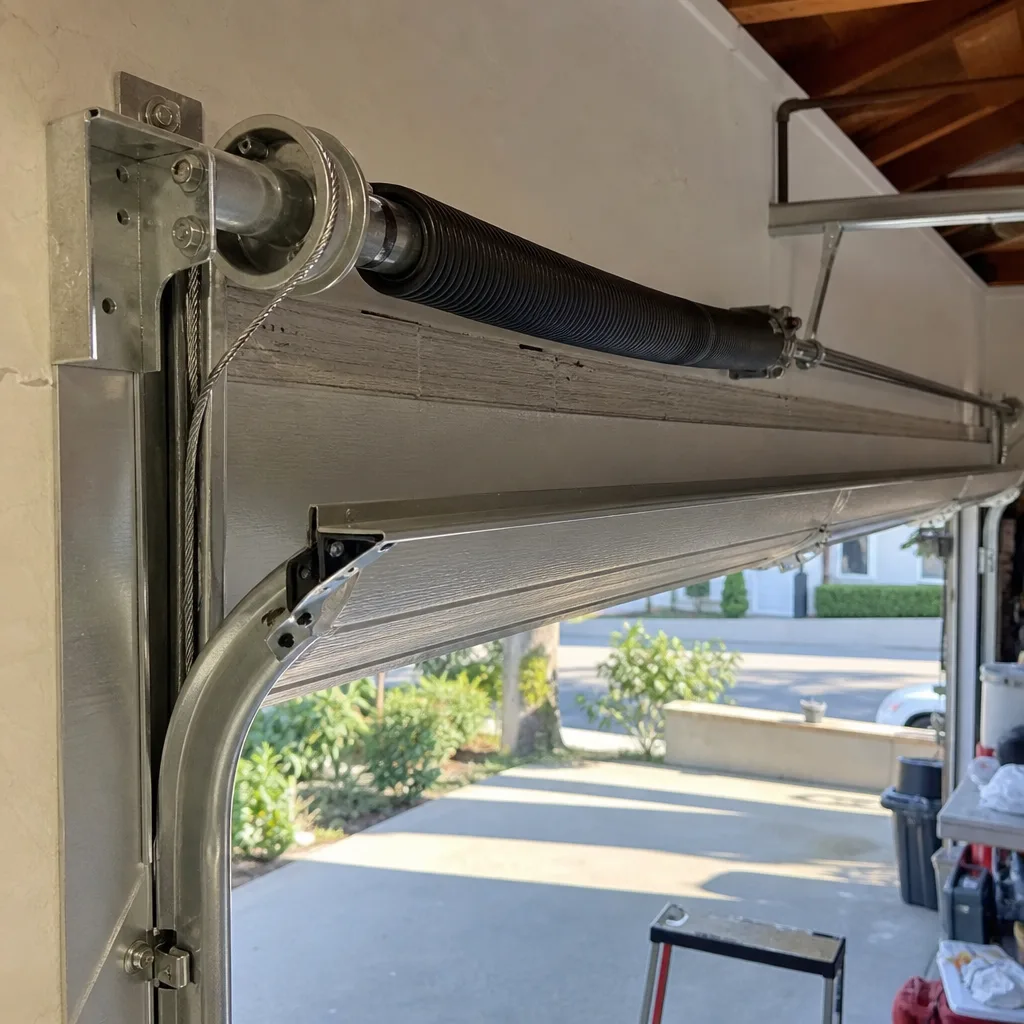 After
After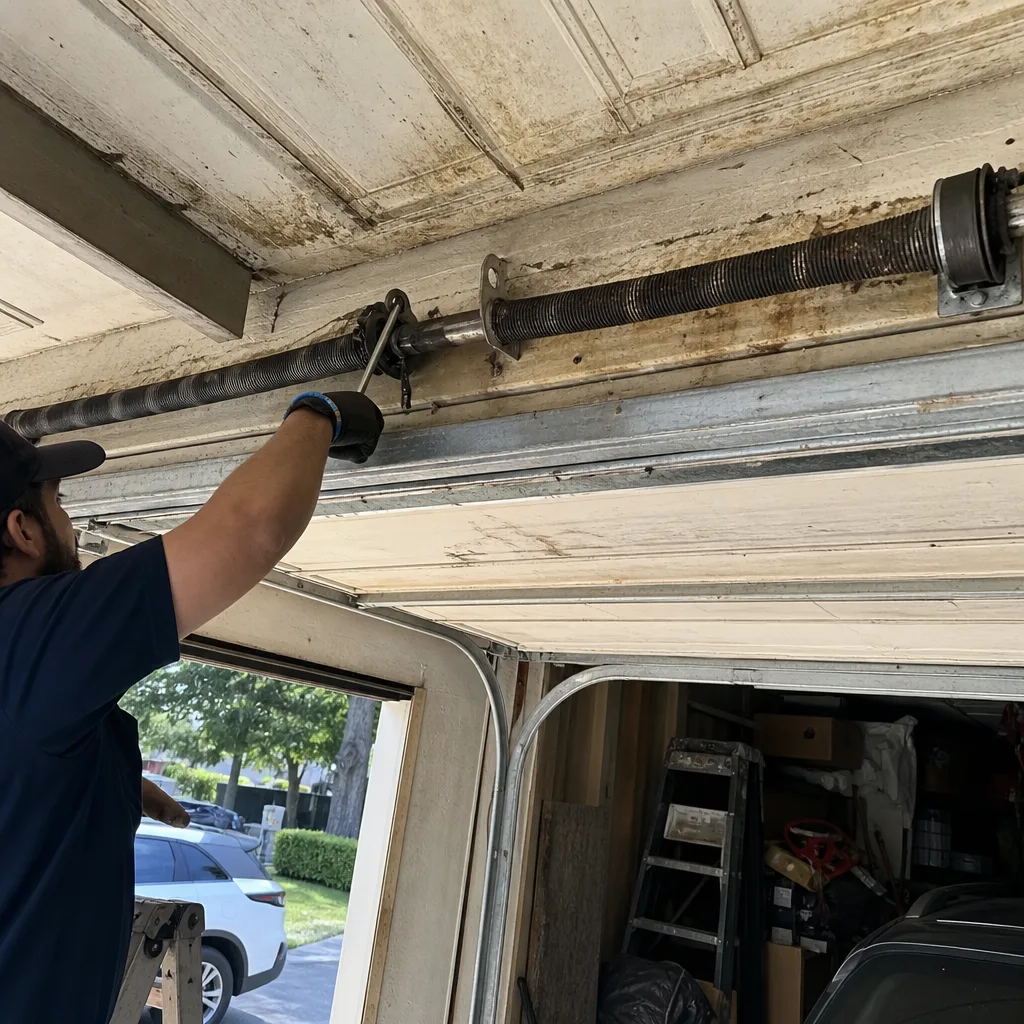 Before
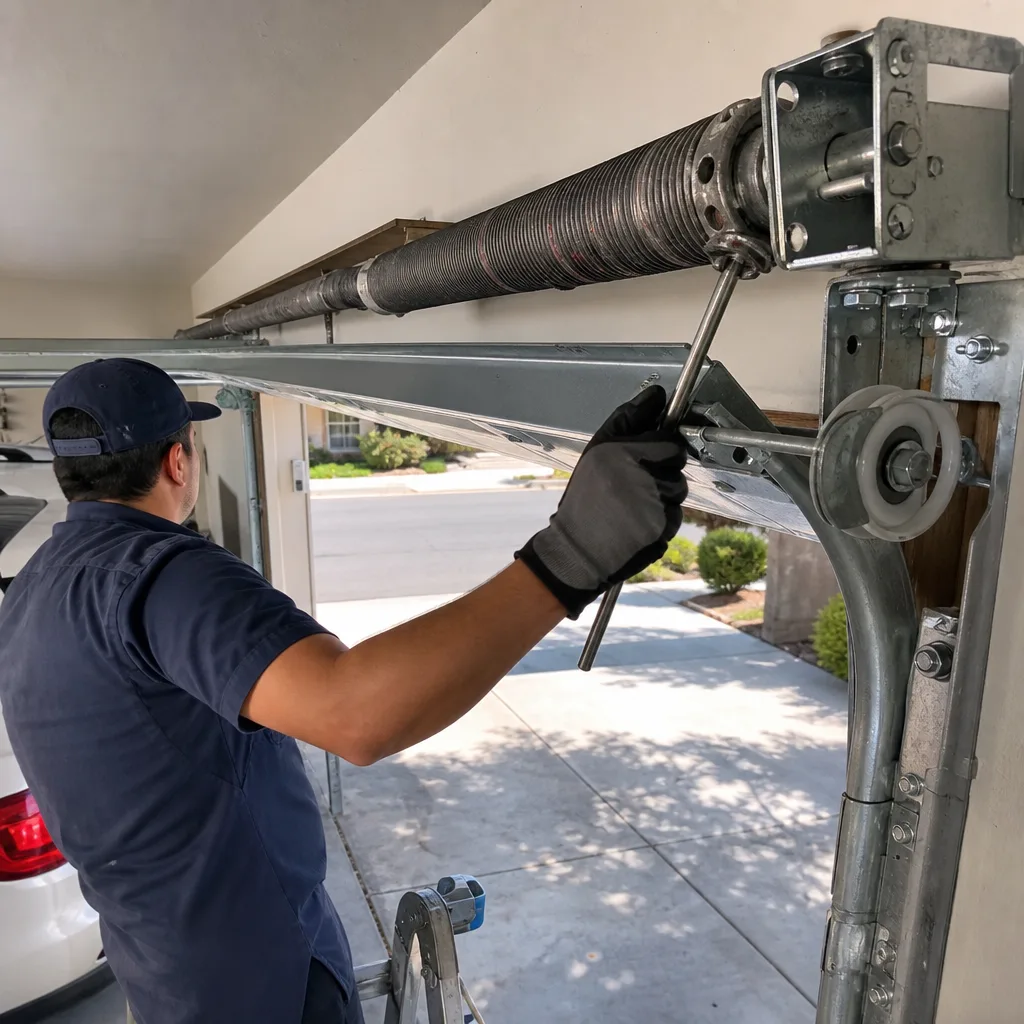 After
AfterGenie Torsion Spring Replacement: The Tarzana Owner’s Guide
A failed Genie torsion spring in Tarzana typically costs between $180 and $340 to replace with installation included, and we stock compatible springs on our trucks for same-day service across the San Fernando Valley. Most homeowners discover the failure the same way: a loud bang from the garage that sounds like a car backfiring, followed by a door that won’t lift more than a few inches. The spring that does the actual lifting has snapped, and no amount of opener force will compensate for it. That sound is the spring’s final act after thousands of open-and-close cycles, and the fix is straightforward once the correct replacement is matched to your door.
We’re Servo Garage Doors Tarzana, an independent service provider, not affiliated with Genie. We work on Genie equipment daily, and the torsion spring is the component we replace most often. Marcus Deller and our technicians carry a range of Genie-compatible springs on the truck so the typical repair is one visit, not two.
Which Genie Models This Applies To
Genie has manufactured torsion spring systems across several residential lines: the IntelliG, ReliaG, TriloG, and the newer Mach Force series, along with doors sold through Genie’s partnership with Clopay. The spring itself is rarely branded “Genie” in a helpful way. The label on the door and the spring’s physical measurements matter far more than the model name.
Here’s the compatibility reality we deal with in Tarzana garages: a torsion spring is matched by wire diameter, inside diameter, length, and wind direction, not by model number. A Genie-branded door from 2008 and a builder-grade door from 2021 may use springs with identical specifications. The OEM-versus-aftermarket decision for Genie doors is simpler than most owners expect. Genie sources springs from the same domestic manufacturers that supply most of the industry. We stock quality aftermarket equivalents that meet or exceed the original spring’s cycle rating, and for heavier or older doors we’ll recommend an upgraded spring with a longer life rating when the door’s weight justifies it. What matters is that the spring is matched to the door’s actual weight and balance, verified with a tension check before we quote anything.
One compatibility gotcha specific to this area: many Tarzana homes built in the 1960s and 1970s along the Vanalden Avenue and Reseda Boulevard corridors have garage doors that were retrofitted to torsion springs years ago, and the retrofit hardware doesn’t always match the door’s current weight. We measure wire diameter with a caliper and check the door’s balance before selecting a spring. A spring that’s one gauge off will either cycle too fast or leave the opener fighting the door’s weight on every lift.
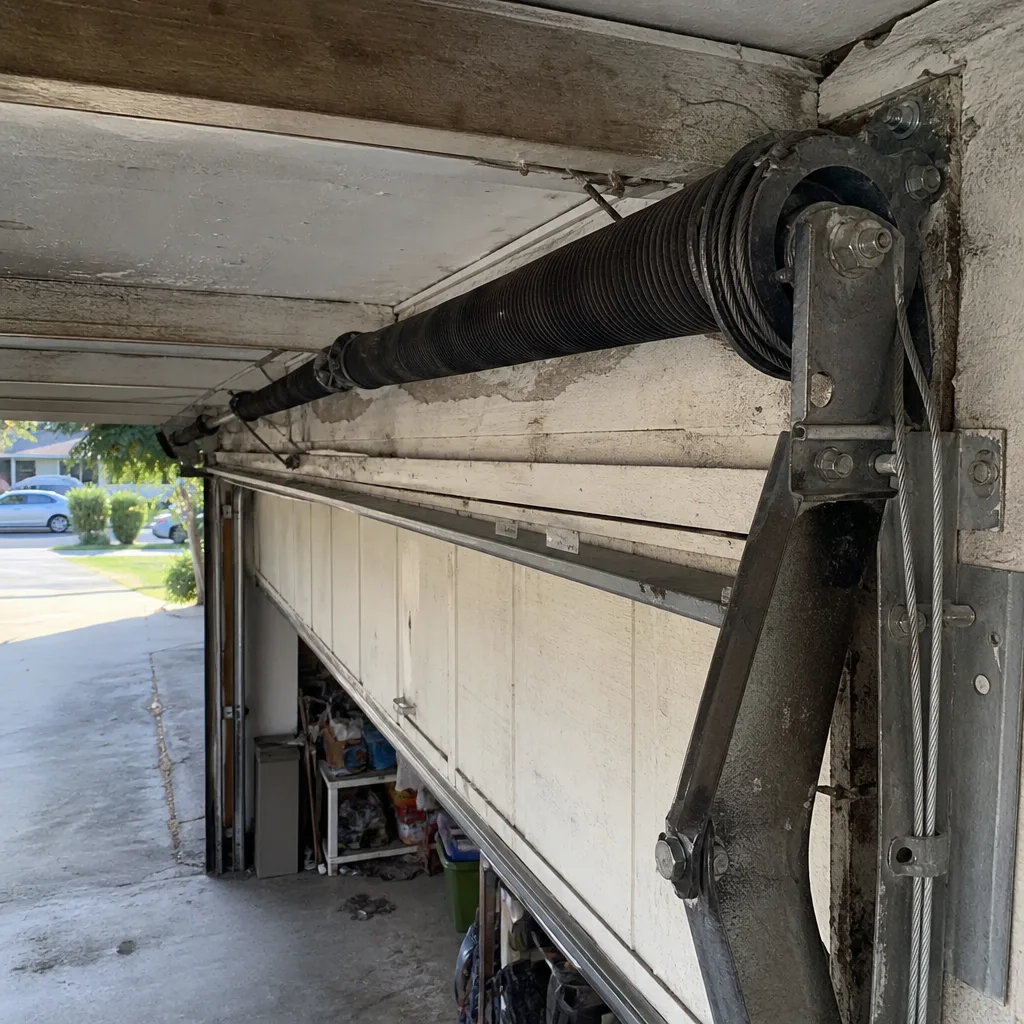
How to identify what you have: look at the spring above the closed door. You’ll see a painted stripe on the coils (usually red, black, or yellow on Genie-sourced hardware) and a dimension code stamped or printed on the spring cone or winding plug. If it’s painted over or illegible, our technicians measure it on site. Most Genie residential doors use springs in the 0.207 to 0.250 wire diameter range, with inside diameters of 1.75 or 2 inches.
Signs Your Genie Torsion Spring Replacement Is Failing
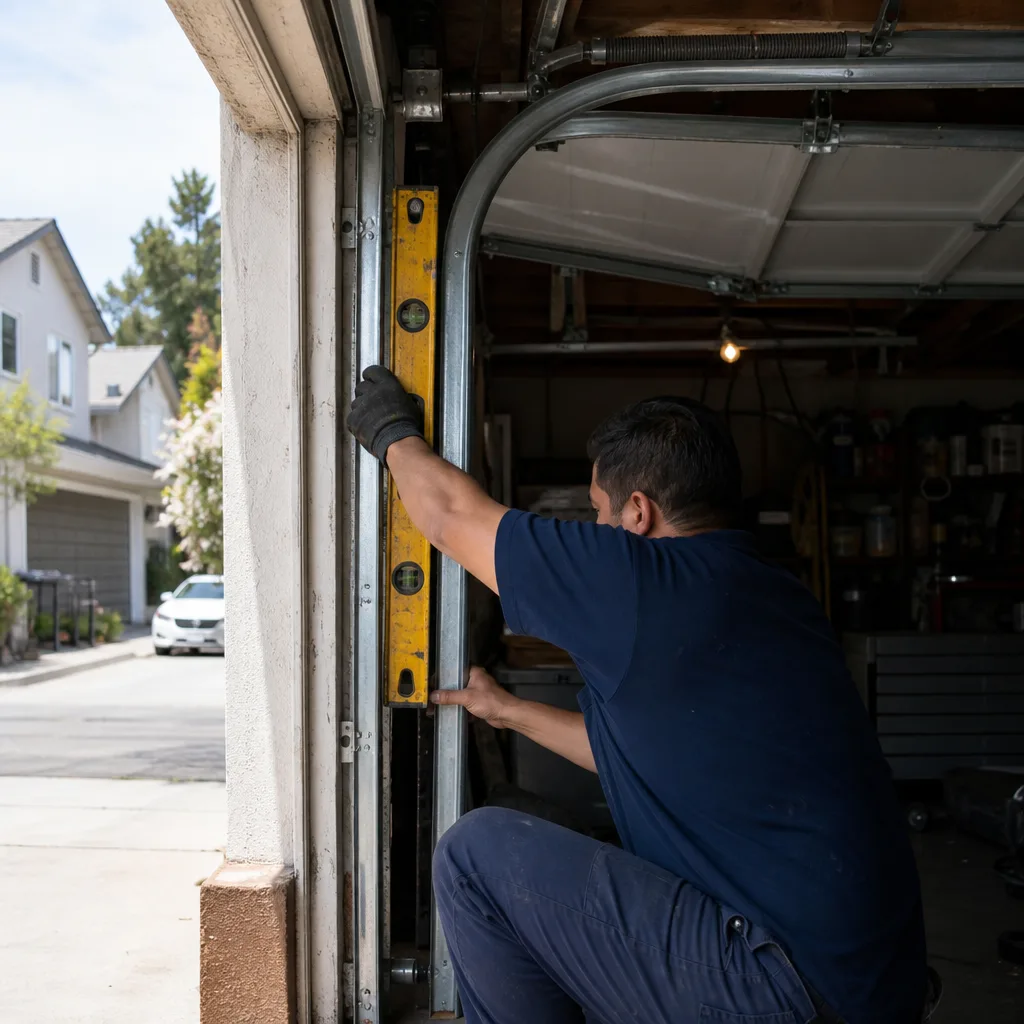
- Loud bang from the garage. The spring snaps under tension, and the sound carries through the house. If you heard it and the door won’t budge, the spring has failed completely, not partially.
- Door feels heavy or won’t lift manually. With the opener disengaged, a balanced door should lift with one hand. A door that drops or takes real effort means the spring has lost tension, even if it hasn’t snapped yet.
- Visible gap in the spring coils. A torsion spring that has fractured will show a clean break, often with a two to three inch separation between coil sections. You’ll spot it from the garage floor without touching anything.
- Opener struggling or stripping gears. When the spring weakens, the opener motor takes on the lifting work it was never designed to do. On Genie openers, the first casualty is usually the drive gear or coupler, not the motor.
- Door opening a few inches, then stopping. The opener senses resistance and reverses. Homeowners sometimes blame the opener, but a dead spring is behind this more than half the time in our Tarzana service calls.
Southern California weather plays a role here. Springs don’t rust out the way they do in humid climates, but the heat in Tarzana garages, which routinely exceeds 110°F in August, shortens the spring’s fatigue life. Most springs in this market are rated for roughly 10,000 cycles, which translates to seven to ten years for a typical two-car household. When we quote a replacement, we can specify a higher-cycle spring if you plan to stay in the home long-term.
BeforeAfterReplacement Cost & What’s Included
In Tarzana, expect to pay $180 to $340 for a Genie-compatible torsion spring replacement, installed. That range covers most single and double residential doors. The price depends on three things: spring wire diameter (heavier doors need thicker wire and cost more), whether we’re replacing one spring or both, and whether your door uses a single-spring or dual-spring configuration. We’ll tell you the exact spring specification and the exact installed price before we touch a tool.
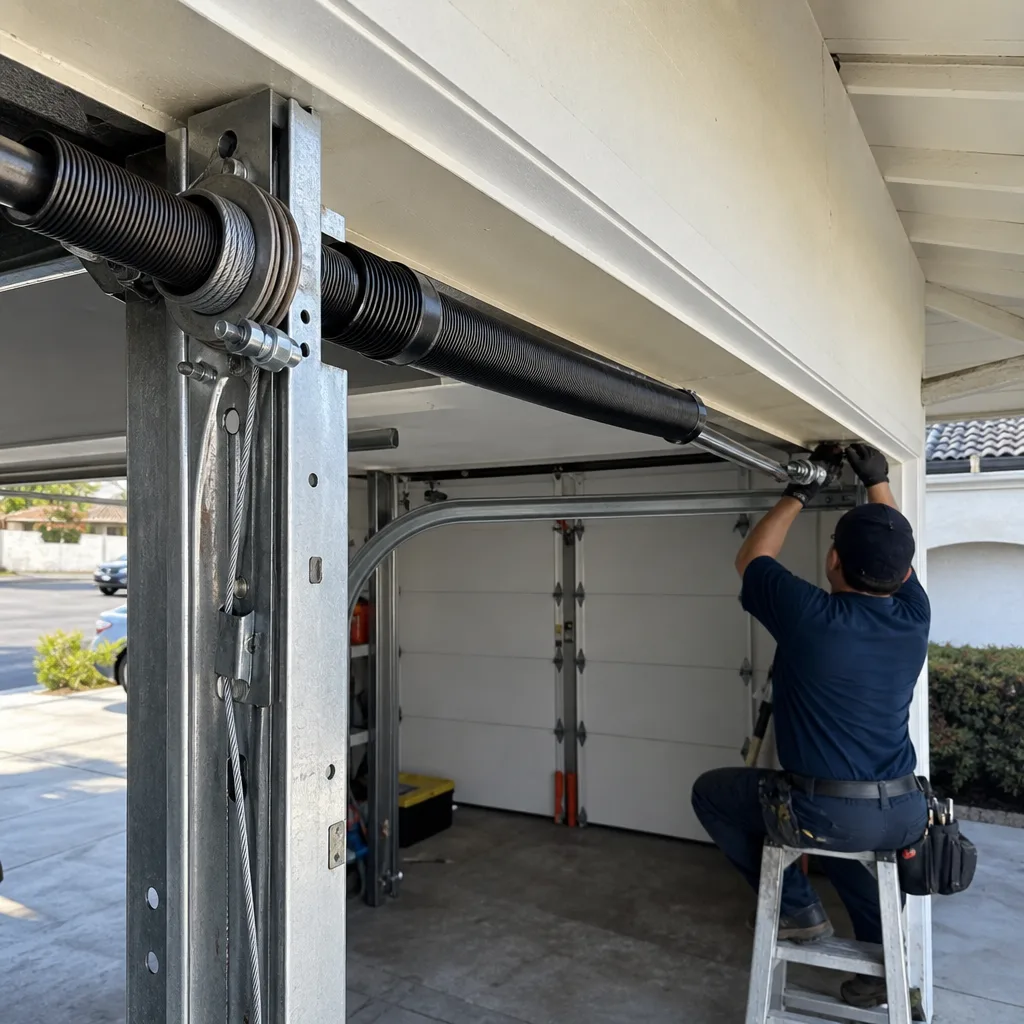
Here’s what the price includes: the spring itself, all winding and unwinding labor, a full door balance and tension check, lubrication of the rollers and hinges, and a written warranty on both the part and the installation. Every visit also includes our documented photo record: photos of the failed spring before removal, the new spring after installation, and the balance test results. Clause 4 of The Haven Standard is why we photograph the failed component before quoting a replacement. You’ll see the broken spring with your own eyes, with the measurement written on the work order.
We also replace both springs when the door has two. It’s not an upsell. When one spring fails, the other has the same number of cycles on it and the same remaining fatigue life. Replacing one side only leaves you with a mismatched spring pair that will cause the door to lift unevenly and wear the opener prematurely. We’ll quote you the single-spring and dual-spring option, and explain which applies to your door.
DIY or Call Us?
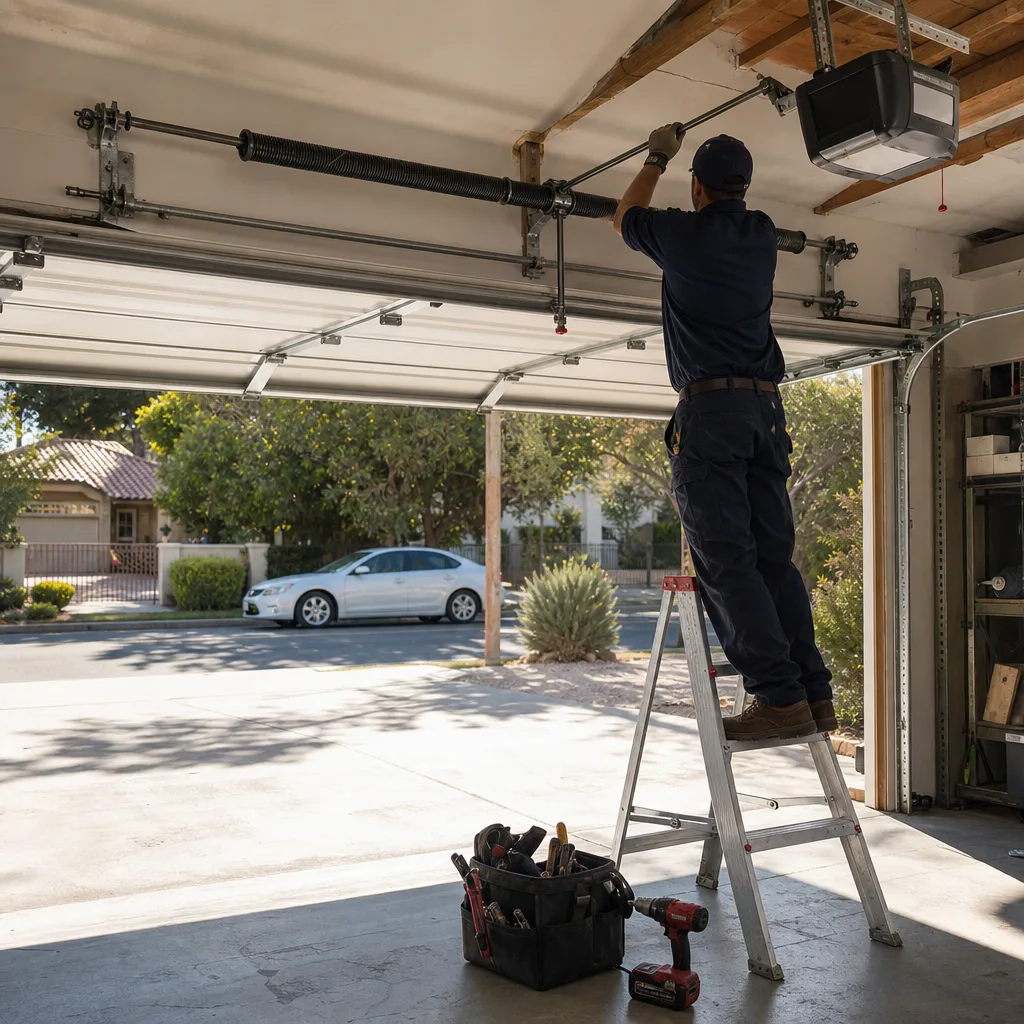
Torsion springs hold enough stored energy to cause catastrophic injury if mishandled. We’re direct about that, not dramatic about it. A winding bar that slips while the spring is under tension becomes a projectile, and human hands are no match for a spring under load. We don’t recommend installing or removing a torsion spring yourself, and we’re not going to publish a step-by-step here. This is the one component on a garage door where the gap between “I can figure this out” and an ambulance ride is measured in fractions of a second.
What you can safely do: check whether the spring has a visible break, confirm which side the label or cone marking is on, and check whether the door lifts by hand with the opener disengaged. That information helps us quote accurately over the phone. What you shouldn’t do: attempt to unwind or rewind a spring, loosen set screws, or remove the spring cones. Those jobs require winding bars, the right spring spec, and the experience to know when the door’s weight and balance are correct. If you’re in Tarzana and you’ve got a broken spring, call us at (424) 372-1317 and we’ll give you a written price for the repair before we arrive. Name the part. Quote the range. Then decide.
FAQs
A standard Genie torsion spring lasts about 10,000 cycles, which works out to seven to ten years for most Tarzana households. A cycle is one full open and one full close, so a family that uses the garage door six times a day will reach 10,000 cycles in roughly four and a half years. We can install a higher-cycle spring rated for 20,000 to 30,000 cycles if you want to extend that interval. Call (424) 372-1317 and we’ll measure your current spring and quote both options.
No. A torsion spring that has snapped cannot be welded, spliced, or re-tensioned. The metal has failed at the fatigue point, and any attempt to repair it leaves the remaining coil metal compromised. Replacement with a correctly spec’d spring is the only safe repair. The good news is that replacement is a routine job: we’ll have your door lifting again the same day in most cases.
The actual spring swap takes 45 to 90 minutes on a standard residential door. That includes unwinding the old spring, installing the new one, winding it to the correct tension, and running a full balance test. If we’re also correcting a pre-existing balance issue or replacing a spring on a heavier door, budget closer to two hours. We’ll tell you the expected time when we quote the job.
Yes. Our technicians carry the most common Genie-compatible torsion spring sizes in wire diameters from 0.207 to 0.250 inches, with both left-wind and right-wind orientations. For unusual door weights or commercial-size springs, we’ll have your spring sourced from our Los Angeles supplier and installed on a scheduled visit, usually the next day. Either way, the price is written before we start, per Clause 1 of The Haven Standard.
Written by Marcus Deller, Owner & Lead Technician, Servo Garage Doors Tarzana at Servo Garage Doors Tarzana, serving Tarzana and nearby areas.